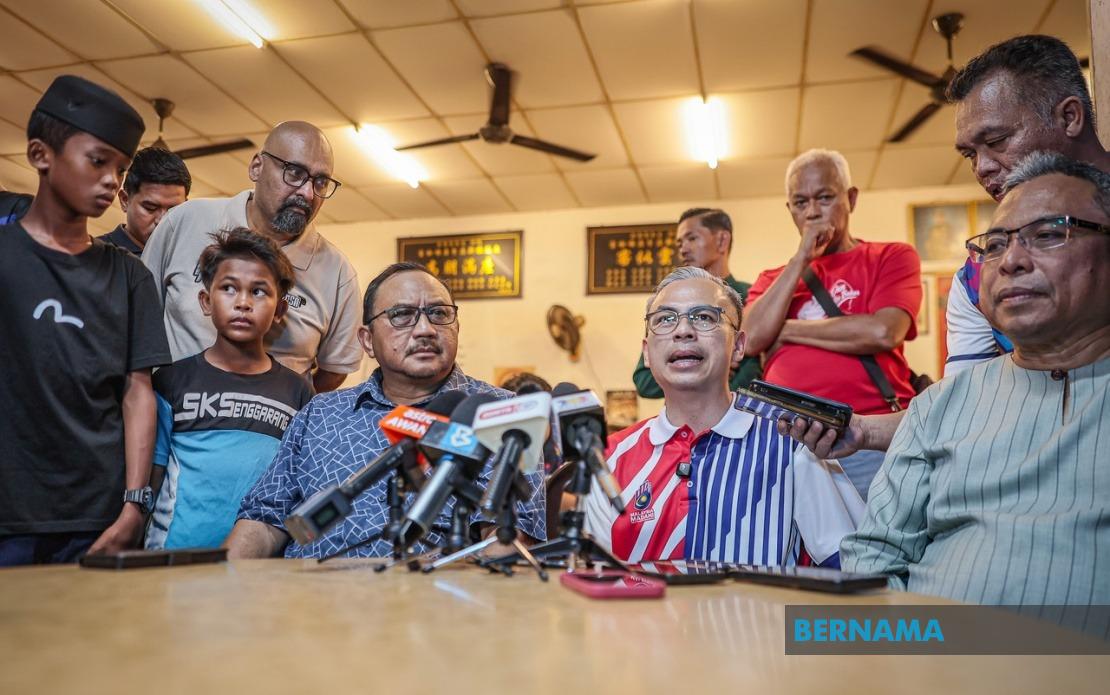
Pakatan Harapan is preparing to launch a two-pronged electoral offensive in Johor that integrates conventional community mobilisation with contemporary digital strategies, marking a deliberate shift towards comprehensive voter outreach as the 16th state election campaign formally commences. The coalition's approach reflects recognition that winning over Johor's electorate requires presence at both neighbourhood level and online spaces where Malaysian voters increasingly form opinions. Datuk Fahmi Fadzil, the coalition's communications director and current Minister of Communications, outlined this integrated methodology during an event in Batu Pahat, emphasising that the dual strategy is essential for transmitting PH's vision and policy offerings to the state's diverse population groups.
The mechanics of PH's campaign reveal a carefully choreographed deployment of senior figures and institutional resources. PKR, contesting 20 seats, will commence campaigning immediately following the completion of candidate nominations tomorrow morning, with Fahmi himself visiting the Semerah nomination centre to personally initiate ground activities. Simultaneously, party deputy president Nurul Izzah Anwar will accompany Senggarang candidate Onn Abu Bakar at his nomination venue, signalling leadership commitment to key battleground constituencies. The coalition has simultaneously established a dedicated media unit tasked with rapid dissemination of information about PH candidates, creating an organisational infrastructure designed to flood social media and messaging platforms with campaign content and candidate profiles within hours of their official registration.
Fahmi's emphasis on accuracy in campaign messaging represents a deliberate tactical choice to differentiate PH from competitors in an environment where misinformation can rapidly distort voter perceptions. The coalition intends to ground its communications in verifiable facts and substantive policy content rather than relying on emotional appeals or unsubstantiated claims. This approach becomes particularly significant in Malaysia's context, where previous election cycles have witnessed widespread circulation of false narratives across social platforms. By positioning itself as a purveyor of truthful information, PH seeks to build credibility with swing voters who may harbour scepticism towards traditional political messaging.
The development agenda PH intends to showcase in Johor reflects federal-state collaboration that has already begun yielding tangible infrastructure projects. Fahmi highlighted the Rapid Transit System Link and the Johor-Singapore Special Economic Zone as concrete examples of how alignment between federal and state governments can accelerate economic initiatives. These mega-projects carry symbolic significance beyond their immediate economic impact, demonstrating to voters that coalition membership delivers material improvements in daily life. The special economic zone particularly resonates with Johor residents given the state's historic reliance on manufacturing and cross-border trade; expanded economic opportunities could translate into employment gains and business expansion across the region.
PH's electoral messaging in Johor will inevitably draw upon the coalition's governance record in three other states—Selangor, Negeri Sembilan, and Penang—where it has accumulated more than a decade of administrative experience. These states serve as performance benchmarks, allowing the coalition to claim tangible achievements in areas ranging from fiscal management to social services. Fahmi's invocation of specific candidates like Dr Maszlee Malik in Puteri Wangsa and Onn Abu Bakar in Senggarang suggests PH intends to personalize its campaign narrative, positioning these individuals as embodiments of the change and competence the coalition promises to deliver to Johor voters.
The coalition's commitment to developing a comprehensive manifesto specific to Johor acknowledges that state elections demand locally-tailored policy platforms. Rather than simply importing national policy agendas, PH recognises the necessity of addressing concerns and aspirations particular to Johor's geography, demography, and economic structure. This manifesto will likely address issues such as water security, which remains perennially contested between Johor and Selangor, as well as employment creation and rural infrastructure development. The timing of manifesto release has been left deliberately unspecified, suggesting the coalition may strategically unveil it during a moment designed to capture maximum media attention and momentum.
The regulatory environment for this campaign reflects heightened concern about information integrity throughout Malaysia's electoral ecosystem. The Malaysian Communications and Multimedia Commission has established a joint task force with the Election Commission, Royal Malaysia Police, and Malaysian Media Council to monitor and suppress misinformation circulation during the Johor campaign period. This institutional response demonstrates governmental acknowledgment that false narratives can undermine electoral legitimacy and public confidence in democratic processes. For Malaysian voters, the existence of this monitoring infrastructure may provide assurance that authorities are actively working to ensure the campaign environment remains reasonably free from deliberate falsehoods, though effectiveness will ultimately depend on how robustly these agencies exercise their monitoring authority.
The incorporation of cultural programming, exemplified by Fahmi's attendance at a "wayang pacak" screening of the film Blood Brothers in Senggarang, illustrates PH's recognition that effective political engagement in Malaysia extends beyond policy discussion into cultural and social spaces where communities gather. The traditional outdoor film screening represents quintessentially Malaysian popular entertainment, particularly valued in smaller towns and rural areas. By positioning party leadership at such venues, PH signals respect for local cultural practices while simultaneously creating informal opportunities for voter interaction and engagement outside formal political settings. This approach acknowledges that political persuasion in Malaysian contexts often occurs through relationship-building and community participation rather than through abstract policy exposition.
For Southeast Asia observers, the Johor campaign methodology offers insights into how major political coalitions are adapting to contemporary communication realities. PH's integration of grassroots mobilisation with digital channels reflects global trends in electoral politics, yet the specific manifestation in Malaysia demonstrates sensitivity to local communication patterns and cultural contexts. The emphasis on factual communication and institutional partnerships against misinformation similarly reflects international best practices being adopted in Southeast Asian democracies grappling with information reliability challenges. The outcome of Johor's campaign will therefore carry implications extending beyond the immediate state contest, potentially signalling whether this hybrid approach effectively resonates with Malaysian voters navigating increasingly complex information environments.

