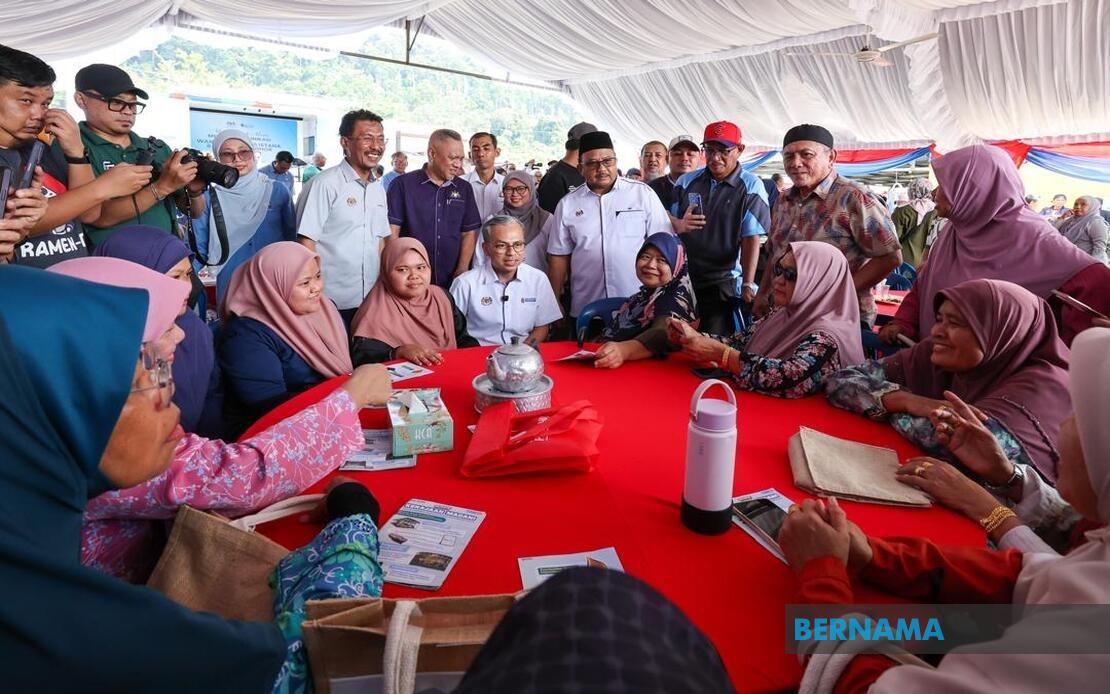
Pakatan Harapan's Communications Director Datuk Fahmi Fadzil has pushed back against suggestions that the coalition's manifesto reveal came too late in the campaign cycle, arguing instead that the timing reflected careful deliberation within the leadership ranks. Speaking at a public event in Batu Pahat on July 4, Fahmi, who also holds the Communications Ministry portfolio, characterised the rollout as appropriately positioned within the second week of the Johor state election campaign period.
The decision to launch the 'Johor for All' manifesto on Friday represented a calculated approach, Fahmi explained, one grounded in ensuring both substantive rigour and approval from the coalition's highest echelons before public release. The Communications Minister underscored that the coalition had prioritised depth of content and buy-in from senior figures, including Prime Minister Anwar Ibrahim, over speed of deployment. This measured cadence stood in contrast to suggestions from former Bangi MP Ong Kian Ming that the delayed announcement might impair PH's ability to mobilise campaign infrastructure effectively.
Fahmi's defence of the timeline warrants understanding within the broader context of coalition management. Pakatan Harapan comprises multiple parties with distinct interests and constituencies, requiring consensus-building mechanisms that differ markedly from single-party operations. The manifesto process therefore involved not merely drafting but securing endorsement across party leadership structures, a process that inevitably consumes additional time compared to unilateral decision-making within Barisan Nasional's more hierarchical framework.
Ong's critique had extended beyond timing alone, incorporating predictions of a landslide Barisan Nasional victory rooted in multiple perceived PH vulnerabilities. The former parliamentarian identified the absence of a publicly named menteri besar candidate, failure to field senior-ranking candidates in key contests, and what he characterised as weak campaign narrative as structural impediments to PH's electoral performance. These criticisms reflected broader concerns about organisational readiness that extend beyond a single manifesto launch date.
Fahmi also addressed criticism from former UMNO Youth chief Khairy Jamaluddin, who had characterised the PH manifesto as derivative of Barisan Nasional's platform, using dismissively uncharitable language about content overlap. Rather than engage directly with substantive comparisons between the documents, Fahmi redirected focus toward Khairy's elevated campaign activism, suggesting that the former youth leader appeared to be shouldering responsibilities that ought to fall to Johor Menteri Besar Datuk Onn Hafiz Ghazi. The implicit critique pointed toward perceived leadership gaps within the ruling coalition, with Fahmi suggesting that qualities demonstrated by Khairy might be beneficially transplanted to more senior figures.
The Communications Minister expressed confidence that internal party controversies within DAP, particularly allegations circulating across social media regarding leadership positions on the proposed pardon of former Prime Minister Datuk Seri Najib Tun Razak, would not meaningfully damage Pakatan Harapan's electoral prospects. Fahmi grounded this assessment not in formal polling data but in observed grassroots enthusiasm at coalition events, where turnout and engagement had registered as robust throughout the campaign period. This reliance on ground sentiment rather than institutional structures reveals both faith in grassroots organising and potential vulnerability to sudden shifts in voter sentiment.
Marina Ibrahim, formerly representing the Skudai state seat before withdrawing from politics, had triggered the DAP-related controversy through social media commentary in which she articulated disillusionment with what she termed the "charade" surrounding party positions on the Najib pardon issue. Such defections and public criticism from within coalition-affiliated figures represent the type of internal fracture that can damage momentum if allowed to proliferate. Fahmi's cited attendance of an event featuring Ng Yak Howe, the DAP candidate contesting the Bentayan state seat, suggested that the coalition perceived sufficient resilience to weather such departures without significant electoral consequence.
The Johor state election itself encompasses 172 candidates competing across 56 state seats, with formal polling scheduled for July 11 and early voting opportunities on July 7. This electoral contest holds particular significance within Malaysian politics given Johor's status as a numerically substantial state with historical importance to the Barisan Nasional political project. The state's electoral dynamics have shifted considerably since 2018, with Pakatan Harapan achieving breakthrough success before internal coalition fractures during the Sheraton Move episode of 2020 returned Johor to Barisan Nasional governance.
For regional observers monitoring Malaysian electoral trends, this Johor contest represents a consequential test of whether Pakatan Harapan has successfully reconstructed organisational coherence following years of internal turbulence. The timing of manifesto releases, quality of candidacies, and presence of senior figures in campaigns all reflect underlying questions about coalition viability and competitive capacity. Fahmi's defensive posture regarding manifesto timing simultaneously reveals coalition confidence in substantive platform content and acknowledge vulnerability to narratives regarding campaign execution and positioning.
The broader implications extend beyond Johor's immediate electoral outcome. How Pakatan Harapan performs in state-level contests influences perceptions of Prime Minister Anwar Ibrahim's political standing and the coalition's capacity to compete in future federal elections. Regional developments in Johor reverberate through neighbouring states including Selangor and Negeri Sembilan, where Pakatan Harapan holds significant influence. Coalition success or failure in mobilising voters despite acknowledged internal disagreements on sensitive issues like the Najib pardon ultimately determines whether Anwar's vision of stable multi-coalition governance can take institutional root within Malaysian politics.

