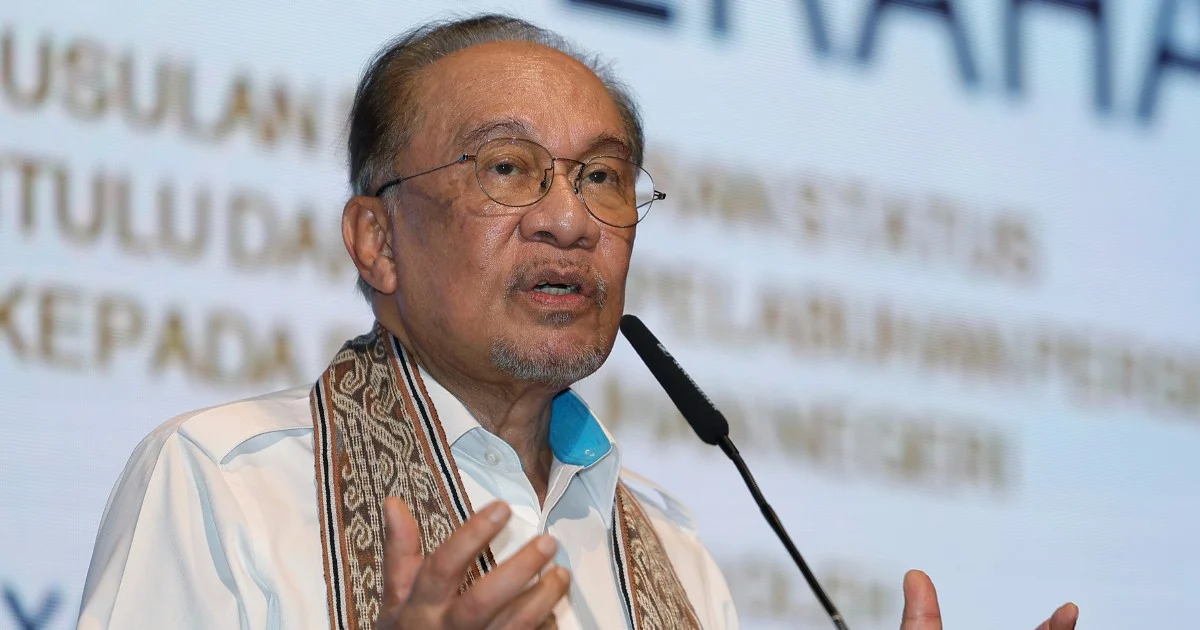
Prime Minister Datuk Seri Anwar Ibrahim expressed renewed confidence in ongoing discussions between Petronas and Petros, marking a significant step forward in resolving long-standing disputes between Malaysia's national oil company and Sarawak's state-owned energy entity. The remarks, delivered while the Premier was in Kuching, reflect a determination to bridge differences on matters central to both organisations' operational futures in one of Southeast Asia's most resource-rich regions.
The negotiations between these two major players come at a pivotal moment for Malaysia's energy sector. Petronas, as the national oil and gas corporation, has historically maintained primary control over exploration and production across Malaysian waters, while Petros, established to manage Sarawak's oil and gas resources, has increasingly sought greater autonomy and a larger share of revenue from state waters. The tension between asserting national control and respecting state interests has created friction that extends beyond commercial concerns to touch on constitutional questions about resource ownership and governance.
The positive momentum cited by Anwar suggests that both parties may be moving towards a compromise framework that acknowledges legitimate interests on each side. Such an agreement would likely involve clearer demarcation of operational responsibilities, more transparent benefit-sharing arrangements, and mechanisms for coordinated investment in exploration and production activities. For Malaysia, achieving consensus between these entities is crucial for maintaining investor confidence and ensuring consistent policy signals to international energy companies.
The timing of these negotiations cannot be separated from global energy market dynamics. With oil prices experiencing volatility and the transition towards renewable energy reshaping long-term demand forecasts, both Petronas and Petros face pressure to maximise returns from existing reserves while strategically planning for a lower-carbon future. A unified approach between the two organisations would strengthen Malaysia's negotiating position with international partners and enable more efficient deployment of capital across the region's hydrocarbon projects.
Sarawak's economic interests remain firmly anchored in hydrocarbon revenues. The state government, through Petros, has consistently advocated for greater control over its resources and a larger share of profits generated from offshore fields. This position reflects Sarawak's historical grievance regarding unequal distribution of petroleum wealth, a concern that has been embedded in state politics for decades. The current negotiations represent a window of opportunity to address these longstanding tensions through dialogue rather than confrontation.
From a Malaysian federalism perspective, resolving the Petronas-Petros question carries broader significance. It demonstrates commitment to respecting state prerogatives while maintaining a coherent national energy strategy. For other states with resource endowments, the outcome of these talks may establish precedents for how the federal government balances competing interests. This makes the negotiation process as important as the final agreement itself, as it signals whether cooperative federalism can work in managing Malaysia's vital economic interests.
Petrolas' accumulated expertise in offshore operations and global project management represents immense value, yet Petros' claims to represent Sarawak's interests are constitutionally grounded. Reconciling these two realities requires creative thinking about structure and governance. Possible solutions might include joint venture arrangements, shared decision-making bodies, or revenue-sharing formulas that go beyond traditional models. Anwar's public acknowledgment of progress suggests that negotiators have moved beyond preliminary posturing into substantive discussions about implementation.
Investor sentiment in Malaysia's energy sector has been sensitive to uncertainty surrounding resource governance. International oil companies require stable, predictable regulatory environments to justify large capital expenditures. Protracted disputes between national and state authorities can deter investment or push companies to focus on more stable jurisdictions. The signal that Petronas and Petros are making progress thus carries weight beyond bureaucratic achievement—it affects Malaysia's global competitiveness in energy markets.
The energy transition adds another layer of complexity to these negotiations. While oil and gas remain important revenue sources, both organisations must plan for a future where fossil fuel demand declines. Strategic alignment between Petronas and Petros on transition investments—including renewable energy projects, carbon capture initiatives, and petrochemical diversification—could position the Malaysian region as a leader in Asia's energy evolution. Anwar's remarks suggest negotiators are thinking beyond legacy fuel management towards long-term sustainability.
Regional dynamics also merit consideration. Neighbouring Indonesia and Brunei face similar tensions between national oil companies and state or provincial authorities over resource management. How Malaysia resolves its Petronas-Petros question may influence approaches elsewhere in Southeast Asia. A successful agreement could become a model for managing sub-national energy interests within frameworks that preserve national coherence and international credibility.
The confirmed progress in these negotiations appears to reflect both parties' recognition that conflict serves neither interest. Petronas requires operational certainty and political backing to compete globally, while Petros needs sufficient autonomy and revenue to justify its existence and deliver value to Sarawak. Finding this balance requires sophisticated diplomacy and willingness to accommodate legitimate concerns on both sides.
Moving forward, the critical phase will be translating principles of agreement into operational reality. Implementation mechanisms, dispute resolution procedures, and governance structures must be clearly defined to prevent future friction. Anwar's emphasis on positive progress suggests these details are receiving serious attention, though observers should remain attentive to how quickly tangible agreements emerge from current discussions.
%22%2F%3E%3C%2Fpattern%3E%3C%2Fdefs%3E%3Crect%20width%3D%22100%25%22%20height%3D%22100%25%22%20fill%3D%22url(%23phbnsqg)%22%2F%3E%3Crect%20width%3D%22100%25%22%20height%3D%22100%25%22%20fill%3D%22url(%23phbnsqp)%22%2F%3E%3Ctext%20x%3D%2250%25%22%20y%3D%2250%25%22%20text-anchor%3D%22middle%22%20dominant-baseline%3D%22central%22%20fill%3D%22rgba(255%2C255%2C255%2C0.95)%22%20font-family%3D%22Georgia%2C%20'Times%20New%20Roman'%2C%20serif%22%20font-weight%3D%22700%22%20font-size%3D%22320%22%20letter-spacing%3D%22-0.02em%22%3EMUDA%3C%2Ftext%3E%3C%2Fsvg%3E)
