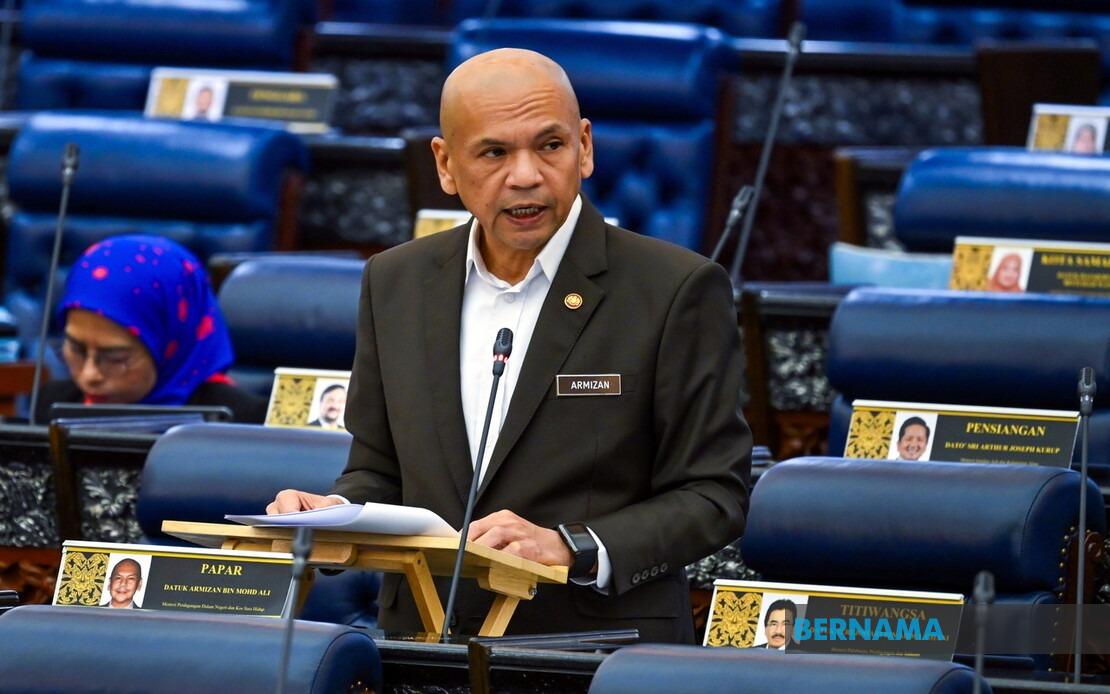
Parliament has endorsed significant reforms to competition law enforcement with the passage of the Competition Commission (Amendment) Bill 2026, marking a critical step in fortifying the Malaysia Competition Commission's ability to police increasingly sophisticated market manipulation schemes. The legislation received cross-party support through a voice vote after deliberation by a dozen legislators spanning both the ruling coalition and opposition benches, underscoring broad recognition of the need for stronger antitrust mechanisms in an era of complex corporate behaviour.
Domestic Trade and Cost of Living Minister Datuk Armizan Mohd Ali characterised the sweeping package of 34 amendments as essential scaffolding for maintaining market integrity as illegal cartel networks grow more intricate. The existing Competition Act already criminalises classical cartel conduct—including price coordination, territorial division, output restrictions, and tender manipulation—alongside sanctions for monopolistic abuses. Yet the minister acknowledged that MyCC has struggled to gather necessary information from both public agencies and private entities, a constraint that hampered the regulator's capacity to conduct thorough market investigations.
Among the bill's centrepiece provisions, MyCC's authority to demand information disclosure now explicitly encompasses market review operations. This expansion addresses a practical gap: the regulator can now compel disclosure from government bodies, state-owned enterprises, and private firms when conducting sector-wide examinations designed to identify systemic competitive distortions. The measure reflects evolving international best practice, where market inquiries serve as intelligence-gathering tools that precede formal enforcement action, enabling authorities to diagnose structural problems before they crystallise into specific violations.
Recognising MyCC's expanding organisational complexity, the bill introduces new delegation provisions under Section 17A, formalising the transfer of specified powers and responsibilities throughout the agency's hierarchy. Without explicit statutory authority for such delegation, MyCC faced potential legal vulnerability when senior officials tasked subordinates with investigative or administrative duties. The amendment resolves this constitutional ambiguity, permitting the commission to distribute workload efficiently across its growing workforce without compromising institutional coherence or individual accountability.
Yet parliamentary debate exposed genuine apprehension surrounding one of the bill's most consequential features: MyCC's enlarged discretion to impose financial penalties directly without necessarily obtaining court approval. Backbenchers across factional lines voiced anxiety that unchecked penalty authority could morph into regulatory overreach targeting smaller, less sophisticated market participants unfamiliar with competition rules. Chong Zhemin from the Pakatan Harapan opposition, while endorsing the penalty extension in principle, stressed the imperative for transparent, uniform guidelines capable of distinguishing between deliberate cartel conspiracies orchestrated by multinational corporations and inadvertent breaches by micro-enterprises operating on razor-thin margins.
Chong's diagnostic insight cuts to the heart of enforcement philosophy. If penalties function merely as a manageable business expense for large firms, profit maximisation incentives will overwhelm deterrence. A cartel extracting windfall profits substantially exceeding any fine faces weak incentives to cease collusion. Conversely, a small trader penalised for conduct reflecting ignorance rather than intent suffers disproportionate burden. Calibrating penalties to the culprit's sophistication and culpability therefore emerges as both a fairness imperative and an efficiency requirement—rigorous sanctions for knowing violations, proportionate corrections for technical breaches.
Regional inequality in competition law administration prompted several legislators to flag an underdeveloped dimension of reform. Isnaraissah Munirah Majilis @ Fakharudy from Warisan, representing the East Malaysian constituency of Kota Belud, advocated establishing a dedicated MyCC presence in Sabah to accelerate investigation and remediation of anticompetitive conduct plaguing Borneo's markets. Her concern gained traction among colleagues from both Sabah and other eastern regions. Currently, Kuala Lumpur-based MyCC operations respond to Borneo complaints through remote coordination, introducing delays incompatible with rapidly evolving market episodes. A Sabah branch would shorten response cycles, improve intelligence gathering from local suppliers and merchants, and demonstrate federal commitment to competitive fairness across all Malaysian territories.
The parliamentary endorsement reflects heightened economic anxiety over cartel behaviour's corrosive effects on consumer welfare and small-business viability. As Malaysia integrates deeper into regional and global supply chains, sophisticated international cartel networks have begun targeting Southeast Asian markets through price coordination spanning multiple jurisdictions. Domestically, collusion among construction material suppliers, pharmaceutical distributors, and quick-service restaurant franchisees has inflicted measurable harm on downstream enterprises and household budgets. MyCC's previous resource constraints impeded systematic investigation into such schemes, allowing violations to persist longer than competitive markets would tolerate.
The amendments also signal acknowledgment that competition law operates within a broader governance ecosystem. Interaction with regulatory agencies—telecommunications, aviation, utilities—requires legal clarity regarding information-sharing and investigative jurisdiction. The bill's expanded information-demand authority extends explicitly to government entities, resolving prior ambiguity about MyCC's reach into state apparatus decision-making. This proves particularly significant for sectors where government procurement, licensing, or subsidy decisions intersect with competitive dynamics, enabling MyCC to investigate whether public policy inadvertently buttresses anticompetitive incumbents.
Looking ahead, successful implementation depends critically on three factors. First, MyCC must promulgate detailed penalty guidelines translating legislative intent into operational procedure, ensuring consistency and predictability while maintaining deterrent potency. Second, adequate budget allocation and staff recruitment remain imperative; expanded authority without commensurate resources creates the appearance rather than reality of enhanced enforcement. Third, regulatory coordination with regional counterparts—ASEAN neighbours, trading partners—must intensify, as cartels routinely operate across borders and require information exchange to uncover.
The bill's passage positions Malaysia to evolve toward more sophisticated, proactive competition administration. Rather than waiting for consumer complaints or market participants to alert authorities, MyCC can initiate market reviews and compel comprehensive disclosure, enabling early cartel detection. For Malaysian consumers, particularly those in smaller towns and rural districts served by limited competitors, this enforcement architecture upgrade offers tangible promise: markets increasingly scrutinised by a powerful regulator tend toward fairer pricing and genuine competitive contestation.

