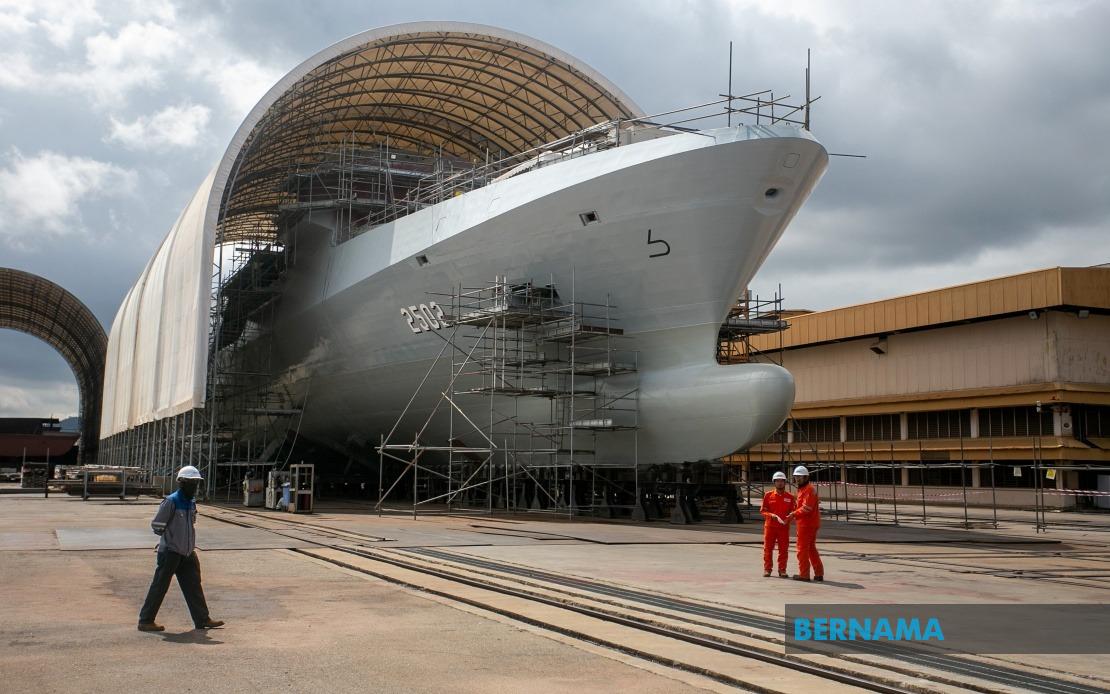
The Malaysian Defence Ministry has moved to dispel mounting parliamentary scrutiny over the controversial RM571.9 million payment for Naval Strike Missile systems destined for the country's Littoral Combat Ships, asserting in written parliamentary replies that the transaction followed contractual milestones rather than representing an unauthorised early disbursement.
At the centre of the controversy is the Norwegian government's subsequent revocation of the export licence for the anti-ship weapon systems, a decision that has left Malaysia's naval modernisation efforts in limbo and prompted lawmakers to question whether taxpayers' money was imprudently released. The Defence Ministry's rebuttal, issued through Parliament's written question portal, attempts to reframe the narrative by emphasising that every Norwegian-supplied NSM system had completed manufacturing and successfully cleared rigorous testing protocols administered by the Royal Malaysian Navy before funds were transferred.
This distinction carries significant weight in defence procurement contexts, where the difference between performance-based payments and advance payments fundamentally shapes how risk is distributed between a buyer nation and its suppliers. The ministry's position effectively argues that Malaysia held physical custody and operational verification of the weaponry prior to settling accounts, thereby meeting standard contractual safeguards. Officials stressed that the payment mechanism aligned precisely with terms negotiated during contract finalisation, suggesting no departure from agreed protocols occurred on the Malaysian side.
The parliamentary questions, fielded by opposition MP Hassan Abdul Karim representing Pasir Gudang and government-aligned legislator Mohd Kurniawan Naim Moktar from Kinabatangan, had specifically raised two interconnected concerns: whether Malaysia had paid prematurely before receiving goods, and whether the procurement agreement itself lacked adequate protective clauses should the Norwegian supplier default or—as occurred—an export licence be revoked. The ministry's response addresses both points directly, maintaining that contractual provisions explicitly enable Malaysia to pursue recovery actions and claim damages in scenarios involving non-performance or material breach.
The Norwegian export licence revocation represents an extraordinary circumstance that neither Malaysia nor the supplying company could have anticipated or prevented through normal contractual vigilance. Defence Ministry representatives characterised this geopolitical development as fundamentally beyond the control of both contracting parties, though this characterisation has not fully satisfied parliamentary critics who argue that international defence procurement demands heightened due diligence regarding supplier nations' political stability and regulatory consistency.
Crucially, the ministry has confirmed that Malaysia is actively invoking the available contractual mechanisms to recover the RM571.9 million payment and pursue associated damages claims against the Norwegian supplier. This aggressive legal posture suggests MINDEF views the agreement as containing sufficient remedial language to mount a credible recovery action, though the practical likelihood of success remains uncertain given the export licence restriction's governmental nature in Norway's jurisdiction.
Operationally, the Defence Ministry has sought to minimise alarm about the NSM system's unavailability, noting that the Royal Malaysian Navy retains existing maritime weapons platforms and defence systems capable of executing territorial protection missions. This reassurance appears designed to prevent perceptions that Malaysia's naval deterrence capability has been meaningfully degraded, a concern that naturally arises when billion-ringgit modernisation initiatives encounter obstacles. The ministry's statement that current armed forces readiness remains unaffected represents a deliberate attempt to separate the NSM setback from broader defence posture discussions.
Looking ahead, the Royal Malaysian Navy has initiated evaluation processes examining alternative missile systems that could functionally replace the NSM within the LCS architecture. This contingency planning acknowledges that the Norwegian export restriction may prove permanent, necessitating either redesignated procurement from alternative suppliers or acceptance of reduced capability specifications. Such substitutions typically require additional time and funding to accommodate integration, testing, and crew familiarisation protocols.
The Defence Ministry also issued categorical denials regarding suggestions that the original NSM procurement contract failed to incorporate standard protective clauses common in international defence agreements. Officials emphasised that the contract explicitly contemplated scenarios involving supplier non-performance and contractual breaches, with remedial procedures already built into the arrangement. Whether these clauses prove sufficiently robust to recover payments made under a foreign government's export prohibition remains legally ambiguous, however.
For Malaysian defence procurement generally, the NSM episode underscores persistent tensions between operational modernisation imperatives and the geopolitical complexities surrounding weapons acquisitions from overseas suppliers. Norway's export licence revocation, whether driven by arms control principles, diplomatic considerations, or internal political calculations, illustrates how nations' defence strategies remain vulnerable to external regulatory changes beyond contractual scope. Malaysian policymakers will likely scrutinise future arrangements with allied nations more rigorously, potentially incorporating currency hedging mechanisms, alternative supplier agreements, or extended delivery windows that permit regulatory adjustments.
The unfolding recovery action may extend across multiple legal jurisdictions, as Malaysia confronts questions about enforcing contract remedies against both the Norwegian firm and potentially requesting official Norwegian government recourse through diplomatic channels. The outcome will substantially influence how Malaysian defence establishments approach future major weapons acquisitions, potentially demanding stricter vetting of supplier nations' regulatory frameworks and greater contractual flexibility regarding component sourcing from alternative allied manufacturers.

