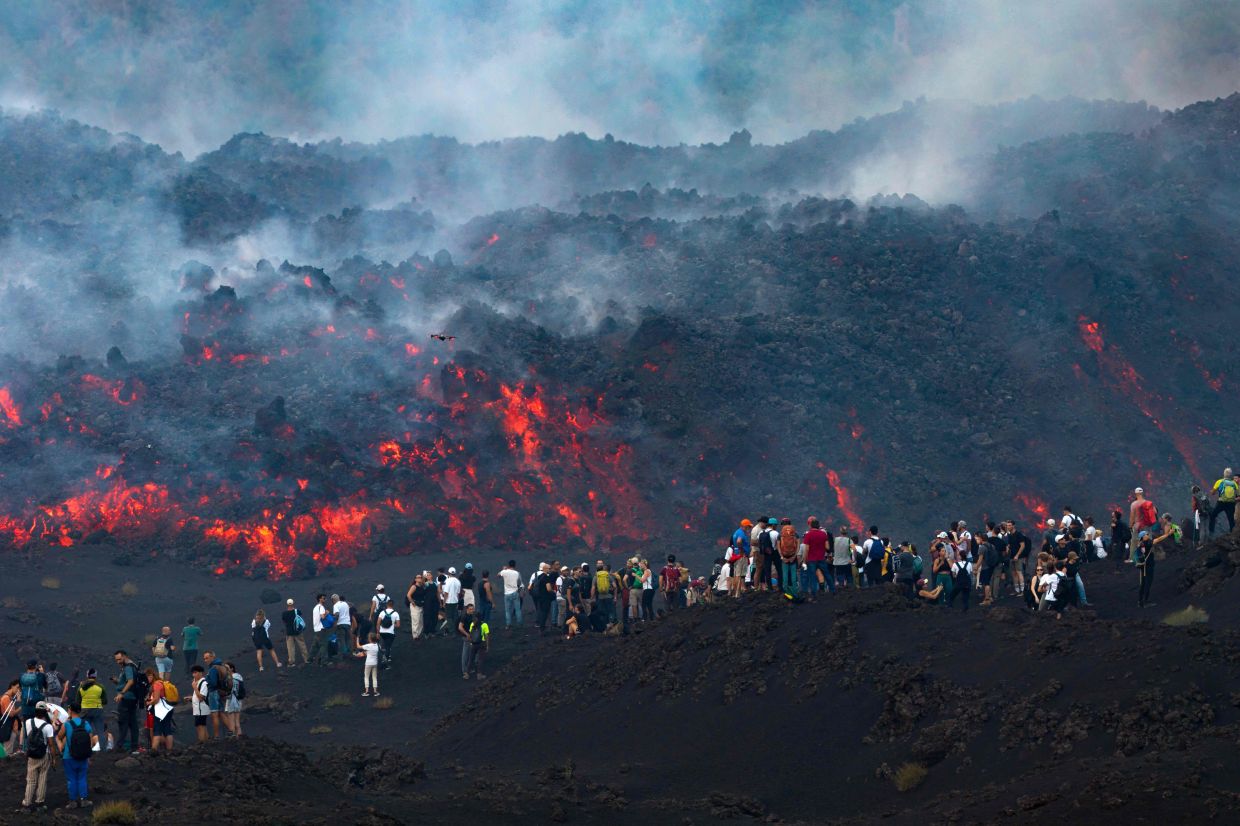
The ongoing eruption of Mount Etna, Europe's highest active volcano, has transformed the Sicilian landmark into an unexpected tourism hotspot, drawing unprecedented crowds eager to witness the raw power of nature. Dramatic images of molten lava cascading down the mountainside have captured global attention, prompting thousands of visitors to descend on the region in hopes of experiencing the geological spectacle firsthand. What began as a routine volcanic event has spiralled into what local operators are characterizing as a "touristic eruption," raising complex questions about how to balance public access with public safety in one of Europe's most volatile geological zones.
The surge in visitor numbers has strained the capacity of local guide services operating in the region. Companies offering evening expeditions up the volcano, which typically field dozens of participants nightly during peak summer months, suddenly find themselves contending with approximately 300 booking requests daily—a threefold increase from normal seasonal demand. Daniele Perricelli, a seasoned local guide operating under the Guide Etna banner, attributes this phenomenon to the universal human fascination with active volcanic processes. "They all want to come and see the lava flow, everyone is drawn to this unique beauty," Perricelli observed, noting that the distinctive appeal lies in the opportunity to observe an awe-inspiring natural phenomenon while maintaining a degree of physical proximity that many find irresistible.
The relative accessibility of Mount Etna's eruption compared to other active volcanoes worldwide has contributed significantly to its magnetic pull on international travellers. Unlike more remote or restricted volcanic sites, Etna permits visitors to approach the volcanic flow in lower-altitude zones where the lava has already begun cooling, allowing for observations from distances of just a few metres. This combination of dramatic visual spectacle and manageable risk has resonated with adventure-seeking tourists. Ernesto Maria Magri, another established guide in the area, characterizes the current phenomenon as appealing to diverse demographic groups precisely because the volcano can be experienced with relative safety, fundamentally distinguishing it from more hazardous active sites elsewhere globally.
Yet this very accessibility has created an unintended consequence: a proliferation of unguided climbers attempting to navigate the volcano independently. The current regulatory framework permits unaccompanied ascents up to approximately 2,400 metres altitude, beyond which professional guides become mandatory. This threshold has inadvertently created a permission structure that encourages self-guided expeditions among visitors lacking specialized knowledge about volcanic hazards. Local guides express considerable alarm regarding this trend, noting that the mountain's inherent instability demands expertise in reading environmental signs and anticipating geological changes that casual climbers cannot possess. Perricelli has documented particularly troubling instances of inadequately prepared visitors attempting the climb, including individuals wearing flip-flops—casual footwear entirely unsuitable for treacherous volcanic terrain with sharp, unstable surfaces.
The safety implications of the current visitor surge extend beyond individual climber vulnerability. With estimates suggesting up to 2,000 people ascending the volcano each evening, the established footpaths have become dangerously congested. Such overcrowding compounds the inherent risks associated with volcanic environments, creating scenarios where crowd dynamics could amplify individual hazards. The concentration of visitors on narrow, uneven pathways reduces everyone's ability to navigate safely or respond effectively to sudden volcanic activity. Local guides have called upon Italian authorities to implement more rigorous oversight and enforcement mechanisms to manage the volume and preparedness of climbers.
The eruption's impact extends well beyond the slopes of the volcano itself, affecting regional infrastructure and international travel patterns. Catania International Airport, situated near the volcano's eastern flank and serving as the primary aviation gateway for Sicily's eastern region, has experienced repeated disruptions. Ash emissions from ongoing volcanic activity have forced flight suspensions on multiple occasions since Saturday, with Italian media reporting that several hundred flights have faced cancellation. This widespread disruption illustrates how volcanic events reverberate through modern transportation networks, affecting not only tourists seeking Etna experiences but also business travellers and residents conducting routine travel.
Catania International Airport represents a critical transportation hub for one of Italy's premier holiday destinations, processing approximately 12 million passengers annually. The sustained volcanic activity and resulting flight cancellations create knock-on effects throughout the regional tourism industry, potentially offsetting gains from increased volcano-related visitation with losses from broader travel disruptions. Airlines face operational complexities in rerouting passengers and aircraft, while travellers experience unexpected delays and itinerary modifications. The airport's vulnerability to volcanic ash underscores the challenges infrastructure managers face in regions of active geological instability.
Italian civil protection authorities have maintained a yellow alert status for Etna, representing the second-highest level on a four-tiered warning scale that progresses from green through yellow and orange to red. This alert level indicates that frequent eruptions and potential explosive events characterize the current volcanic phase, justifying heightened awareness and precautionary measures. The designation reflects scientific assessment of ongoing hazard levels and guides policy responses regarding visitor restrictions and public communications.
High-profile incidents have further highlighted safety concerns associated with the current tourist influx. Television personality Diletta Leotta faced social media criticism following photographs apparently taken in dangerously close proximity to actively glowing lava flows, raising awareness about the distinction between permissible proximity in cooled zones and genuinely hazardous approaches to active molten material. Such incidents, particularly when involving public figures whose actions receive amplified attention, risk normalizing risky behaviour among less experienced visitors and potentially encouraging others to attempt increasingly dangerous feats for social media documentation.
The current situation encapsulates broader tensions within contemporary tourism management, particularly regarding natural hazard zones. The democratization of travel information and real-time social media dissemination of spectacular imagery creates spontaneous demand surges that traditional tourism infrastructure and safety frameworks struggle to accommodate. Local guides and authorities face the challenging task of preserving public access to extraordinary natural phenomena while implementing necessary safeguards. The Mount Etna scenario will likely inform how other volcanic destinations worldwide approach the balance between tourism accessibility and visitor safety as similar eruptions trigger future waves of spontaneous visitation.

