Over 4,300 entrepreneurs in Melaka have tapped into nearly RM100 million in financing approved by the Ministry of Entrepreneur Development and Cooperatives (KUSKOP) as of May 31, signalling sustained government support for the state's micro, small and medium-sized enterprise sector. The approval underscores a deliberate policy push to ensure capital accessibility remains a cornerstone of Malaysia's entrepreneurship strategy, particularly in key states driving economic activity.
Minister Steven Sim framed the financing initiative as more than a transactional exercise, emphasizing how capital injections create multiplier effects throughout the broader economy. When entrepreneurs secure financing to expand operations, the resulting growth generates employment, strengthens supply chains, and injects purchasing power into local communities. This ecosystem perspective reflects a growing recognition that MSME development cannot be viewed in isolation but rather as interconnected with consumer spending, supplier networks, and regional prosperity. The minister's emphasis on the circular flow of capital highlights how government-backed financing fundamentally differs from conventional commercial lending in its capacity to stimulate entire local economies.
The timing of Sim's visit to Melaka, occurring during the three-day Hebatkan Perniagaan Malaysia Carnival from June 19 to 21, provided an opportunity to showcase these initiatives directly to business communities. The carnival format allowed the ministry to engage entrepreneurs in informal settings, understand ground-level challenges, and demonstrate tangible support through on-the-spot financing approvals. This engagement approach signals a shift towards more accessible and responsive government support mechanisms rather than purely bureaucratic channels.
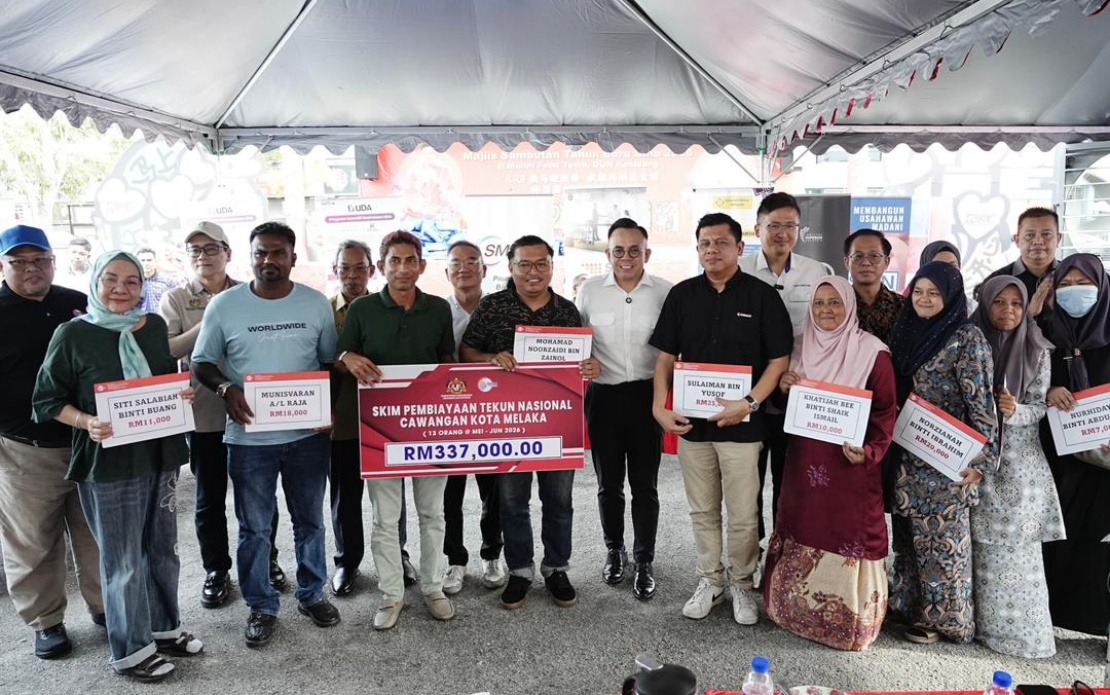
During the working visit, Sim distributed nearly RM1 million in financing to 18 entrepreneurs through TEKUN Nasional and SME Corp Malaysia at Malim Food Town. The recipients operated across diverse sectors including food and beverages, wholesale, professional services, construction contracting, retail, e-commerce, automotive services, and other sectors. This sectoral diversity is significant because it demonstrates that government financing programmes are reaching across the economy rather than concentrating in narrow segments, suggesting a holistic approach to MSME development that recognizes the importance of multiple economic pillars.
Melaka's experience reflects a national trend of accelerating MSME financing. Nationwide, KUSKOP approved RM5 billion in financing during the first five months of 2024, benefiting nearly 180,000 entrepreneurs across the country. These figures suggest a substantial acceleration in capital deployment compared to historical norms, indicating either increased application rates or expanded government allocations—or both. For Malaysian readers accustomed to witnessing MSME challenges firsthand, these numbers represent concrete action translating policy rhetoric into actual capital availability.
The ministry's broader initiative, PowerUp10K, establishes an even more ambitious trajectory by targeting RM15 billion in financing channeled to MSMEs nationwide during 2024. Achieving this target would require sustained administrative capacity, continued funding allocations, and mechanisms to identify qualifying entrepreneurs efficiently. If realized, this represents a significant escalation in government support for the enterprise sector and positions Malaysia competitively within Southeast Asia's MSME financing landscape.
Sim's comments on Malaysia's multicultural fabric and economic competitiveness introduce another dimension relevant to regional observers. The minister argued that Malaysia's linguistic, cultural, and ethnic diversity constitutes a tangible economic advantage in attracting foreign investment and enabling local enterprises to penetrate regional markets. This framing diverges from conventional perspectives that sometimes frame diversity as a governance challenge, instead positioning it as a unique market advantage. For Malaysian businesses seeking to expand beyond domestic borders, this narrative reinforces the notion that their inherent multicultural networks and language capabilities provide competitive advantages unavailable to counterparts in less diverse economies.
The distinction between Melaka's RM100 million in approvals and the national RM5 billion figure warrants consideration. Melaka, with a population of approximately 1.9 million, represents roughly 6 percent of Malaysia's total population. Yet the state's share of RM100 million represents approximately 2 percent of the national RM5 billion approved during the same period. This disparity could reflect either Melaka's having received enhanced support relative to other states or variations in application rates and eligibility criteria across regions. Understanding such geographical distribution patterns matters for investors and entrepreneurs evaluating regional opportunities within Malaysia.
The involvement of multiple agencies—TEKUN Nasional and SME Corp Malaysia—in administering these financing programmes indicates a multi-institutional approach to capital deployment. Different agencies may offer distinct advantages in terms of product design, sector expertise, and delivery mechanisms. TEKUN Nasional traditionally focuses on bumiputera entrepreneurship, while SME Corp Malaysia serves broader MSME constituencies. This institutional plurality potentially increases accessibility but also requires careful coordination to minimize duplication and ensure consistent standards.
For businesses in Malaysia's surrounding regions, Melaka's financing momentum carries implications for regional competitiveness. As capital becomes increasingly available to Malaysian entrepreneurs, neighbouring economies in Southeast Asia may experience competitive pressures in attracting foreign investment or retaining talent. Conversely, Malaysian enterprises with adequate capitalization may drive increased cross-border trade and investment within the region, particularly through established trade corridors linking Malaysia to Thailand, Singapore, and Brunei.
Looking forward, the sustainability of these financing programmes depends on multiple factors including continued government budgetary allocations, repayment rates from existing beneficiaries, economic growth rates that sustain business viability, and administrative capacity to process and monitor loan portfolios. Any significant deterioration in underlying economic conditions or loan quality could constrain future financing availability and undermine the ambitious PowerUp10K targets. Equally important is ensuring that financing reaches genuinely viable enterprises rather than concentrating among politically connected applicants or established businesses with existing access to conventional credit.
The Melaka initiative ultimately reflects a broader Malaysian policy orientation towards proactive state engagement in capital allocation. Rather than relying exclusively on market mechanisms, the government has positioned itself as a direct financier of entrepreneurship. For entrepreneurs evaluating Malaysia's business environment, this represents both opportunity—access to government-backed capital at potentially favourable terms—and a reminder that Malaysia's economic structure remains substantially shaped by state institutions and policy decisions. The continued expansion of financing programmes like PowerUp10K will likely influence Malaysia's competitive position within Southeast Asia's entrepreneurship ecosystem throughout 2024 and beyond.

%22%2F%3E%3C%2Fpattern%3E%3C%2Fdefs%3E%3Crect%20width%3D%22100%25%22%20height%3D%22100%25%22%20fill%3D%22url(%23ph3uvpcg)%22%2F%3E%3Crect%20width%3D%22100%25%22%20height%3D%22100%25%22%20fill%3D%22url(%23ph3uvpcp)%22%2F%3E%3Ctext%20x%3D%2250%25%22%20y%3D%2250%25%22%20text-anchor%3D%22middle%22%20dominant-baseline%3D%22central%22%20fill%3D%22rgba(255%2C255%2C255%2C0.95)%22%20font-family%3D%22Georgia%2C%20'Times%20New%20Roman'%2C%20serif%22%20font-weight%3D%22700%22%20font-size%3D%22136%22%20letter-spacing%3D%22-0.02em%22%3EParliament%3C%2Ftext%3E%3C%2Fsvg%3E)