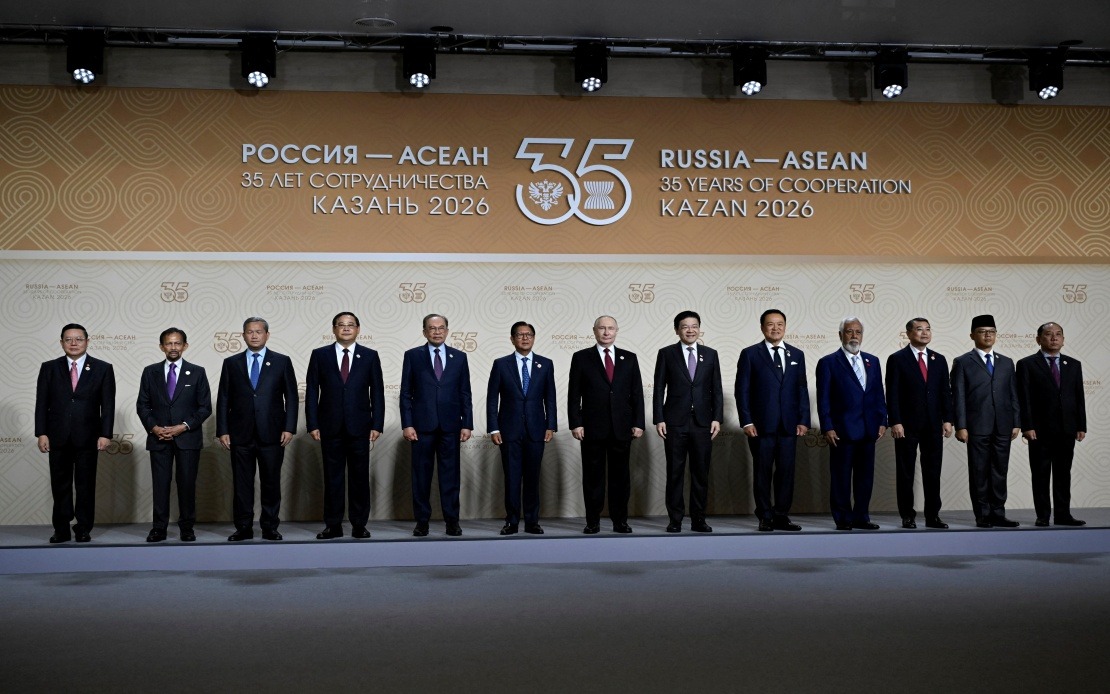
Following his attendance at the ASEAN-Russia Commemorative Summit in Kazan, Philippine President Ferdinand R. Marcos Jr has articulated a vision for substantially deepening ties between the regional bloc and Moscow by venturing into new technological and energy domains. In remarks to Russian media, Marcos acknowledged that while relations between ASEAN and Russia have evolved steadily over the past three decades, the partnership remains far from maturity, with considerable opportunity for expansion into sectors that did not exist during earlier periods of engagement.
Marcos characterised the trajectory of ASEAN-Russia cooperation as solid but unremarkable in its pace of expansion. He noted important variations within the regional organisation, observing that certain member states have cultivated stronger bilateral relationships with Moscow than others, reflecting divergent national interests and strategic outlooks. This differentiation reflects the fundamental reality that ASEAN decision-making proceeds by consensus, often constraining the bloc's capacity to pursue unified approaches toward external partners.
The Philippine leader identified several frontier areas ripe for collaborative development that represent genuine departures from conventional economic engagement. Advanced technology adoption, artificial intelligence applications, data centre infrastructure, and renewable energy generation emerged as his priority sectors. These domains, Marcos reasoned, scarcely featured in historical ASEAN-Russia relations because the technological landscape itself has been fundamentally transformed in recent years. The emergence of these new possibilities creates fresh grounds for meaningful partnership that neither side fully exploited previously.
Marcos recognised Russia's expanding competence and involvement across these emerging technology and energy sectors, positioning Moscow as a credible and potentially valuable partner for ASEAN nations seeking to modernise infrastructure and build digital capabilities. This framing represents a diplomatic gesture acknowledging Russian expertise whilst simultaneously pitching collaboration as mutually beneficial rather than extractive. For Southeast Asian nations grappling with rapid digitalisation, energy transition demands, and infrastructure development, such partnerships warrant serious consideration despite geopolitical complexities.
The president emphasised that the current historical moment differs fundamentally from preceding eras of ASEAN external relations. He described the regional bloc as entering a period of accelerated maturation characterised by deliberate portfolio diversification across multiple international partners and engagement modalities. This evolution reflects not merely opportunistic fence-sitting but rather a pragmatic acknowledgement that Southeast Asian development requirements are too expansive and varied to be addressed through traditional alignments alone. The bipolar world order that once constrained strategic choices has given way to a more multipolar landscape requiring sophisticated relationship management.
Marcos depicted the contemporary phase of ASEAN engagement as a "new day" marked by flexibility in selecting collaborators and expanding the substantive agenda beyond conventional trade and security frameworks. Rather than viewing partnerships through zero-sum lenses, the Philippines leader presented a vision of ASEAN as an organised collective steadily acquiring greater agency in determining its own development trajectory. This positioning carries particular resonance for Malaysia and other mid-sized ASEAN economies seeking to leverage their geographic location and economic weight for maximum advantage.
The Kazan summit itself represented a symbolic and substantive milestone, commemorating over 35 years of formal dialogue relations between ASEAN and Russia. The gathering produced several outcome documents intended to structure engagement through the coming years. The Kazan Declaration 2026 establishes overarching principles for the partnership, whilst the ASEAN-Russia Comprehensive Plan of Action for 2026–2030 creates specific operational frameworks for cooperation. Supplementary joint documents focused on cultural exchanges and energy collaboration indicate that cooperation will extend across multiple dimensions rather than concentrating narrowly on economic or security matters.
For Malaysian observers, this diplomatic initiative carries several implications. Malaysia maintains its own substantial engagement with Russia across energy, trade, and cultural domains, making deeper ASEAN-wide cooperation potentially advantageous for accessing coordinated engagement opportunities. The emphasis on technology and AI cooperation reflects global trends that Malaysia is actively pursuing through its own digital economy and Industry 4.0 initiatives. Furthermore, ASEAN-Russia cooperation on energy matters aligns with regional interests in diversifying energy suppliers and technologies as nations transition toward sustainability objectives.
The framing of ASEAN as an increasingly mature bloc capable of managing complex partnerships simultaneously demonstrates confidence in regional institutional capacity. Southeast Asian nations have long navigated great power competition by developing sophisticated diplomatic practices that allow concurrent engagement across multiple external partners without forcing binary choices. This approach has enabled the region to punch above its weight in international affairs whilst maintaining strategic autonomy. Marcos's comments suggest this tradition of pragmatic non-alignment remains operative despite contemporary geopolitical pressures.
The articulation of untapped partnership potential, particularly in emerging sectors, reflects a broader recognition that technological and energy transitions create novel opportunities for countries willing to collaborate across traditional fault lines. Russia possesses genuine capabilities in advanced technology and nuclear energy that Southeast Asian nations require, independent of political considerations. ASEAN's attraction as a partner lies in its substantial population, economic dynamism, and strategic location along critical sea lanes and within the broader Indo-Pacific region.
Implementation of the comprehensive action plan will likely proceed unevenly across ASEAN member states, reflecting varying domestic priorities and international orientations. However, the summit's outcomes establish a permissive framework within which bilaterally-inclined nations can deepen engagement whilst others maintain more measured relationships. This flexibility suits ASEAN's operational style and acknowledges the heterogeneous interests within the bloc. Whether these frameworks translate into substantive collaboration in artificial intelligence infrastructure, data centres, and power generation will depend on careful project development and clear articulation of mutual benefits for participating nations.
%22%2F%3E%3C%2Fpattern%3E%3C%2Fdefs%3E%3Crect%20width%3D%22100%25%22%20height%3D%22100%25%22%20fill%3D%22url(%23ph49f10g)%22%2F%3E%3Crect%20width%3D%22100%25%22%20height%3D%22100%25%22%20fill%3D%22url(%23ph49f10p)%22%2F%3E%3Ctext%20x%3D%2250%25%22%20y%3D%2250%25%22%20text-anchor%3D%22middle%22%20dominant-baseline%3D%22central%22%20fill%3D%22rgba(255%2C255%2C255%2C0.95)%22%20font-family%3D%22Georgia%2C%20'Times%20New%20Roman'%2C%20serif%22%20font-weight%3D%22700%22%20font-size%3D%22226%22%20letter-spacing%3D%22-0.02em%22%3EExists%3C%2Ftext%3E%3C%2Fsvg%3E)
%22%2F%3E%3C%2Fpattern%3E%3C%2Fdefs%3E%3Crect%20width%3D%22100%25%22%20height%3D%22100%25%22%20fill%3D%22url(%23ph4a4w5g)%22%2F%3E%3Crect%20width%3D%22100%25%22%20height%3D%22100%25%22%20fill%3D%22url(%23ph4a4w5p)%22%2F%3E%3Ctext%20x%3D%2250%25%22%20y%3D%2250%25%22%20text-anchor%3D%22middle%22%20dominant-baseline%3D%22central%22%20fill%3D%22rgba(255%2C255%2C255%2C0.95)%22%20font-family%3D%22Georgia%2C%20'Times%20New%20Roman'%2C%20serif%22%20font-weight%3D%22700%22%20font-size%3D%22272%22%20letter-spacing%3D%22-0.02em%22%3ETrump%3C%2Ftext%3E%3C%2Fsvg%3E)