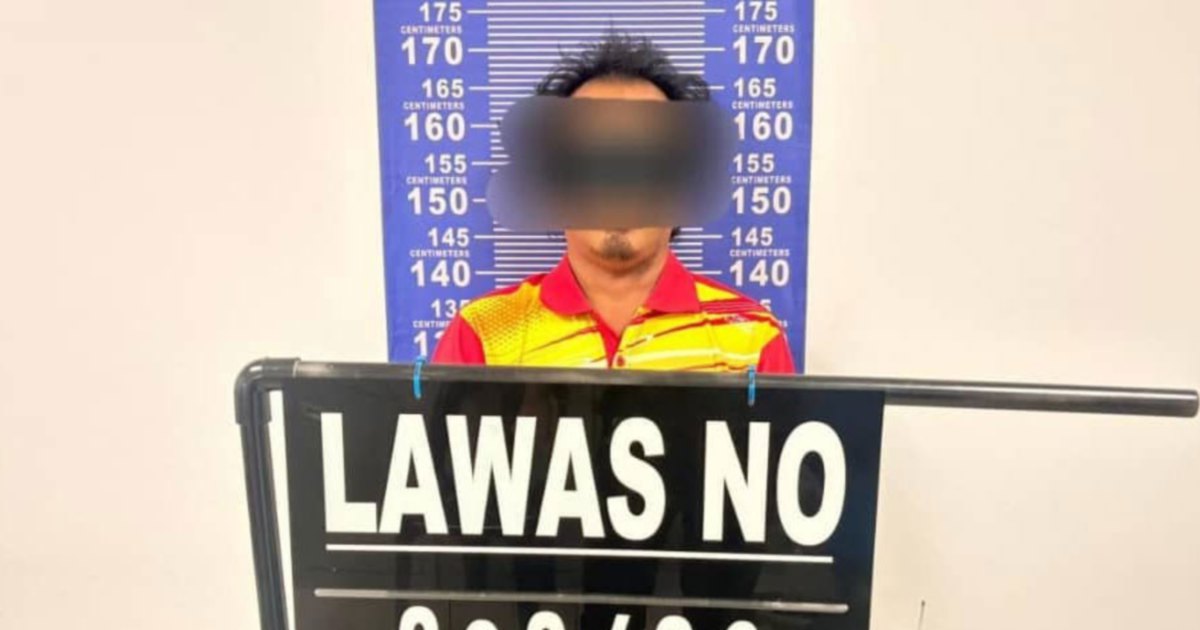
A 38-year-old man accused of carrying out a serious parang attack in Lawas was apprehended at a Kota Kinabalu hotel in the early hours of Friday, ending a manhunt that had stretched across two of Sabah's largest towns. The arrest marked a swift resolution to what authorities had treated as a priority case following the wounding incident in the smaller district.
The suspect had evaded authorities by fleeing northward from Lawas to Kota Kinabalu, where he apparently believed the distance and anonymity of a hotel would shield him from detection. His attempt to hide proved unsuccessful, however, as law enforcement officers tracked him down and took him into custody at the accommodation where he had sought refuge. The early Friday operation suggests that police had gathered sufficient information to pinpoint his location with confidence.
The Lawas incident that sparked the investigation involved a man sustaining significant injuries from a parang, the traditional Southeast Asian blade that remains disturbingly common in assault cases across Sabah. Parang attacks in the region often result in serious trauma due to the weapon's size and cutting power, making such incidents a genuine concern for local safety authorities. The severity of this particular victim's injuries evidently prompted police to prioritise the investigation and deploy resources across district boundaries.
Sabah's geography presents distinct policing challenges, particularly when suspects attempt to flee between towns. Lawas, located in the southwestern corner of the state, is considerably removed from Kota Kinabalu, the state capital and largest urban centre. The fact that the suspect made this journey suggests either desperation to distance himself from the crime scene or knowledge of potential shelter in the larger city. Such movements between districts are not uncommon in cases where perpetrators attempt to exploit the logistical challenges facing law enforcement.
The capture demonstrates the effectiveness of inter-district coordination among Sabah's police forces. Modern investigative techniques, including surveillance data and witness information, likely proved instrumental in narrowing down the suspect's location to the specific hotel. The precise timing of the arrest in the early morning hours suggests a planned operation rather than a chance encounter, indicating that authorities had built a solid case for detention.
Hotel-based apprehensions in high-profile cases often involve cooperation with accommodation management and staff. Hotels typically maintain guest registries and security systems that can aid law enforcement investigations, making them logical places for fugitives to be traced. The suspect's choice to seek shelter in a hotel rather than remaining in Lawas or disappearing into rural areas may ultimately have hastened his capture, though anonymity in larger urban centres sometimes creates investigative difficulties.
The parang attack highlights an ongoing concern in Malaysian society regarding weapon-related violence. While firearms are strictly regulated, traditional blades such as parangs remain relatively accessible in agricultural and rural communities across Sabah and Sarawak, where they serve legitimate purposes. The dual-use nature of such tools means that distinguishing between legitimate possession and potential for misuse presents ongoing challenges for law enforcement and policymakers.
Lawas, as one of Sabah's smaller districts, would naturally have more limited police resources compared to Kota Kinabalu. Yet the ability to pursue the suspect across state territory and apprehend him relatively quickly suggests effective information-sharing between local police operations. Such coordination becomes increasingly important as crime investigations grow more complex and offenders become more mobile.
The arrest brings immediate closure to what could have remained an unsolved case, particularly had the suspect managed to leave Sabah entirely or move further into more remote areas. The swift resolution will likely reassure residents of both Lawas and surrounding communities that serious offences are pursued with determination, regardless of where perpetrators attempt to hide. For the victim and their family, the capture of the accused represents a significant milestone in seeking justice.
Details regarding charges and court proceedings would typically follow the arrest, with the suspect likely to be brought before magistrate courts in Sabah within the mandated timeframe. The evidence gathered—presumably including eyewitness testimony, medical records documenting the victim's injuries, and any forensic or circumstantial evidence—will form the basis of prosecution. The case will proceed through Malaysia's criminal justice system according to standard procedures.

