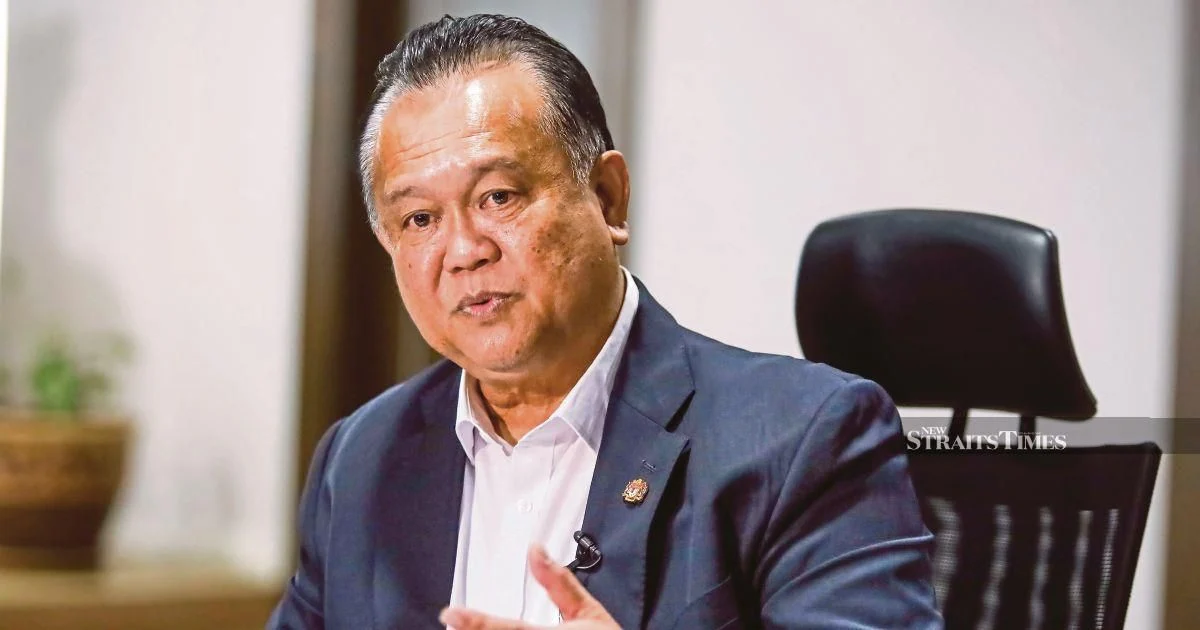
Malaysia's transport development strategy is entering a new phase that moves beyond the traditional focus on highway expansion, according to Works Minister Datuk Seri Alexander Nanta Linggi, who articulated a vision for more sophisticated, interconnected mobility systems. Speaking in Kuala Lumpur, the minister signaled that while road networks remain foundational to the country's infrastructure, the coming years will see a deliberate recalibration of how authorities design and fund transport projects.
The minister's remarks reflect growing recognition within government circles that the highway-centric model, which has dominated Malaysian transport planning for decades, must evolve. This shift aligns with emerging global trends where policymakers acknowledge that unlimited road expansion creates its own set of problems—congestion, urban sprawl, environmental degradation, and escalating maintenance costs. For Malaysia, where urban areas particularly Klang Valley and the Penang corridor experience chronic traffic congestion despite billions spent on expressways, the message suggests a willingness to fundamentally rethink infrastructure priorities.
According to Datuk Seri Alexander Nanta Linggi, future highways will be fewer in number, implying that planned expansion projects will face greater scrutiny and potentially cancellation. This represents a pragmatic acknowledgment that constructing additional road capacity often fails to solve congestion in the long term—a phenomenon known as induced demand, where new highways eventually fill with traffic, necessitating further expansion. Malaysian cities have experienced this cycle repeatedly over the past two decades, suggesting that the ministry recognizes the limitations of infrastructure-heavy approaches to solving mobility challenges.
The Works Minister's emphasis on intelligence and integration indicates that existing road networks will receive technological enhancements rather than pure capacity additions. Smart highway systems—incorporating real-time traffic management, dynamic pricing, adaptive signals, and vehicle-to-infrastructure communication—represent the frontier of road-based mobility. These technologies allow existing infrastructure to function more efficiently without the environmental and financial burdens of new construction. For Malaysian authorities managing tight budget constraints and competing infrastructure demands, this approach offers potential cost efficiencies while maintaining service quality.
Crucially, Datuk Seri Alexander Nanta Linggi highlighted the need for highways to become better integrated with public transport networks. This represents a philosophical departure from the traditional segregation between road and transit planning in Malaysia. Currently, most expressways operate independently from bus rapid transit, light rail, and commuter rail systems, with limited connectivity and passenger interchange facilities. Enhanced integration would enable commuters to seamlessly transition between private vehicles, highways, and mass transit, potentially reducing overall traffic volumes and vehicle dependency.
The implications for Malaysian urban centers are substantial. Cities like Kuala Lumpur, George Town, and Johor Bahru could see transport master plans prioritizing first-and-last-mile connectivity between highway exits and transit stations. Rapid bus corridors perpendicular to major expressways, for instance, could capture traffic at highway access points and feed passengers into rail networks. This multi-modal approach requires sophisticated coordination between federal, state, and local authorities—a governance challenge that has historically hindered Malaysian transport integration efforts.
For Southeast Asian regional context, Malaysia's strategic pivot reflects broader patterns reshaping transport investment across the region. Singapore has long pursued integrated planning; Bangkok and Jakarta increasingly recognize that car-dependent expansion perpetuates congestion; cities like Ho Chi Minh City face similar bottlenecks. Malaysia's recalibration positions it alongside peers questioning whether perpetual highway construction represents prudent long-term policy. The Works Ministry's position could influence thinking across ASEAN regarding sustainable urbanization and climate-conscious infrastructure.
The financial implications deserve scrutiny. Historically, Malaysian highway projects attract substantial funding from toll concessionaires, development bonds, and government budgets. A reorientation toward public transport and smart road technologies requires different financing mechanisms—potentially public-private partnerships focused on operational efficiency rather than capital expansion. This shift may create winners and losers within Malaysia's construction and concession sectors, with implications for contractor viability and toll operator profitability.
Environmental considerations underpin the minister's position, though not explicitly stated. Road expansion contributes significantly to greenhouse gas emissions, air pollution, and urban heat island effects. Reduced highway construction coupled with transit integration supports Malaysia's climate commitments and air quality objectives. For Malaysian citizens experiencing hazardous smog episodes during peak seasons, transport policies emphasizing alternatives to private vehicles represent tangible benefits.
The practical implementation of Datuk Seri Alexander Nanta Linggi's vision faces substantial obstacles. Malaysia's automotive industry, petroleum economy, and cultural preference for private vehicles create powerful constituencies favoring continued road expansion. Middle-class professionals, small business operators, and rural commuters dependent on personal vehicles may resist policies prioritizing transit. Successfully executing integrated, smart transport systems requires sustained political commitment transcending electoral cycles, a challenge evident in Malaysia's fragmented governance structure.
Looking forward, this statement likely presages revised transport master plans for major urban areas and potentially new legislation governing highway development approvals. Infrastructure budgets may increasingly favor rail transit, bus rapid transit, and intelligent transportation systems. The Works Ministry appears positioned to drive this transition, suggesting cabinet-level consensus on the strategic direction, though implementation timelines and specific project allocations remain unclear.
The minister's remarks represent important signaling to investors, planners, and urban advocates that Malaysia recognizes conventional highway expansion faces diminishing returns. Whether this position translates into substantial policy and budget reallocation will determine whether the nation successfully transitions toward genuinely integrated, sustainable mobility systems or merely moderates an otherwise unchanged trajectory toward car dependency.