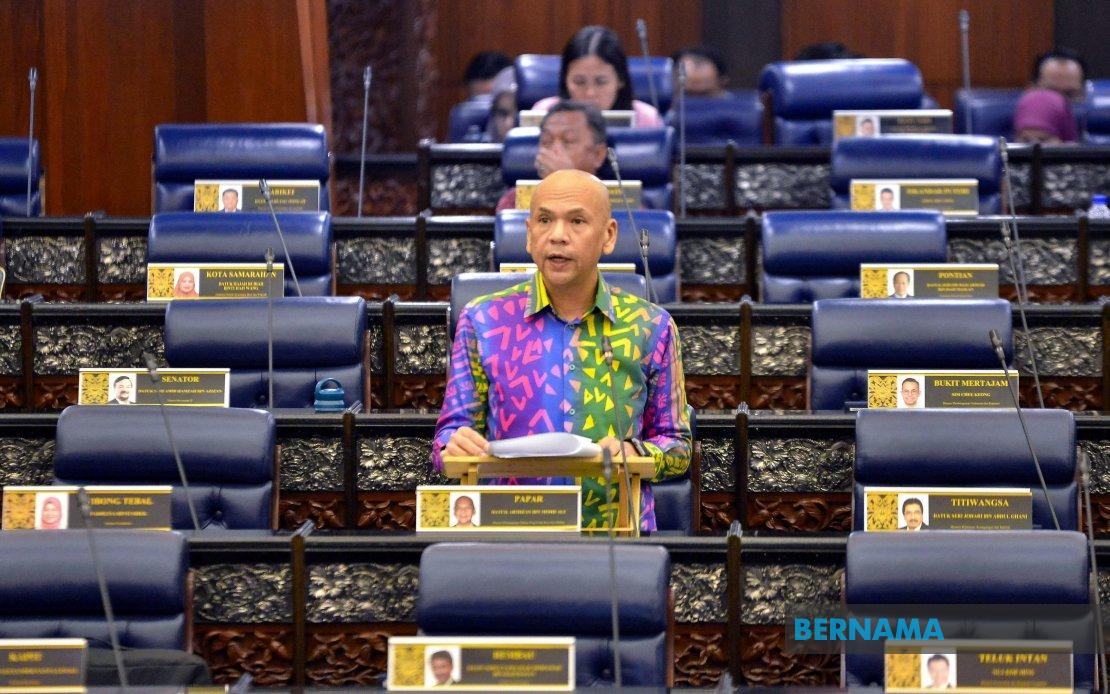
Malaysia's competition regulator is poised to receive a significant boost in its arsenal against anti-competitive conduct, with sweeping legislative amendments that will fundamentally reshape how the Malaysia Competition Commission detects and prosecutes cartel arrangements. The Competition (Amendment) Bill 2026, which has cleared its policy stage in Parliament, introduces a dual incentive framework designed to encourage corporate transparency and expedite resolution of competition violations, whilst simultaneously tightening the noose around illicit price-fixing and market-sharing schemes that distort the nation's economic landscape.
At the heart of the proposed reforms lies a financial incentive structure that recognizes the critical role informants play in dismantling hidden cartels. The Bill establishes Section 64B, conferring upon the MyCC explicit authority to offer monetary rewards to whistleblowers whose disclosures culminate in the identification and substantiation of cartel activity. This represents a watershed moment for competition enforcement in Malaysia, acknowledging that many cartels operate in deliberate secrecy, making their discovery dependent on insiders willing to breach the code of silence that shields illegal agreements. For the first time, Malaysia's competition framework will provide direct financial compensation to those who choose conscience over complicity, a measure that enforcement authorities worldwide have found dramatically accelerates the detection of underground cartels that would otherwise persist undetected.
Equally transformative is the introduction of the Settlement Offer mechanism under Section 38A, which fundamentally alters the incentive calculus for enterprises implicated in cartel behaviour. Companies that voluntarily acknowledge their liability during the early stages of investigation can now negotiate penalty reductions of up to 40 per cent—a substantial discount that transforms admission into a rational business decision rather than an act of desperation. This approach mirrors leniency programmes operating in advanced economies, where the prospect of meaningful penalty mitigation motivates rapid cooperation and confession. Domestic Trade and Cost of Living Minister Datuk Armizan Mohd Ali emphasized that this mechanism serves broader enforcement objectives beyond individual cases, as early settlements conserve MyCC's investigative resources, accelerate case resolution, and substantially reduce the likelihood of protracted litigation following final determination.
The regulatory architecture supporting these enforcement innovations required careful legislative engineering to resolve a longstanding jurisdictional gap that previously hampered cartel detection. The existing Whistleblower Protection Act 2010 operates within a criminal and disciplinary framework, offering safeguards calibrated for public sector misconduct and criminal wrongdoing. By contrast, competition law violations constitute civil contraventions, leaving whistleblowers who expose cartel arrangements operating in legal ambiguity regarding their entitlements to protection. The new Sections 64A and 64B remedy this lacuna by establishing a dedicated protective regime explicitly tailored to civil competition matters, ensuring that individuals who report cartel activity enjoy comprehensive shield against retaliation, defamation claims, and other adverse consequences that might otherwise deter disclosure.
Beyond these incentive structures, the amendments undertake a fundamental expansion of MyCC's investigative reach through redefinition of the term "enterprise." The current Competition Act narrowly circumscribes MyCC's jurisdiction to overtly commercial undertakings engaged in market transactions, creating enforcement blind spots where industry associations, professional bodies, and quasi-commercial entities coordinate anti-competitive arrangements without formal legal vulnerability. The expanded definition extends MyCC's authority across the full spectrum of economic activities, equipping the regulator to scrutinize industry associations that impose price floors, allocate customers, restrict output, or otherwise coordinate conduct that undermines competition. This extension proves particularly consequential in sectors where trade associations exercise outsized influence over member behaviour, such as professional services, construction, and manufacturing—domains where hidden coordination has historically flourished in the shadows of legitimate collective representation.
The timing of these amendments reflects accumulated enforcement experience demonstrating that cartel prosecutions overwhelmingly depend upon intelligence from participants or affected parties rather than proactive investigation, and that many companies prefer negotiated settlement to drawn-out proceedings. Competition authorities across Southeast Asia have similarly embraced such mechanisms, recognizing that cartelists operate behind closed doors and that legal incentives for disclosure constitute the most efficient enforcement technology. For Malaysian businesses, the legislative changes introduce a strategic calculus: companies discovered participating in price-fixing or market allocation arrangements now face a choice between legal defense and voluntary admission coupled with substantial penalty reduction, fundamentally altering the commercial calculation that previously favoured silence and denial.
The amendments also signal Malaysia's commitment to competitive market functioning as economic policy, particularly salient given the nation's aspirations toward higher-value manufacturing and services sectors where innovation depends upon genuine competitive rivalry. Cartels operate as a tax on the broader economy, inflating costs for downstream enterprises and ultimately consumers whilst rewarding illegal coordination over legitimate competitive achievement. By strengthening MyCC's enforcement capabilities and creating positive incentives for disclosure, the legislation aims to reduce cartel prevalence and thereby lower prices and improve product quality across the economy.
The parliamentary process continues with committee-stage consideration of the Competition (Amendment) Bill 2026 scheduled for Monday, followed by concurrent second reading of the related Competition Commission (Amendment) Bill 2026. These legislative developments will require MyCC to develop implementation frameworks, guidance for whistleblowers seeking rewards, and settlement protocols balancing the competing objectives of encouraging cooperation and ensuring sufficient deterrence for continued misconduct. Regional observers will watch Malaysia's experience closely, as successful cartel enforcement increasingly shapes investor confidence and competitive dynamics across Southeast Asian markets.

