%22%2F%3E%3C%2Fpattern%3E%3C%2Fdefs%3E%3Crect%20width%3D%22100%25%22%20height%3D%22100%25%22%20fill%3D%22url(%23ph4gywdg)%22%2F%3E%3Crect%20width%3D%22100%25%22%20height%3D%22100%25%22%20fill%3D%22url(%23ph4gywdp)%22%2F%3E%3Ctext%20x%3D%2250%25%22%20y%3D%2250%25%22%20text-anchor%3D%22middle%22%20dominant-baseline%3D%22central%22%20fill%3D%22rgba(255%2C255%2C255%2C0.95)%22%20font-family%3D%22Georgia%2C%20'Times%20New%20Roman'%2C%20serif%22%20font-weight%3D%22700%22%20font-size%3D%22170%22%20letter-spacing%3D%22-0.02em%22%3EMalaysia%3C%2Ftext%3E%3C%2Fsvg%3E)
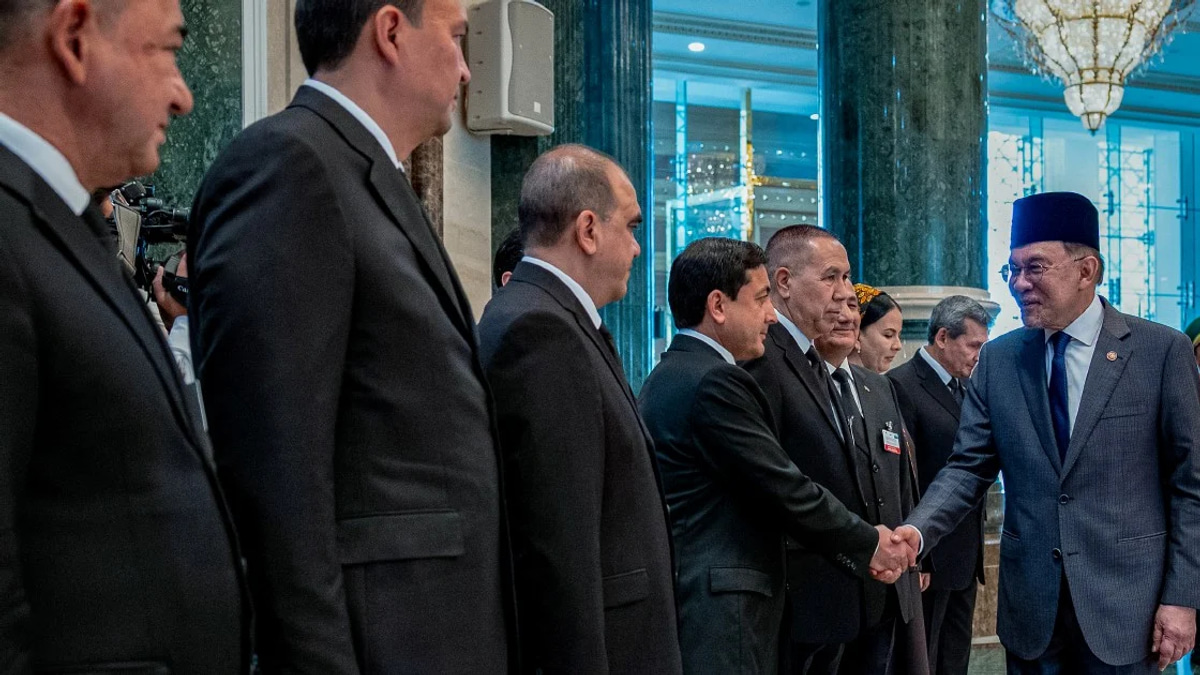
Prime Minister Anwar Ibrahim has attributed Malaysia's landmark breakthrough into Turkmenistan's substantial gas reserves to the nation's carefully calibrated foreign policy of neutrality and non-alignment. The agreement represents a significant expansion of Malaysia's energy security strategy beyond its traditional Southeast Asian suppliers and signals the country's deepening engagement with Central Asian markets at a time when energy competition in the region is intensifying.
The deal positions Malaysia alongside established players in accessing one of the world's most prolific gas-producing regions. Turkmenistan holds the fourth-largest proven natural gas reserves globally, yet remains comparatively underexplored in terms of partnerships with Asian economies outside China and Russia. Anwar's framing of the arrangement as a consequence of Malaysia's principled diplomatic positioning underscores how Kuala Lumpur has leveraged its historical commitment to non-alignment and balanced great-power relations to carve out economic opportunities where more openly aligned nations might face barriers or restrictions.
This approach reflects a deliberate strategy deployed across multiple Southeast Asian governments, though Malaysia has been particularly consistent in maintaining equidistant relations with major powers. By refusing to lock itself into exclusive alliances or adopt overtly geopolitical stances, Malaysia has preserved flexibility to negotiate with partners across the ideological and geopolitical spectrum. In the context of Central Asia, where competing interests from Russia, China, the United States, and Europe create a delicate diplomatic equilibrium, such positioning offers distinct advantages. The Turkmenistan partnership suggests that this model continues to yield tangible commercial returns.
The energy dimension carries particular weight for Malaysia's long-term development objectives. Domestic gas production has been gradually declining as reserves deplete, creating pressure on energy planners to secure supplies from external sources to maintain stable power generation and feed domestic petrochemical industries. The Central Asian avenue provides geographic and political diversification compared to reliance on Middle Eastern suppliers, reducing vulnerability to disruptions in any single region. For a trading nation like Malaysia, which depends heavily on stable energy costs to maintain manufacturing competitiveness, such diversification is strategically vital.
Turkmenistan itself has invested substantially in developing pipeline infrastructure and liquefaction capacity in recent years, seeking to expand its customer base beyond historical Soviet-era arrangements with Russia and emerging partnerships with China. The country's geopolitical position—buffered between Russia and China while maintaining selective engagement with Western economies—mirrors Malaysia's own diplomatic calculus. For Ashgabat, partnering with a respected Southeast Asian voice carries soft-power benefits and reduces dependence on any single major buyer.
The timing of this agreement also reflects broader realignments in Asian energy markets following disruptions to global supplies over the past three years. LNG prices have stabilized after extreme volatility, creating a more favorable environment for long-term contracting. Simultaneously, European nations have successfully reduced Russian gas dependency, opening opportunities for traditional suppliers like Turkmenistan to redirect volumes toward Asia. Malaysia's entry into this market occurs at a moment when Turkmenistan has greater flexibility to negotiate with new partners and Malaysia has both the technical expertise and financial capacity to engage meaningfully.
Anwar's public linkage of the agreement to Malaysia's foreign policy doctrine serves a dual purpose. Domestically, it reinforces the narrative that non-alignment and principled neutrality generate concrete economic benefits rather than representing mere moral positioning. This framing may strengthen political support for maintaining Malaysia's traditionally balanced approach to international relations, even as some voices advocate for closer alignment with specific powers. Internationally, it signals to other nations that Malaysia views diplomacy and strategic restraint as pathways to mutual benefit.
The partnership also carries implications for Malaysia's broader regional standing. As ASEAN grapples with maintaining unity while members pursue divergent foreign policies, Malaysia's success in securing advantageous energy deals through balanced positioning offers a model that aligns with ASEAN's traditional commitment to non-alignment and the ASEAN Way. This could enhance Malaysia's credibility as a diplomatic voice within the grouping, particularly on issues requiring consensus-building across ideological lines.
For energy companies operating in Malaysia, the Turkmenistan arrangement may open supply diversification benefits and create opportunities for technology partnerships or project development. Malaysian state enterprises and private firms with regional expertise could potentially develop broader business relationships in Central Asia. The agreement thus extends beyond immediate resource acquisition to encompass potential commercial partnerships and sectoral expansion.
Looking ahead, this arrangement may establish a template for deepening Malaysian engagement across Central Asia. The region contains significant untapped potential for trade, investment, and cultural exchange, yet remains underexploited by Southeast Asian economies relative to the opportunities present. A successful energy partnership could catalyze broader commercial and diplomatic initiatives, positioning Malaysia as a bridge between Southeast and Central Asia. This aligns with long-standing Malaysian aspirations to play a meaningful role in expanding intra-Asian connectivity and cooperation.
The Turkmenistan deal ultimately exemplifies how mid-sized powers can leverage diplomatic positioning to punch above their weight in resource competition. Rather than seeking to dominate through military might or ideological influence, Malaysia has found that principled non-alignment creates space for mutually beneficial partnerships with countries seeking alternatives to great-power frameworks. As global energy markets continue evolving and geopolitical fragmentation increases, this strategy may prove increasingly valuable for smaller and mid-sized Asian economies navigating complex international landscapes.
%22%2F%3E%3C%2Fpattern%3E%3C%2Fdefs%3E%3Crect%20width%3D%22100%25%22%20height%3D%22100%25%22%20fill%3D%22url(%23ph3l4smg)%22%2F%3E%3Crect%20width%3D%22100%25%22%20height%3D%22100%25%22%20fill%3D%22url(%23ph3l4smp)%22%2F%3E%3Ctext%20x%3D%2250%25%22%20y%3D%2250%25%22%20text-anchor%3D%22middle%22%20dominant-baseline%3D%22central%22%20fill%3D%22rgba(255%2C255%2C255%2C0.95)%22%20font-family%3D%22Georgia%2C%20'Times%20New%20Roman'%2C%20serif%22%20font-weight%3D%22700%22%20font-size%3D%22194%22%20letter-spacing%3D%22-0.02em%22%3EBersatu%3C%2Ftext%3E%3C%2Fsvg%3E)
%22%2F%3E%3C%2Fpattern%3E%3C%2Fdefs%3E%3Crect%20width%3D%22100%25%22%20height%3D%22100%25%22%20fill%3D%22url(%23ph4zr2og)%22%2F%3E%3Crect%20width%3D%22100%25%22%20height%3D%22100%25%22%20fill%3D%22url(%23ph4zr2op)%22%2F%3E%3Ctext%20x%3D%2250%25%22%20y%3D%2250%25%22%20text-anchor%3D%22middle%22%20dominant-baseline%3D%22central%22%20fill%3D%22rgba(255%2C255%2C255%2C0.95)%22%20font-family%3D%22Georgia%2C%20'Times%20New%20Roman'%2C%20serif%22%20font-weight%3D%22700%22%20font-size%3D%22320%22%20letter-spacing%3D%22-0.02em%22%3EKing%3C%2Ftext%3E%3C%2Fsvg%3E)