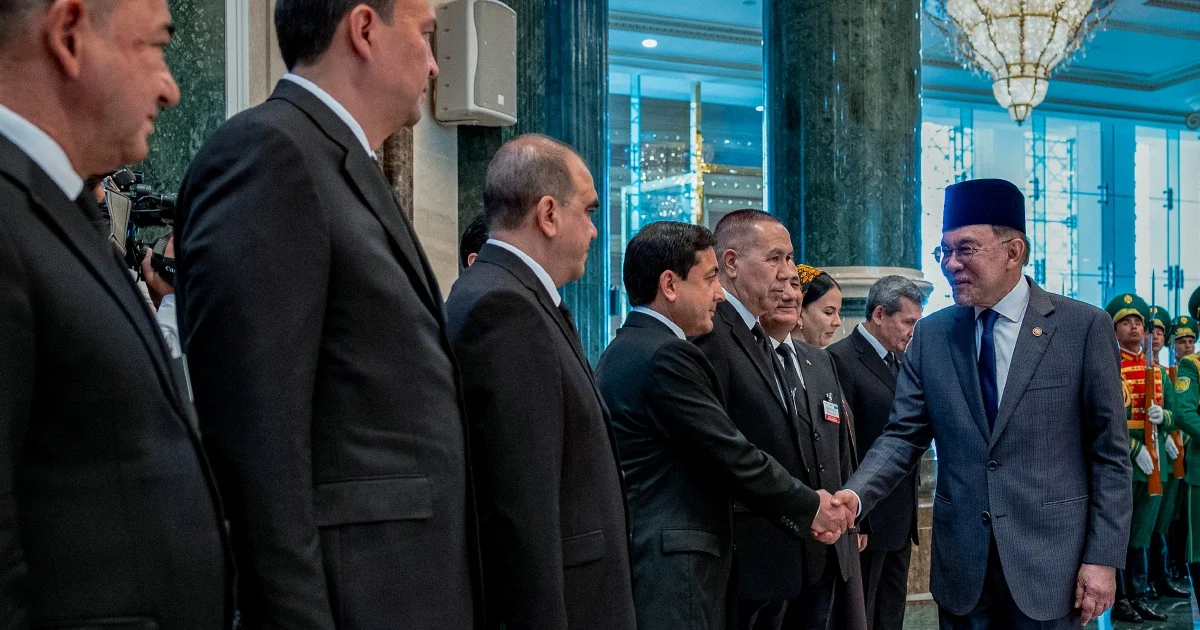
Prime Minister Datuk Seri Anwar Ibrahim's proactive engagement with international partners is increasingly viewed as essential to buttressing Malaysia's economic resilience during a period of heightened global instability. Academic observers and policy analysts argue that the administration's sustained diplomatic outreach carries significant potential to expand Malaysia's commercial networks, facilitate trade growth, and attract foreign direct investment—all critical variables as traditional supply chains face disruption and nations recalibrate their geopolitical alignments.
The strategic logic underpinning this assessment reflects a broader reality facing middle-income economies in Southeast Asia. Malaysia, as a trading nation historically dependent on open markets and regional stability, stands to benefit materially from deepening bilateral and multilateral relationships. When major economic powers are increasingly turning inward or reassessing partnerships, active diplomatic engagement becomes a competitive advantage. The Prime Minister's efforts to cultivate relationships across diverse regions—from established developed economies to rising powers in Asia—serve to diversify Malaysia's economic exposure and reduce vulnerability to any single market or geopolitical bloc.
Global economic forecasters have grown more cautious regarding near-term growth prospects, citing persistent inflation, rising borrowing costs, and escalating trade protectionism. Within this uncertain environment, Malaysia's capacity to negotiate favourable trade terms, secure investment commitments, and position itself as a reliable partner becomes proportionally more important. Anwar's diplomatic itinerary has demonstrated an awareness of these pressures, with the administration emphasising the country's role as a bridge between different economic zones and cultures—a positioning that appeals to multinational investors seeking stable, well-connected operational hubs in Asia-Pacific.
Malaysia's historical strength has resided in its ability to maintain pragmatic relationships across competing interests. The country benefits from its geographic location along critical maritime trade routes, its diversified economic base spanning manufacturing, services, and technology sectors, and its established institutional frameworks for managing international commerce. These structural advantages are most effectively leveraged through consistent diplomatic engagement that keeps Malaysia visible to investors and trading partners while reinforcing its credentials as a dependable actor in international economic affairs.
The technology sector offers a particularly compelling illustration of this diplomatic dividend. Nations and corporations expanding semiconductor manufacturing networks, green technology development, and digital infrastructure investments are actively scanning Southeast Asia for suitable jurisdictions. Malaysia's existing electronics manufacturing base and technical workforce make it a natural candidate, yet sustained government-level relationships and investment facilitation mechanisms prove decisive in competing against regional alternatives such as Vietnam and Thailand. Here, diplomatic initiatives directly translate into job creation and technology transfer.
Regional trade arrangements present another avenue where active diplomacy yields concrete returns. Malaysia's participation in agreements such as the Regional Comprehensive Economic Partnership (RCEP) and various bilateral free trade arrangements depends partly on maintaining positive government relations and demonstrating commitment to regional stability and rules-based commerce. The administration's diplomatic calendar reflects awareness that maintaining and expanding these frameworks benefits Malaysian exporters, investors, and service providers who gain preferential access to markets across Asia and beyond.
Foreign direct investment patterns underscore how diplomatic engagement influences capital flows. Institutional investors and multinational enterprises base location decisions not only on economic fundamentals but also on political stability, government responsiveness, and the quality of relationships between administrations. A Prime Minister actively engaged in international forums, bilateral visits, and economic summits sends signals about Malaysia's openness to business and commitment to creating favourable conditions for investment. These soft factors, while difficult to quantify precisely, materially affect investor confidence and capital allocation decisions.
Challenges remain, of course. Global supply chain reconstruction, rising geopolitical tensions between major powers, and the accelerating energy transition present both opportunities and risks for Malaysia's economy. Agricultural exporters, palm oil producers, semiconductor manufacturers, and tourism operators all face shifting market dynamics. Diplomatic engagement alone cannot shield Malaysia from external shocks, yet strategic international relationships provide tools for negotiating through transitions, accessing crisis-response mechanisms through multilateral institutions, and securing partnerships that foster economic resilience.
The emerging consensus among policy observers is that Malaysia's economic trajectory increasingly depends on its credibility and connectivity within the international system. An administration that actively cultivates relationships, participates meaningfully in regional and global forums, and clearly articulates the country's economic vision creates conditions conducive to sustained growth. For Anwar's government, the diplomatic calendar serves not merely ceremonial purposes but functions as a practical mechanism for advancing Malaysia's economic interests during a period when strategic positioning carries heightened consequence for national prosperity.
%22%2F%3E%3C%2Fpattern%3E%3C%2Fdefs%3E%3Crect%20width%3D%22100%25%22%20height%3D%22100%25%22%20fill%3D%22url(%23phj28xg)%22%2F%3E%3Crect%20width%3D%22100%25%22%20height%3D%22100%25%22%20fill%3D%22url(%23phj28xp)%22%2F%3E%3Ctext%20x%3D%2250%25%22%20y%3D%2250%25%22%20text-anchor%3D%22middle%22%20dominant-baseline%3D%22central%22%20fill%3D%22rgba(255%2C255%2C255%2C0.95)%22%20font-family%3D%22Georgia%2C%20'Times%20New%20Roman'%2C%20serif%22%20font-weight%3D%22700%22%20font-size%3D%22170%22%20letter-spacing%3D%22-0.02em%22%3EMalaysia%3C%2Ftext%3E%3C%2Fsvg%3E)