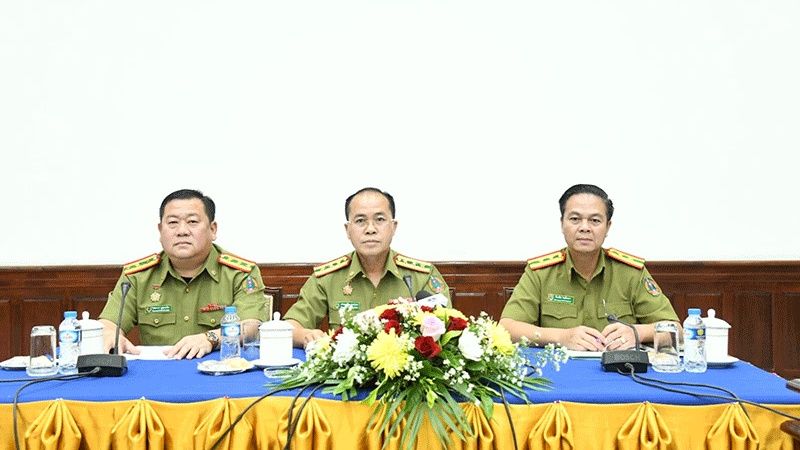
Lao police have formally charged the proprietor of Tiger Vodka distillery and multiple employees at Nana Backpackers Hostel in connection with the deaths of six international tourists in Vangvieng during late 2024, authorities announced at a press briefing by the Ministry of Public Security on Friday. The development marks the most comprehensive public disclosure of the investigation's findings, though police acknowledge significant limitations in establishing causation for five of the six deaths due to the absence of post-mortem examinations.
The deceased victims have been identified as James Louis Hutson from the United States, Danes Freja Vennervald Sorensen and Anne-Sofie Orkild Coyman, Australians Bianca Jones and Holly Bowles, and Briton Simone White. The deaths occurred between November 13 and November 21, 2024, creating international concern that resonated across Southeast Asia and triggered diplomatic engagement from multiple embassies.
Deputy Chief of the Vientiane Province Police Command, Colonel Khamfong Vongdalasane, reported that investigators detected methanol concentrations exceeding permissible thresholds in Tiger Vodka manufactured at a private facility located in Xaimoungkhoun village, Naxaithong district. The Australian Embassy subsequently provided confirmation that Aek Udon Hospital in Thailand had identified methanol in the bloodstream of the two deceased Australian women, corroborating preliminary suspicions about contaminated alcohol.
Despite these damaging findings, Colonel Khamfong acknowledged that Lao law prevents investigators from definitively attributing the five remaining deaths to any identifiable cause without autopsy evidence. This legal constraint reflects a significant evidentiary gap in the investigation, as families of the deceased exercised their right to decline post-mortem procedures. The inability to establish direct causation has forced prosecutors to pursue alternative legal strategies against the accused parties.
The distillery owner faces prosecution under Article 275 of the Penal Code for manufacturing and distributing consumer products hazardous to health, alongside charges under Article 297 for operating an unlicensed business. Prosecutors initially considered food safety violations but ultimately determined insufficient evidence supported such charges, pivoting instead toward the broader consumer goods statutes. The case has been forwarded to Vientiane Province People's Court for trial proceedings.
A parallel investigation examined the Nana Backpackers Hostel's handling of American tourist James Louis Hutson's death. Police determined that hostel staff relocated his body from Room 205 to Vangvieng District Hospital on November 13, 2024, without first notifying authorities, effectively preventing police from conducting forensic examination of the room where he died. This sequence of events triggered separate charges against the hostel owner and ten employees under Article 383 of the Penal Code for destroying evidence.
The Vangvieng District Court previously convicted all ten staff members on the evidence-tampering charges, but prosecutors subsequently challenged the sentences as insufficiently severe. The Vangvieng People's Prosecutor's Office has appealed to Vientiane Province People's Court, requesting harsher penalties. The hostel currently remains shuttered as legal proceedings advance, with both the proprietor and staff members stripped of passport privileges and subject to travel restrictions until case conclusion.
Investigators found multiple items within Hutson's room, including beer bottles, glasses containing Tiger Vodka, soft drinks, bottled water, medications, and a document resembling a suicide note. When Hutson's family declined autopsy examination, authorities released the body for funeral arrangements, effectively foreclosing the possibility of subsequent toxicological analysis. This decision, while respecting family wishes, substantially complicated efforts to establish definitively what precipitated his death.
The two Danish women initially presented with respiratory distress, vertigo, and gastrointestinal symptoms before receiving treatment at Vangvieng District Hospital and subsequent transfer to Hospital 103 in Vientiane, where they succumbed to their illnesses. Similar to Hutson's family, their relatives refused autopsy requests, preventing forensic determination of cause. The two Australian tourists, admitted to Nana Backpackers Hostel on November 9, had their movements and consumption patterns only partially documented during their stay. Following severe deterioration, they received treatment at Vangvieng District Hospital, transferred to Settathirath Hospital in Vientiane, then underwent medical evacuation to Thailand, where they ultimately died.
British national Simone White lost consciousness and was transported from Mahosot Hospital to Kasemrad International Hospital in Vientiane on November 13, dying eight days later. Despite opening investigations into all five deaths lacking autopsy data, Colonel Khamfong emphasized that existing evidence falls short of satisfying Lao legal standards to establish criminal responsibility by any particular individual. The methanol detected in Tiger Vodka and identified in the two Australian women's blood, while suggestive, does not alone constitute sufficient proof under Lao jurisprudence without broader corroborating forensic findings.
The investigation's progression underscores structural challenges when international fatalities occur in jurisdictions with limited forensic infrastructure and where family preferences regarding autopsies diverge from investigative requirements. Authorities have pledged to maintain investigation momentum in accordance with Lao criminal procedure regulations while sustaining diplomatic cooperation with embassies representing the United States, Australia, Denmark, and the United Kingdom. Colonel Khamfong extended formal condolences to bereaved families and emphasized police commitment to conducting transparent and equitable proceedings despite evidentiary constraints.
For Malaysian and Southeast Asian travelers, the incident highlights the risks associated with informal accommodation establishments and unregulated alcohol production in the region. The case demonstrates how quickly recreational tourism can transform into tragedy when safety standards remain unmonitored and when institutional procedures for handling emergencies prove inadequate. The passports confiscation measures imposed on Lao nationals involved reflect the gravity with which authorities regard the breaches, signaling that tourism-related negligence will face serious consequences.

