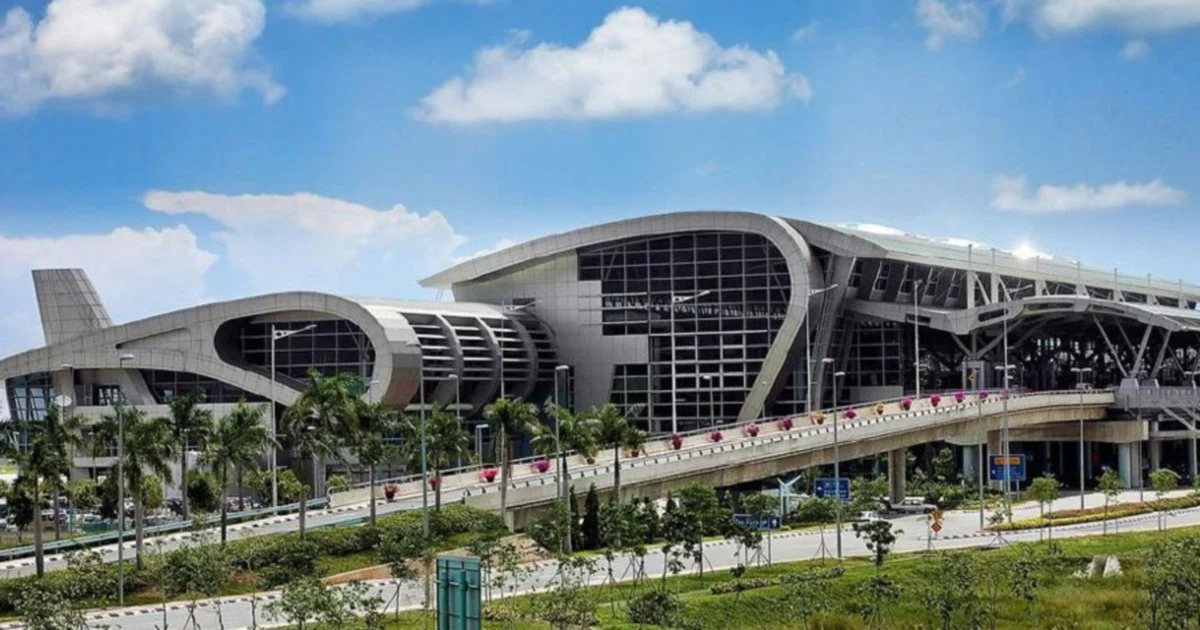
Kota Kinabalu International Airport's ambitious RM500 million modernisation programme cannot proceed until thorny land and site complications are untangled with Sabah's state government, according to Deputy Transport Minister Datuk Hasbi Habibollah. The federal official's statement underscores the complex jurisdictional challenges that often delay infrastructure projects in Malaysia, particularly when federal and state interests collide over property rights and land designation.
The expansion initiative represents a significant commitment to enhancing aviation capacity at one of Malaysian Borneo's busiest transport hubs. KKIA currently handles traffic from Sabah and surrounding regions, including leisure and business travellers heading to the state's tourist attractions and commercial centres. Growing passenger volumes in recent years have intensified pressure to expand terminal facilities, runway capacity, and ancillary infrastructure to prevent congestion and maintain competitiveness with rival regional airports.
Land acquisition and site preparation typically consume months or even years of negotiation and administrative processing, particularly when multiple stakeholders hold overlapping claims or when state governments maintain reservations about ceding control of territory within their boundaries. In Sabah's case, the complications appear multifaceted, encompassing questions about land ownership, zoning classifications, environmental considerations, and possibly the displacement or resettlement of existing occupants. Such issues require careful coordination between federal transport authorities, airport operators, state land offices, and potentially affected communities.
The delay reflects broader infrastructure challenges across Malaysia, where coordinating between Kuala Lumpur-based federal ministries and state administrations frequently creates bottlenecks. Sabah, as one of Malaysia's largest states by area and geographically remote from the peninsula, maintains considerable autonomy over land matters within its territory. Any airport expansion necessarily involves substantial ground area, making state-level approval not merely procedural but genuinely consequential to the project's viability.
For Malaysian aviation stakeholders, the stalled expansion carries real operational implications. Existing terminal capacity at KKIA already shows signs of strain during peak travel seasons, particularly around school holidays and festive periods when tourism swells. Without timely expansion, the airport risks losing competitive advantage to facilities in neighbouring jurisdictions or reduced efficiency during high-demand periods. Airlines operating in Sabah similarly face constraints on scheduling and fleet deployment if runway and apron capacity remains static.
The RM500 million investment also represents substantial economic activity for Sabah during the construction and operational phases. Enhanced airport infrastructure typically generates employment, attracts additional airline routes, and facilitates tourism and business development. State authorities' apparent reluctance to expedite the project may stem from concerns about compensation terms, environmental safeguards, or control over land use following airport development. These negotiating positions, while frustrating for federal planners, reflect legitimate state interests in protecting resources and managing regional development priorities.
Deputy Minister Hasbi's public acknowledgment of these stalled negotiations signals that federal authorities recognise the impasse and presumably are working toward resolution. However, no timeline emerged from his statement, suggesting that breakthrough negotiations remain some distance away. The absence of concrete movement on this front may reflect either preliminary stages of dialogue or genuine substantive disagreements that require senior-level political engagement to overcome.
International airport expansion projects worldwide frequently encounter similar complications, but Malaysian cases often hinge on federal-state power dynamics unique to Malaysia's constitutional structure. Unlike nations with centralised control over all land and infrastructure, Malaysia's federal system grants states considerable authority over land matters, creating situations where federal and state objectives can diverge sharply. Successfully navigating these tensions requires not merely technical competence but also political skill and willingness to accommodate state concerns.
For Sabah's broader development trajectory, resolving this dispute efficiently carries implications beyond aviation. How federal and state authorities handle infrastructure conflicts potentially shapes investor confidence, inter-governmental relationships, and the state's economic trajectory. Efficient resolution signals capable governance; prolonged stalling suggests administrative dysfunction that may deter commercial investment across multiple sectors.
The expansion project's eventual approval will likely require compromises addressing state anxieties while maintaining federal operational control over a critical national infrastructure asset. Possible solutions might include revenue-sharing arrangements, environmental protection covenants, local employment guarantees, or other benefits-sharing mechanisms that align federal and state interests. Without such calibrated agreements, infrastructure projects in Malaysia often languish indefinitely, frustrating all parties.
As Sabah navigates economic diversification and seeks to position itself as a regional aviation and tourism hub, timely infrastructure investment becomes increasingly critical. The KKIA expansion, once completed, could meaningfully enhance the state's competitive positioning in Southeast Asia's rapidly evolving aviation market, attracting carriers, passengers, and related commercial activity. The challenge now rests with negotiators translating this strategic vision into concrete agreements that satisfy both Kuala Lumpur's infrastructure ambitions and Kota Kinabalu's jurisdictional prerogatives.

