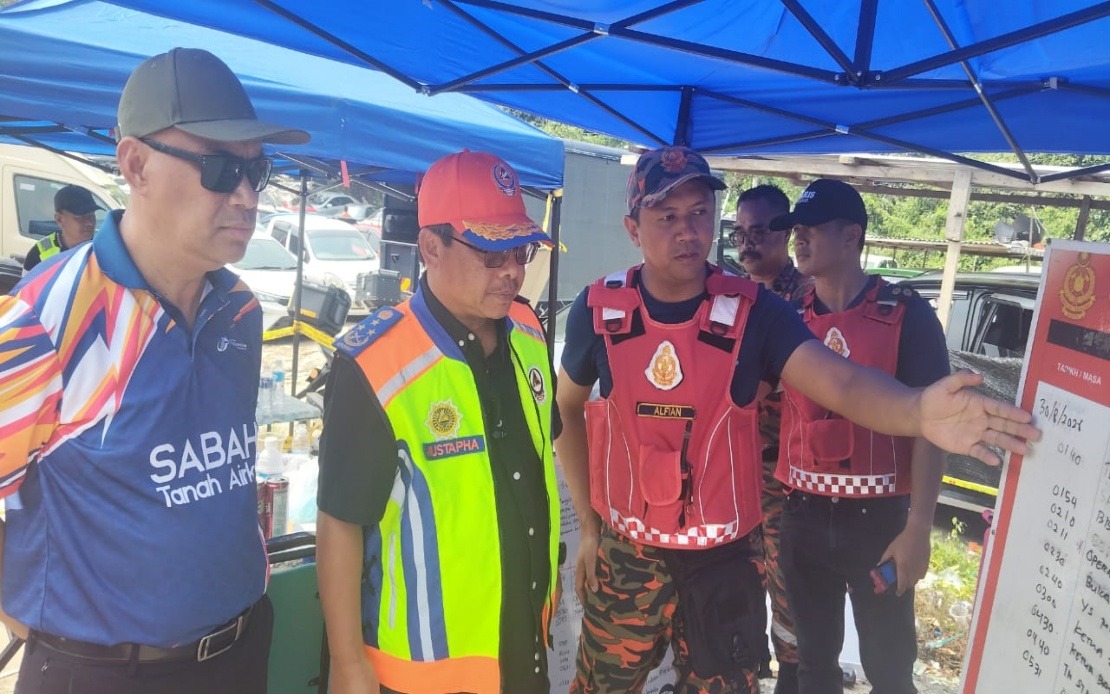
A devastating fire swept through Kampung Lok Buta in Kota Kinabalu early this morning, claiming the lives of three children and leaving more than 200 families homeless. The blaze, which occurred at 1.40 am, destroyed over 200 houses in the densely populated village, triggering an immediate emergency response from the Sabah government and local authorities. The victims were identified as siblings Nana Abdullah, aged 4, and Mohd Asrul Abdullah, aged 6, along with their 8-year-old cousin Nurfarahdilah Mohd Tajihah. The tragedy has sent shockwaves through the community and prompted high-level government intervention to coordinate relief and recovery efforts.
Authorities moved swiftly to establish two temporary relief centres at Dewan Kampung Likas and Dewan Damai to provide immediate shelter and services to the displaced residents. These facilities are serving as registration hubs where affected families can be documented, their needs assessed, and donated aid systematically distributed. The Kota Kinabalu City Hall has officially designated the affected area as a disaster zone, unlocking access to emergency resources and streamlining the deployment of government assistance. This administrative designation is crucial for coordinating multiple agencies and ensuring that help reaches those in need without bureaucratic delays.
Datak Mustapha Sakmud, who serves as Minister in the Prime Minister's Department overseeing Sabah and Sarawak affairs, visited the disaster site and spoke with reporters about the government's response strategy. Mustapha, who represents Sepanggar as Member of Parliament, emphasised that identifying and supporting students affected by the fire would be a priority. He recognised that disruption to education could have long-term consequences for vulnerable young people already dealing with the trauma of losing their homes and, in some cases, loved ones. This focus reflects growing awareness among Malaysian policymakers about holistic disaster response that addresses not just immediate physical needs but also educational and psychological recovery.
In coordination with Kota Kinabalu City Hall Mayor Datuk Seri Dr Sabin Samitah, who chairs the District Disaster Management Committee, Mustapha indicated that the Ministry of Education would be briefed on the situation. The goal is to ensure that students from primary schools, secondary schools, higher education institutions, and TVET centres affected by the fire receive appropriate educational support. This could include temporary learning arrangements, counselling services, and financial assistance for affected families. The involvement of multiple educational levels suggests that the fire has affected residents across a wide demographic spectrum, from young children through to young adults pursuing vocational training.
Mustapha signalled that Kota Kinabalu City Hall and relevant agencies would convene meetings to coordinate comprehensive assistance measures. He outlined plans for the matter to be elevated to the Malaysia Agreement 1963 Implementation Action Council, a high-level body that addresses matters affecting Sabah and Sarawak's interests under the constitutional agreement that brought these states into the Malaysian federation. This council is expected to be attended by Prime Minister Datuk Seri Anwar Ibrahim and Sabah Chief Minister Datuk Seri Hajiji Noor, indicating the gravity with which the federal government is treating the incident. The involvement of these top political leaders suggests that significant resources and policy decisions may flow from their consideration of the disaster.
The elevation of the Kampung Lok Buta fire to this level of political attention reflects both the scale of the disaster and growing recognition of how natural and man-made emergencies can destabilise communities in Malaysian towns. For residents of Sabah, the visible commitment from federal leadership provides some assurance that recovery will not be left solely to already-stretched state resources. The briefing proposed for the Prime Minister and Chief Minister by the Kota Kinabalu mayor could result in special reconstruction funds, regulatory changes to prevent similar fires, or targeted development assistance for the village.
Mustapha committed to providing initial financial assistance to the families of the three children who perished in the fire. While such immediate support is essential for funeral arrangements and basic needs, the broader question of long-term reconstruction and compensation for those who lost homes and livelihoods remains. In Malaysia, disaster relief typically follows a tiered approach, with initial emergency assistance followed by medium-term rehabilitation and longer-term reconstruction programmes. The establishment of relief centres is the first step in this process, but sustained commitment will be needed over months and years.
The Kampung Lok Buta fire also raises important questions about urban settlement patterns in Sabah's major towns. Kampung Lok Buta, like many traditional villages within expanding urban areas, represents older settlement patterns where wooden structures and dense housing layouts can increase fire risk. As Kota Kinabalu continues to grow and informal settlements expand, fire safety, building codes, and emergency preparedness become increasingly critical governance challenges. The disaster may prompt discussions about urban planning policies, building regulations, and fire prevention infrastructure in rapidly developing Malaysian towns.
Community recovery from such a catastrophe extends beyond material reconstruction. The psychological impact on survivors, particularly children who have lost homes and friends, requires sustained mental health support. Schools serving the affected area will need to be equipped with counselling services to help students process trauma. The cultural and social fabric of Kampung Lok Buta, where tight-knit community bonds are a defining characteristic, may experience significant strain. Government and non-governmental organisations will need to support not just physical rebuilding but also community healing and social cohesion.
The response mobilised by Mustapha and other officials demonstrates the increasing sophistication of Malaysia's disaster management framework. The rapid declaration of a disaster zone, establishment of coordinated relief centres, and involvement of multiple government layers reflects institutional learning from previous emergencies. However, the real test will be whether the momentum generated by ministerial visits and high-level political attention translates into sustained, effective support for displaced families. For Malaysian observers following this tragedy, the Kampung Lok Buta fire serves as a reminder of both the fragility of homes and livelihoods and the importance of robust disaster preparedness and equitable resource distribution in times of crisis.

