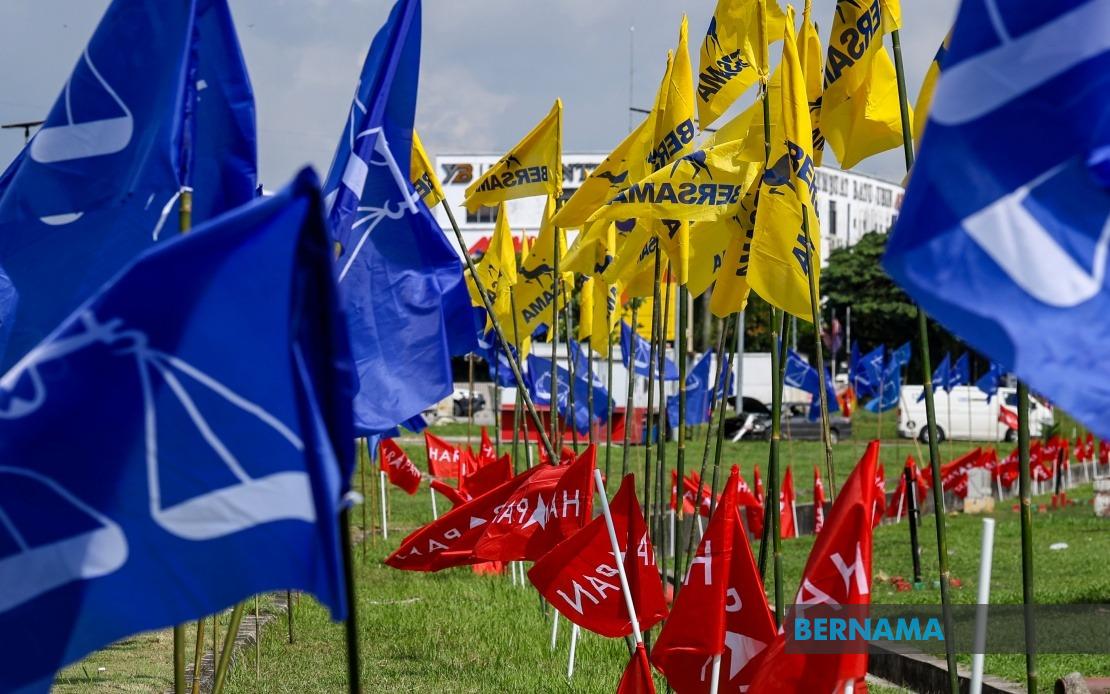
The opening phase of Johor's 16th state election has unfolded with measured momentum, reflecting a strategic pivot by all contesting parties towards more intimate and carefully targeted voter engagement rather than the spectacle of large-scale rallies that once dominated Malaysian campaign cycles. During the first week of campaigning, political organisations across the spectrum have prioritised direct interaction with constituents through house-to-house visits, intimate group meetings, and locally rooted community programmes designed to build personal connections with potential voters in specific areas.
According to political analysts examining the campaign's trajectory, this methodological shift represents a sophisticated adaptation to the contemporary electoral environment in Malaysia. Prof Datuk Dr Sivamurugan Pandian, Senior Lecturer in Political Sociology at Universiti Sains Malaysia, characterises the opening week as fundamentally about establishing campaign foundations through granular grassroots work. This approach, he explains, grants candidates valuable opportunities to engage voters directly, comprehend their particular grievances and aspirations, and simultaneously strengthen internal party machinery while deploying financial and human resources with greater precision ahead of what analysts anticipate will be a more confrontational second phase of campaigning.
The transition toward data-driven, segmented campaign strategies reflects broader global trends in electoral politics that have permeated Southeast Asian democracies. Dr Azmi Hassan, a geostrategist at the Nusantara Academy for Strategic Research, notes that contemporary election campaigns increasingly depend on sophisticated voter categorisation—distinguishing between committed supporters (white), undecided voters (grey), and opposition adherents (black)—with targeted messaging designed to persuade each group through different channels. Social media platforms now constitute a critical infrastructure for campaign communication, complementing traditional ground operations rather than replacing them entirely. Where previous generations of campaigns concentrated resources on public spaces and mass gatherings, contemporary electoral warfare combines decentralised field operations with precision digital targeting.
Examining the substantive content of competing campaign messages, researchers identify three recurring thematic pillars that dominate current discourse across party lines: emphasis on established governance records, promises regarding future policy initiatives, and claims of capacity to deliver political stability and institutional continuity. Mujibu Abd Muis, a researcher at the Ilham Centre and lecturer in political science at Universiti Teknologi MARA, cautions however that these narratives have not yet crystallised into a singular dominant framework sufficiently powerful to reshape the broader campaign landscape. The efficacy of any political message, he argues, ultimately depends on whether it translates into tangible issues that connect with voters' immediate material circumstances—encompassing household finances, employment security, infrastructure development, and quality of public services.
Geographic concentration of campaign activity during the opening week reveals important strategic calculations among party leadership. Northern Johor districts including Muar, Tangkak, Segamat, alongside portions of Batu Pahat and Kluang, received disproportionate attention from campaign machinery, suggesting deliberate resource allocation towards constituencies assessed as genuinely competitive or likely to prove electorally decisive. Mujibu observes that the deployment of senior national leaders to these constituencies serves dual purposes: attracting media attention while simultaneously signalling to internal party structures which electoral contests merit maximum organisational effort. This concentration strategy reflects rational campaign management rather than haphazard coverage, with parties optimising limited resources by focusing on contested territory rather than attempting simultaneous penetration across all 56 state assembly seats.
The competitive landscape encompasses two dominant coalitional blocs whose respective geographic strongholds have become increasingly apparent during the campaign's early days. Barisan Nasional maintains substantial organisational presence and historical support in eastern coastal constituencies, particularly Mersing and Kota Tinggi, where traditional voting patterns favour the ruling coalition. Pakatan Harapan demonstrates greater electoral traction in southern and western Johor regions, having consolidated support in these areas during previous electoral contests. Associate Professor Dr Mazlan Ali, Director of the Faculty of Social Sciences and Humanities at Universiti Teknologi Malaysia, underscores that the spatial distribution of campaign resources directly reflects each coalition's strategic assessment of victory probabilities across different geographic sectors. This sophisticated matching of campaign expenditure to realistic electoral prospects suggests that party operatives conduct granular internal analysis of constituency-by-constituency dynamics before deploying scarce organisational resources.
All political analysts consulted emphasised that voter mobilisation and turnout will ultimately prove decisive in determining electoral outcomes. The psychological and organisational challenge of compelling voters to participate on polling day represents perhaps the most critical variable beyond message content or candidate quality. Political organisations must therefore balance their public campaign messaging with internal get-out-the-vote operations designed to ensure that supporters actually cast ballots rather than remaining home. This mobilisation imperative has assumed heightened importance given increasingly polarised and volatile electorates where traditional voting blocs can no longer be taken as assured.
The electoral contest encompasses 172 candidates competing for 56 state assembly seats, with voting scheduled for July 11 and early voting opportunities provided on July 7. The administrative framework allows senior party figures and observers to monitor campaign conduct across the state during the forthcoming weeks, as expectations grow that the campaign will intensify substantially during its second phase. Most analysts predict that senior coalition leadership will increasingly appear in the state, rallies will proliferate, and digital campaign operations will accelerate as polling day approaches.
For Malaysian observers and Southeast Asian watchers of regional democratic processes, the Johor campaign offers instructive lessons regarding the evolution of electoral strategy in mature Asian democracies. The apparent decline of mass rally politics in favour of sophisticated micro-targeting suggests that campaigns are becoming simultaneously more technologically advanced and more atomised, with voters increasingly encountering political messages tailored to their specific demographic and behavioural profiles rather than through shared community experiences. This transformation carries implications for how political cohesion develops and how electoral mandates are understood, as victory increasingly depends on successfully aggregating numerous small-scale persuasion efforts rather than mobilising unified mass movements.

