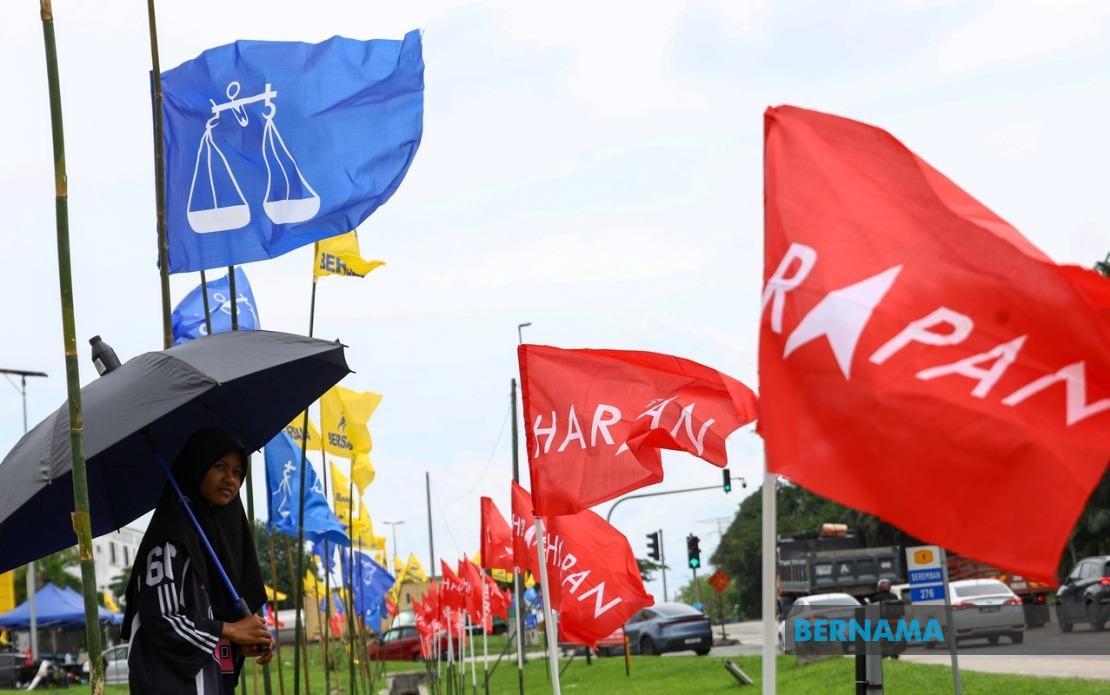
The campaign for Johor's 16th state election has crystallised into two fundamentally distinct approaches, with Pakatan Harapan and Barisan Nasional pursuing separate pathways to secure voter support ahead of Saturday's polling. Both coalitions are contesting all 56 state seats, yet their campaign philosophies and messaging strategies reveal a broader generational shift in how political parties must connect with Malaysian electorates across different demographic segments.
Pakatan Harapan has constructed its campaign narrative around addressing the material concerns that dominate daily conversations in Johor households. The coalition's manifesto, titled "Johor For All," positions economic benefits and livelihood improvements as the central pillar of its electoral pitch. Rather than focusing on headline investment statistics or gross domestic product figures, PH's strategy emphasises how development should translate into wage increases, accessible housing solutions, quality employment opportunities, and strengthened social welfare systems. This approach represents a deliberate reframing of what "development" means to ordinary voters, shifting the conversation from macro-economic indicators to micro-level quality-of-life improvements that residents can measure in their own lives.
Barisan Nasional, by contrast, has adopted a more personality-driven campaign framework, with significant emphasis placed on the return of two prominent UMNO figures to active electoral politics. Datuk Seri Hishammuddin Tun Hussein and Khairy Jamaluddin, both returning through the "Rumah Bangsa" initiative, represent attempts to reconnect with voter segments that had grown distant from the coalition. For BN strategists, these personalities serve as symbols of renewed commitment and bridges to constituencies that had fractured during earlier political turbulence. The coalition's calculation appears to rest on the assumption that recognisable, respected figures can rekindle enthusiasm among traditional supporters and unlock momentum in key marginal seats.
Political analysis from Universiti Malaya's Dr Mohammad Tawfik Yaakub provides crucial context for understanding these divergent strategies. He observes that PH's emphasis on policy-driven messaging reflects a broader understanding that contemporary voters, particularly in urbanised and semi-urbanised Johor, demand substantive responses to concrete problems rather than rhetorical appeals. The coalition's focus on wage stagnation, housing affordability, and equitable wealth distribution directly addresses anxieties that pervade household discussions across the state. This positioning also attempts to redefine the terms of electoral competition, moving debate away from historical party performance towards future-oriented policy commitments that require measurable, trackable outcomes.
Yet Dr Tawfik also cautions against assuming that personality-driven campaigns have lost all relevance. Rather, he notes that voters have become more discerning in how they evaluate political figures, insisting on coherence between the speaker, the party's institutional credibility, and the actual policy substance on offer. The mere presence of a prominent politician at campaign rallies no longer guarantees electoral traction; voters now cross-reference campaign messaging against demonstrable party capacity and candidate quality. This evolution suggests that BN's strategy, while leveraging recognisable names, must ultimately be anchored in credible policy propositions and candidate competence to convert campaign attention into actual votes.
Hishammuddin's re-emergence carries particular significance for UMNO's internal recovery within Johor. His active participation in this campaign functions as a signal to party members and traditional supporters who had become disaffected or demoralised during earlier periods of institutional weakness. According to Ilham Centre chief researcher Assoc Prof Dr Mohd Yusry Ibrahim from Universiti Malaysia Terengganu, Hishammuddin retains considerable influence within Johor's political networks and tribal structures, potentially catalysing renewed engagement among constituencies that had drifted towards disengagement with Barisan Nasional. His return thus serves both symbolic and practical functions: it demonstrates institutional renewal within UMNO while simultaneously unlocking communication pathways to voter segments that recognise and respect his political standing.
Khairy Jamaluddin represents a different demographic calculation. His consistent popularity among younger voters addresses one of BN's most persistent structural vulnerabilities: the coalition's difficulty engaging Malaysia's younger electorate, particularly those under 35 with less ingrained party loyalty. Dr Mohd Yusry emphasises that contemporary young voters operate within entirely different political frameworks compared to their parents' generation. Rather than displaying durable party identification, younger Malaysians respond primarily to individual personalities they find compelling, relatable, and authentic. In this context, Khairy functions as an access point to demographics that UMNO and Barisan Nasional have historically struggled to mobilise, leveraging his visibility across social media platforms and his perceived alignment with younger voter concerns.
The underlying voter behaviour analysis reveals a profound shift in electoral dynamics across Malaysian political contests. Young voters no longer demonstrate the persistent party loyalty that characterised earlier electoral cohorts, instead treating their votes as instruments to be deployed based on immediate candidate appeal and policy relevance. This fragmentation creates both opportunities and risks for established coalitions: opportunities because voters become less predictable and more persuadable through targeted appeals, but risks because traditional organisational advantages and institutional memory no longer guarantee electoral outcomes. The 56 seats contested in Johor thus represent testing grounds for understanding how these competing strategies—policy-focused messaging versus personality-driven mobilisation—perform across different voter segments and geographic constituencies.
The structural setup of the 16th Johor state election, with 172 candidates contesting 56 seats across early voting on July 7 and main polling on Saturday, July 11, provides multiple opportunities for campaign messages to permeate voter consciousness. However, the second week of campaigning has already revealed that neither coalition can rely on singular strategic advantages. Pakatan Harapan's policy emphasis requires clear communication channels and sustained voter attention to translate into electoral gains, while Barisan Nasional's personality-driven approach must overcome voter cynicism about whether prominent figures genuinely represent institutional commitment to change rather than opportunistic repositioning.
The ultimate election outcome will likely demonstrate how effectively each coalition has calibrated its strategy to Johor's specific voter composition. Urban and suburban voters, particularly those grappling with housing affordability and wage concerns, may respond more readily to PH's policy-focused messaging. Meanwhile, traditional BN constituencies with established party networks and cultural connections to Malay-Muslim institutional frameworks may prove more receptive to Hishammuddin and Khairy's mobilisation efforts. The election thus offers valuable insights into the contemporary mechanics of Malaysian electoral competition, revealing how both personality and policy, institutional strength and strategic innovation, compete for dominance in shaping electoral outcomes.

