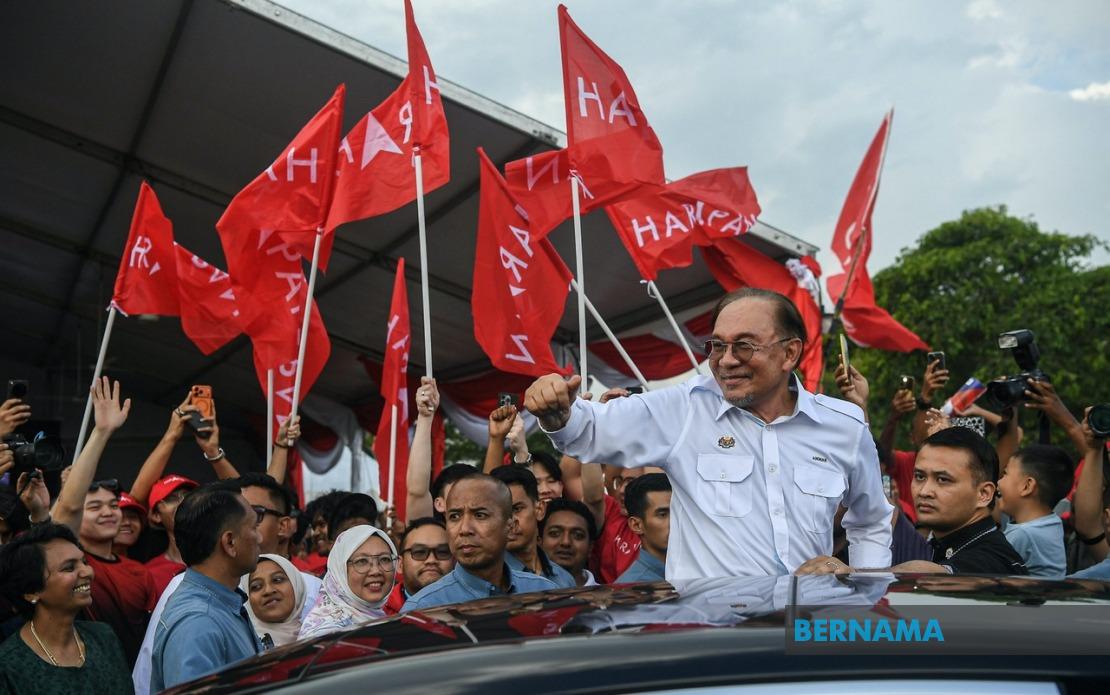
The sprawling campaign machinery mobilised for the 16th Johor State Election has leaned heavily on algorithmic reach and viral content, yet a fundamental truth persists among the state's older electorate: nothing quite replaces a candidate standing before them in the flesh. A Bernama survey conducted ahead of the Saturday polling has documented this enduring preference, uncovering a nuanced reality where digital and traditional campaign methods operate less as competitors and more as interlocking tools in the modern electoral playbook.
Retired teacher A. Chandra, 70, articulates what many of his contemporaries feel when he describes the incomparable texture of attending campaign rallies in person. The electricity of a live crowd, the chance to observe a politician's gestures and bearing without the mediation of a screen, the ability to pose questions directly and gauge responses in real time—these elements create an experiential depth that livestreamed events simply cannot replicate. For Chandra and voters like him across the Perling constituency, such interactions serve as a personal barometer of sincerity, allowing them to read beyond prepared speeches and assess whether a candidate possesses the character and commitment their vote demands.
Yet the picture emerging from the survey defies easy generalisations about age and digital adoption. Housewife Maimunah Ismail, 73, from Sedeli constituency, has woven social media into her everyday routine, scrolling through campaign content on her mobile phone while performing household tasks. She acknowledges the supplementary value of these platforms for accessing information conveniently, though she retains a preference for physical campaigning as the superior method for truly comprehending a candidate's message and evaluating their trustworthiness. This hybrid consumption pattern—blending on-the-ground presence with digital follow-up—increasingly characterises how voters across demographic segments approach electoral decisions.
Seventy-two-year-old Saadon Mohamad, a settler in the constituency, recognises that information abundance online has democratised access to political content, making it far easier for anyone with a mobile device to stay informed. However, he contends that pure digital distribution lacks the atmospheric qualities that make campaigning memorable and impactful. The palpable energy of a rally, the spontaneity of crowd interaction, and the tangible sense of a movement gathering momentum cannot be transmitted through a screen, no matter how sophisticated the production values.
The digital literacy assumption—that older Malaysians remain technologically passive—finds little support in the survey findings. Kempas voter Fairuz Saif, 59, explicitly rejects this stereotype, arguing instead that the real challenge lies in how political parties craft their online messaging. When digital campaigns employ unnecessarily complex language or information-dense presentations, they inadvertently exclude audiences who might otherwise engage. Conversely, when parties distil their platforms into clear, accessible content, older voters demonstrate genuine facility with these tools. Yet even Saif, who embraces digital platforms, maintains that face-to-face campaigning retains superior persuasive power because candidates can respond dynamically to voter concerns and build the kind of personal rapport that inspires confidence.
Physical constraints illuminate another dimension of this debate. Retired civil servant M. Sivathramani, 73, experiences limited mobility due to past injuries, circumstances that render large campaign venues logistically challenging to navigate. For voters in similar situations across Johor's constituencies, the emergence of TikTok and other social platforms has opened a pathway to political engagement that would otherwise remain closed. Yet Sivathramani's comments reveal something important: the convenience of digital access does not eliminate his desire for direct candidate encounters when circumstances permit. Social media becomes less a replacement for traditional campaigning than a temporary substitute that serves vulnerable populations.
Grocery shop owner Lee Lian Chen, 58, from Bukit Permai, approaches political information strategically, using social platforms to preliminary-vet candidates' stated plans and manifestos before conducting her own ground-level assessment. For working-age voters managing business responsibilities, social media provides an efficient preliminary filter, yet final judgments still require personal verification. Chen's decision-making framework reflects a broader recognition that campaign promises mean little without demonstrable implementation capacity, a calculation that online platforms struggle to convey without supplementary offline confirmation.
Universiti Tun Hussein Onn Malaysia's Dr Nazreena Mohammed Yasin, a social sciences lecturer, offers analytical framework for understanding these patterns. The traditional opposition between digital and physical campaigning, she argues, has become largely obsolete. Contemporary electoral contests instead feature complementary campaign strategies that serve different voter needs across varied circumstances. Sentimental attachment to physical campaigns persists partly because they provide genuine communal experience, the sense of participating in democracy rather than merely consuming its content. This psychological dimension extends beyond simple information transfer into the emotional terrain where voting choices ultimately crystallise.
Nazreena observes that older citizens increasingly populate social media platforms, consuming live-streamed campaign broadcasts and gathering supplementary information through WhatsApp and Facebook channels. Yet traditional media—newspapers and television—still anchor political information for many senior voters, creating a three-channel information ecosystem rather than a wholesale migration to digital. Meanwhile, working-age adults exploit social media's accessibility to navigate campaigns despite demanding professional schedules and mobility constraints, effectively squeezing electoral engagement into their existing daily routines.
The generational variation in information-seeking patterns reflects underlying differences in how voters developed their civic habits. Those who matured in an era of community gatherings and town halls maintain a preference rooted in that experience, while younger cohorts, accustomed to digital interaction, find social platforms more intuitive. Yet the survey results suggest these are matters of degree rather than absolute division. Most contemporary voters adopt what Nazreena characterises as a hybrid approach, integrating direct rally attendance with social media surveillance to construct comprehensive political knowledge before casting their ballots.
With 2.7 million voters preparing to elect 56 representatives across the state, political parties face the challenge of optimising this dual-channel landscape. Parties that rely exclusively on either digital saturation or traditional rallies risk missing crucial segments of the electorate. Those who understand that different voters at different life stages require different engagement pathways—combining the personal authenticity of face-to-face encounters with the accessibility and convenience of digital platforms—position themselves most effectively for mobilising the broadest possible support.
The Johor election thus offers a microcosm of how Southeast Asian democracies are evolving. Rather than digital transformation erasing traditional campaigning, the more dynamic reality involves parties learning to orchestrate sophisticated combinations of both methods. Elderly voters who prize the personal encounter, working adults constrained by time, individuals with mobility limitations, and digitally native voters all find space in this integrated approach. Success in modern Malaysian elections increasingly requires respecting these varied preferences and constructing campaigns that honour both the sentimental weight of traditional community engagement and the practical efficiency of digital reach.

