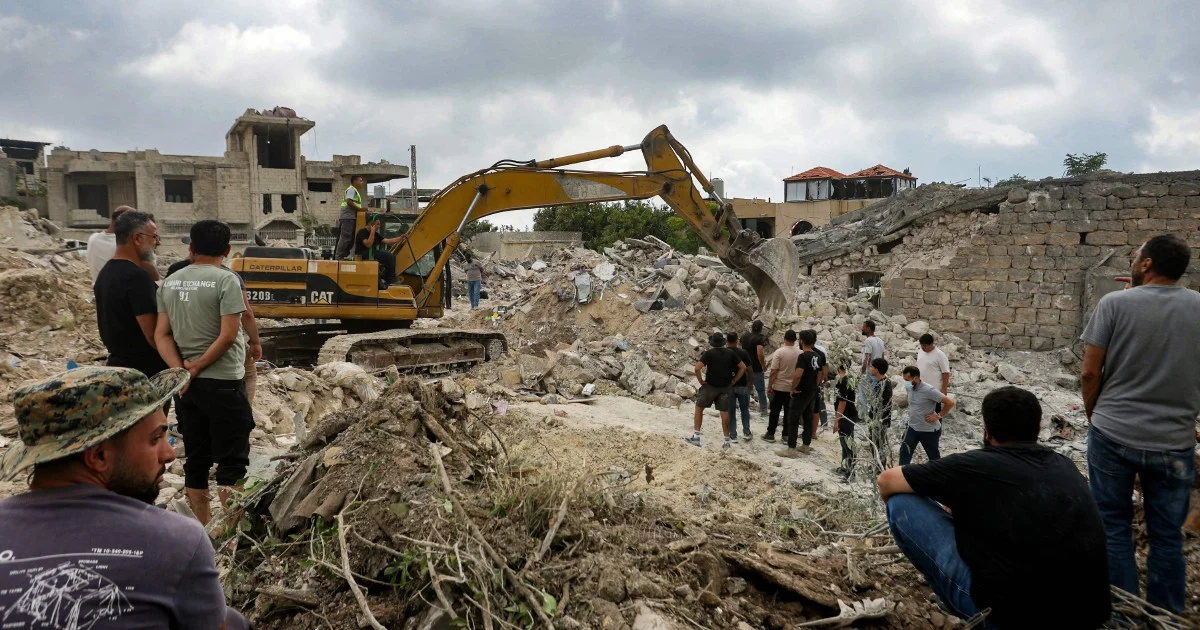
Hezbollah's top political figure Naim Qassem delivered a stark repudiation of Israeli military ambitions in Lebanon on Sunday, flatly refusing to accept any form of Israeli-controlled security zone on Lebanese territory. His statement came in direct response to comments by Israeli Prime Minister Benjamin Netanyahu, who had asserted that Israeli armed forces would maintain their position in southern Lebanon for whatever duration deemed necessary by Tel Aviv.
The escalating rhetoric marks a critical juncture in the conflict between Israel and Hezbollah, which has dominated regional politics for decades. Qassem's unequivocal rejection signals that the Lebanese militant organization will not acquiesce to a prolonged Israeli military footprint, even if such an arrangement were framed as temporary or limited in scope. This hardline position reflects Hezbollah's foundational opposition to any Israeli sovereignty or control over Lebanese soil, an ideology that has shaped its political identity since its formation in the 1980s.
Netanyahu's assertion that Israeli troops would remain "as long as necessary" implies an open-ended deployment with no predetermined timeline for withdrawal. Such language typically suggests Israel's intention to maintain strategic control until it determines that security objectives have been met—a threshold that could extend for months or years. This approach has precedent in Israeli military doctrine, where security concerns often justify prolonged occupations in neighboring territories.
For Malaysian and Southeast Asian observers, this confrontation underscores the fragility of ceasefire arrangements in the Middle East and the persistent challenge of implementing sustainable peace agreements. The dispute over a security zone illustrates how even when active fighting subsides, fundamental disagreements over territorial control and military presence can reignite tensions. Similar dynamics have played out across the region, from Israeli-Palestinian disputes to various regional conflicts where external military forces have established semi-permanent positions.
Hezbollah's categorical rejection carries significant implications for potential negotiations. By precluding any compromise on the security zone issue, the organization has drawn a hard line that negotiators would need to navigate carefully. Such intransigence can either serve as a negotiating anchor that strengthens the group's position or become a stumbling block that prevents diplomatic progress. The group's leadership may be calculating that firmness now will discourage Israeli expansion plans and demonstrate resolve to its domestic constituency and regional allies.
The context of southern Lebanon's recent conflict history is essential to understanding this dispute. The region has been a flashpoint for decades, with periodic Israeli military operations punctuated by ceasefire periods. Hezbollah has maintained significant control over southern Lebanese areas, allowing it to position itself as the guardian of Lebanese sovereignty against external interference. Any Israeli security zone would fundamentally challenge this narrative and potentially undermine Hezbollah's political legitimacy within Lebanon.
Israel's strategic interests in southern Lebanon center on preventing Hezbollah from using the territory to launch attacks across the border into northern Israel. From Tel Aviv's perspective, a security zone would create a buffer area free from rocket launchers and other military infrastructure. However, such an arrangement would require monitoring mechanisms and potentially an Israeli military presence, elements that Hezbollah and the broader Lebanese political establishment view as violations of national sovereignty.
The Lebanese state's position in this dispute remains complicated. While officially aligned with international law and the principle of national sovereignty, Lebanon's government lacks the military capacity to enforce its authority over all territory, particularly in the south where Hezbollah maintains substantial power. This power vacuum has historically invited external interventions, from Israeli incursions to United Nations peacekeeping operations. The current standoff thus reflects not just a bilateral dispute but Lebanon's deeper struggle to consolidate state authority.
Regional powers are closely monitoring this confrontation. Iran, Hezbollah's principal patron, has consistently opposed any Israeli military presence in Lebanon and would view a security zone as unacceptable. Syria, historically a key player in Lebanese affairs, also opposes Israeli expansion. Conversely, Gulf states and some regional actors have shown varying degrees of tolerance or even tacit support for Israeli security measures, reflecting the region's fractured geopolitical landscape.
Qassem's statement must be understood as part of Hezbollah's broader messaging strategy. By publicly rejecting the security zone concept, the leadership appeals to its support base and regional allies while signaling to international mediators that this issue is non-negotiable. Such declarations can sometimes become hardened positions that complicate future diplomacy, but they may also reflect genuine constraints on Hezbollah's decision-making capacity, given the organization's ideological commitment to anti-Israeli resistance.
The dispute highlights the challenge facing the international community in managing Israeli-Lebanese tensions. External powers, including the United States, various European nations, and the United Nations, have attempted to facilitate ceasefires and monitor compliance. However, without addressing the fundamental question of Israeli military presence and Lebanese sovereignty claims, such mechanisms remain vulnerable to breakdown.
Moving forward, resolving this impasse will require creative diplomatic solutions that address security concerns on both sides. Whether such solutions exist remains uncertain, given the apparent incompatibility of Israeli intentions and Hezbollah's categorical rejection. The stalemate underscores how bitter disputes, once entrenched in historical grievances and identity politics, become extraordinarily difficult to resolve through conventional negotiation channels.
%22%2F%3E%3C%2Fpattern%3E%3C%2Fdefs%3E%3Crect%20width%3D%22100%25%22%20height%3D%22100%25%22%20fill%3D%22url(%23ph3l4smg)%22%2F%3E%3Crect%20width%3D%22100%25%22%20height%3D%22100%25%22%20fill%3D%22url(%23ph3l4smp)%22%2F%3E%3Ctext%20x%3D%2250%25%22%20y%3D%2250%25%22%20text-anchor%3D%22middle%22%20dominant-baseline%3D%22central%22%20fill%3D%22rgba(255%2C255%2C255%2C0.95)%22%20font-family%3D%22Georgia%2C%20'Times%20New%20Roman'%2C%20serif%22%20font-weight%3D%22700%22%20font-size%3D%22194%22%20letter-spacing%3D%22-0.02em%22%3EBersatu%3C%2Ftext%3E%3C%2Fsvg%3E)
%22%2F%3E%3C%2Fpattern%3E%3C%2Fdefs%3E%3Crect%20width%3D%22100%25%22%20height%3D%22100%25%22%20fill%3D%22url(%23ph4zr2og)%22%2F%3E%3Crect%20width%3D%22100%25%22%20height%3D%22100%25%22%20fill%3D%22url(%23ph4zr2op)%22%2F%3E%3Ctext%20x%3D%2250%25%22%20y%3D%2250%25%22%20text-anchor%3D%22middle%22%20dominant-baseline%3D%22central%22%20fill%3D%22rgba(255%2C255%2C255%2C0.95)%22%20font-family%3D%22Georgia%2C%20'Times%20New%20Roman'%2C%20serif%22%20font-weight%3D%22700%22%20font-size%3D%22320%22%20letter-spacing%3D%22-0.02em%22%3EKing%3C%2Ftext%3E%3C%2Fsvg%3E)