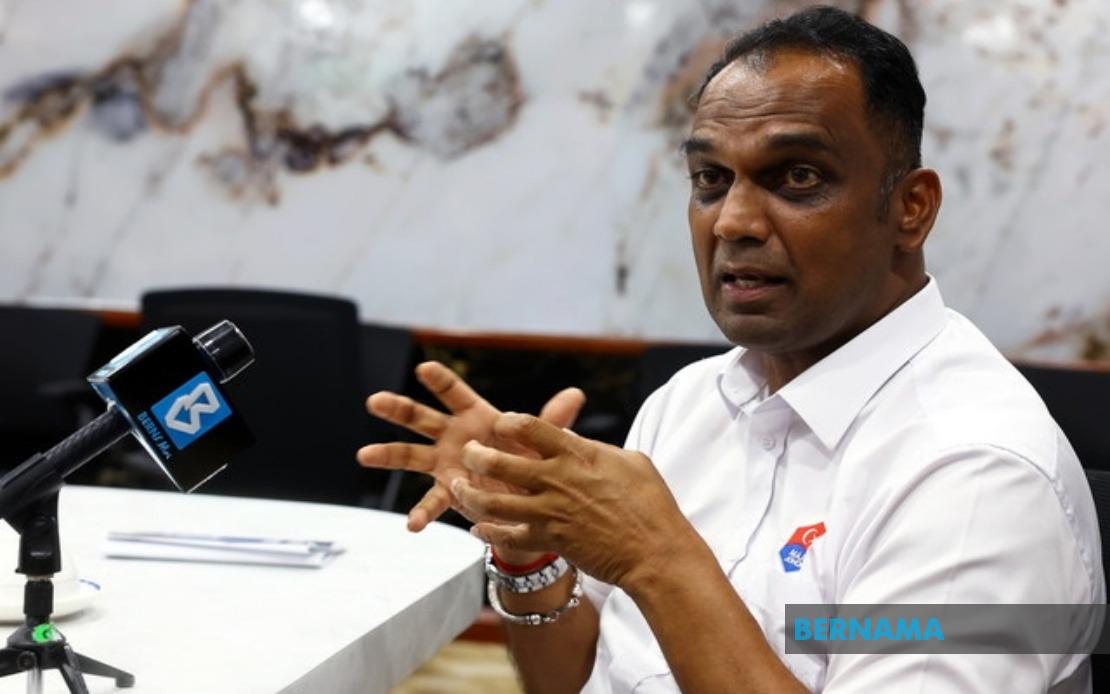
Johor's 16th state election is shaping up as a traditionally contested affair, with candidates deploying varied campaign strategies to capture voter support. Among them, Barisan Nasional's P. Pannir Selvam is charting a distinctly personal course in his bid to represent the Perling seat, eschewing heavy digital bombardment in favour of intimate community engagement through what he terms "pocket talks"—small-group discussions held across the constituency. This approach underscores a broader strategic calculation that in Malaysian elections, particularly at state level, tangible human connection often yields stronger returns than algorithmic reach.
Making his electoral debut in state-level politics, Pannir Selvam acknowledges the undeniable presence of social media as a contemporary campaign instrument, yet he contends that technology cannot fully replicate the efficacy of one-on-one and small-group dialogue. His conviction rests on the premise that direct engagement fosters genuine rapport, allows candidates to project authenticity, and creates memorable impressions that digital content struggles to achieve. This positioning reflects a pragmatic understanding of Malaysian voter psychology, particularly in urban and semi-urban constituencies like Perling, where residents juggle competing priorities and may remain somewhat detached from impersonal campaign messaging.
Through his pocket talk sessions, Pannir Selvam identifies multiple strategic advantages. The format permits him to introduce himself in a relatable manner, articulate his vision with nuance appropriate to each audience, and critically, to listen. By framing these meetings as bilateral conversations rather than top-down messaging, he creates space to comprehend the specific grievances and aspirations animating Perling residents. This intelligence-gathering dimension is strategically valuable, allowing him to calibrate his messaging and platform promises to resonate with actual community priorities rather than assumed ones. Early feedback from voters has reportedly been encouraging, bolstering his confidence that the approach is yielding dividends as voting approaches.
Pannir Selvam's candidacy carries a notable dynastic element that he has deliberately foregrounded. His father, Datuk KS Balakrishnan, is a political veteran of considerable stature: a five-term assemblyman for Permas and former member of Johor's state executive council. At 84 years old, the elder Balakrishnan remains actively involved in his son's campaign, personally attending events and traversing constituencies regardless of weather. For Pannir Selvam, this paternal involvement transcends emotional support; it serves as a visible endorsement of continuity and inherited political credibility. In the Malaysian electoral context, where family networks and personal histories carry weight, such proximity to an experienced political figure can substantially elevate a newcomer's perceived legitimacy.
The intergenerational dimension extends beyond symbolism into substantive guidance. Pannir Selvam credits his father with imparting crucial lessons about public service: the imperative to assist constituents without regard to ethnic or religious background, the value of gracefully accepting criticism, and the foundational importance of sincerity, honesty, and integrity in governance. These principles, distilled from decades of service, form the ideological scaffolding of his campaign messaging. By publicly attributing his political values to paternal instruction, he positions himself not as an untested novice but as someone already schooled in the philosophy and practice of representative politics by a seasoned mentor.
Pannir Selvam's professional background in local government provides another credential he mobilises in his candidacy. As a former member of Johor Bahru City Council (MBJB), he possesses direct experience in municipal administration—the interface where policy meets pavement. His campaign promises reflect this expertise: he commits to addressing the congestion that plagues daily commuting around Taman Perling Public Market and to resolving the endemic shortage of parking facilities that residents face. These are not visionary abstractions but quotidian problems that affect people's lived experience. By anchoring his platform to such concrete issues, he demonstrates both attentiveness to ground realities and confidence that his administrative background equips him to deliver solutions.
The Perling constituency presents a competitive landscape with 109,992 registered voters choosing among three primary contenders. Beyond Pannir Selvam's BN candidacy, the field includes Alan Tee Boon Tsong representing the Pakatan Harapan coalition and Boo Wei Han contesting under the banner of Parti Bersama Malaysia. This three-way contest suggests that no single faction dominates local sentiment, making the race genuinely open and placing premium on candidates' ability to mobilise their base and persuade persuadable voters. In such fragmented electoral scenarios, grassroots connection becomes especially consequential, as candidates cannot rely on overwhelming partisan allegiance alone.
The broader context of Johor's 16th state election involves 172 candidates competing across 56 seats, representing a substantial field of aspirants and reflecting Johor's continued political competitiveness. The state has long served as a bellwether within Malaysian politics, with its electoral outcomes carrying significance for national political trajectories. Polling is scheduled for July 11, with early voting opportunities on July 7, providing windows for both voters and observers to assess whether strategies like Pannir Selvam's grassroots engagement prove sufficient in the contemporary Malaysian electoral environment.
For regional observers, the Johor contest offers instructive insights into how candidates are recalibrating campaign strategies amid technological change and evolving voter expectations. Pannir Selvam's emphasis on pocket talks, while grounded in traditional relationship-building, represents a deliberate choice to resist the pressure toward pure digital campaigns. Whether this measured approach succeeds will provide data on whether personal politics retains its potency in modern Malaysia, or whether social media's pervasiveness has fundamentally altered the game. The outcome in Perling and across Johor will reveal voter preferences not only for particular candidates and parties, but implicitly for the style and substance of political engagement itself. His candidacy thus becomes a test case for whether authenticity and accessibility, deployed through intimate conversation, can compete effectively against the noise of digital campaigning in contemporary Southeast Asian democracy.

