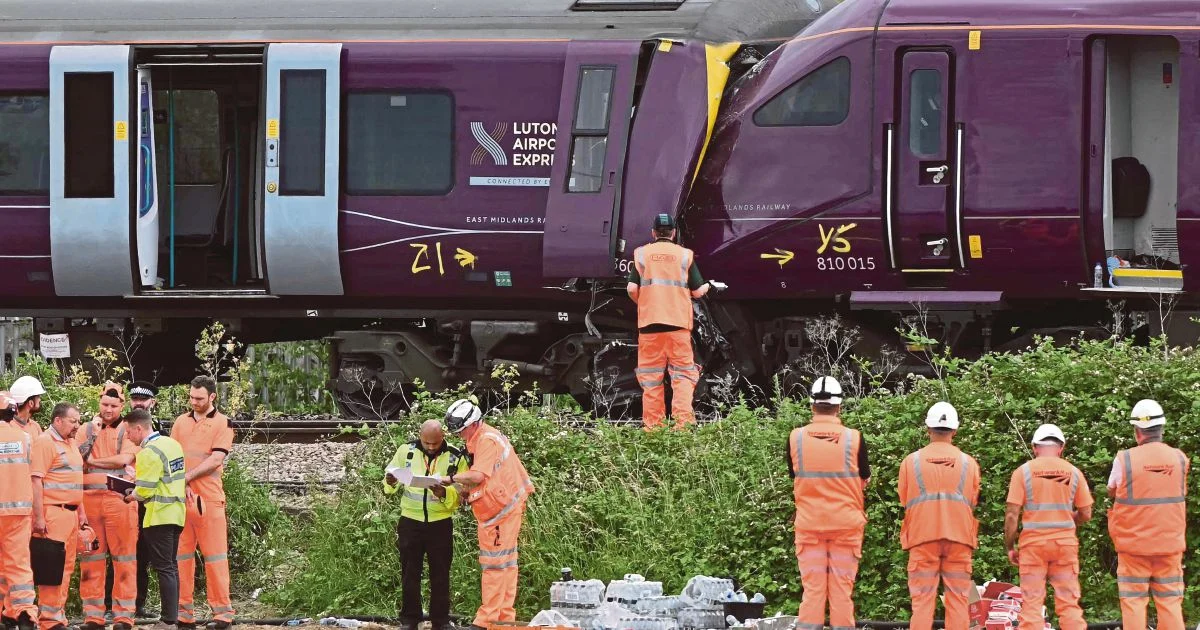
A train driver has died and 28 passengers remain hospitalised following a collision north of London on Saturday, prompting immediate intervention by UK accident investigators seeking to determine what triggered the incident. The collision, which occurred near Bedford in central England, ranked among the more serious rail incidents in recent years, with nine of those injured admitted in critical condition to surrounding medical facilities.
The Bedford accident investigation team moved quickly to the scene to begin systematic examination of the wreckage and operating conditions that preceded the crash. Preliminary efforts focused on establishing a timeline of events, reviewing communication records between rail operators and train crew, and assessing whether signalling systems or track conditions played any role in the collision. Such investigations typically require weeks or months to reach firm conclusions, with authorities examining multiple layers of causation rather than attributing incidents to single factors.
The severity of injuries among the hospitalised passengers underscores the force of impact when trains collide. Nine individuals classified as critically injured are receiving specialist care, while the remainder occupy beds across multiple hospitals in the region. Emergency services deployed rapidly following the collision alert, with ambulance crews, fire and rescue personnel, and medical teams coordinating response efforts to extract trapped passengers and provide immediate medical intervention at the scene.
The fatality of the train driver represents a particular tragedy, as crew members bear responsibility for operating heavy rail vehicles carrying hundreds of passengers. Driver fatalities in such incidents often result from catastrophic cabin damage or the extreme forces generated during collisions. The personal and professional dimensions of this loss will weigh heavily on the rail industry and the investigation team alike.
For Malaysian and Southeast Asian readers, this incident serves as a sobering reminder of rail safety challenges that extend across developed economies despite stringent regulatory frameworks. Britain's rail network, among the world's oldest, operates alongside European railway systems that prioritise safety through redundant signalling systems, automatic train protection mechanisms, and strict operational protocols. Yet serious incidents continue, suggesting that technological safeguards and human factors interact in complex ways that require continuous reassessment.
The UK's accident investigation procedures, conducted by specialised independent bodies separate from regulatory authorities, represent best-practice methodology that other nations, including those in Southeast Asia, study when developing their own transport safety frameworks. These investigations prioritise technical evidence gathering over rapid blame assignment, recognising that understanding root causes protects future passengers more effectively than seeking immediate accountability.
Rail travel in Britain has generally maintained strong safety records compared to road transportation, yet public confidence can erode rapidly following high-profile collisions. The incident will likely prompt questions from rail unions, passenger advocacy groups, and Members of Parliament regarding maintenance schedules, crew fatigue protocols, and investment levels in network upgrades. The rail industry's response to such scrutiny often shapes policy discussions about transport funding and safety priorities.
Signalling systems present particular investigation focus in collision incidents. Modern trains operate within complex networks where electronic signalling communicates safe operating distances between vehicles, prevents conflicts at junctions, and alerts drivers to hazardous conditions ahead. Failures in these systems, whether from technical malfunction, maintenance lapses, or operational error, can eliminate the protective margins that prevent collisions. The proximity of the collision to Bedford suggests it may have occurred at a junction or station area where operational complexity increases.
Track conditions and weather factors also warrant investigation consideration. Heavy rainfall, rail surface degradation, or excessive wear on wheel assemblies can affect braking performance and traction, potentially extending stopping distances or compromising directional stability. Saturday's weather conditions in the Bedford area will form part of the investigative record, alongside maintenance logs and inspection records for both trains involved.
Crew fatigue represents another critical variable examined in railway accidents. Driver working hours, rest protocols, and scheduling practices all influence alertness and reaction time. The investigation will access crewing records to establish whether fatigue contributed to any operational errors preceding the collision. British rail regulations establish maximum working hours and mandatory rest periods, yet enforcement and compliance remain ongoing challenges across the industry.
The psychological impact on surviving passengers and other railway workers cannot be minimised. Passengers experiencing train collisions often report lasting trauma and anxiety about travelling by rail, creating downstream effects on passenger numbers and revenue for operators. Crew members witness colleagues' injuries or deaths, generating workplace safety concerns that unions and management must address collaboratively.
As the investigation proceeds, the incident will likely influence ongoing discussions about rail investment priorities across the UK. Network improvements, signal upgrades, and infrastructure maintenance compete for limited government funding, and accidents inform political judgments about which safety interventions merit allocation of public resources. The Bedford collision may accelerate particular projects already under consideration by network operators or regulators.
Regionally, observers in Southeast Asian nations will monitor how British authorities conduct their investigation and how findings translate into operational changes. As Malaysia and other regional nations expand rail networks serving rapidly urbanising populations, learning from international incidents and investigation methodologies strengthens domestic transport safety frameworks and potentially prevents similar tragedies.
%22%2F%3E%3C%2Fpattern%3E%3C%2Fdefs%3E%3Crect%20width%3D%22100%25%22%20height%3D%22100%25%22%20fill%3D%22url(%23ph49f10g)%22%2F%3E%3Crect%20width%3D%22100%25%22%20height%3D%22100%25%22%20fill%3D%22url(%23ph49f10p)%22%2F%3E%3Ctext%20x%3D%2250%25%22%20y%3D%2250%25%22%20text-anchor%3D%22middle%22%20dominant-baseline%3D%22central%22%20fill%3D%22rgba(255%2C255%2C255%2C0.95)%22%20font-family%3D%22Georgia%2C%20'Times%20New%20Roman'%2C%20serif%22%20font-weight%3D%22700%22%20font-size%3D%22226%22%20letter-spacing%3D%22-0.02em%22%3EExists%3C%2Ftext%3E%3C%2Fsvg%3E)

%22%2F%3E%3C%2Fpattern%3E%3C%2Fdefs%3E%3Crect%20width%3D%22100%25%22%20height%3D%22100%25%22%20fill%3D%22url(%23ph4a4w5g)%22%2F%3E%3Crect%20width%3D%22100%25%22%20height%3D%22100%25%22%20fill%3D%22url(%23ph4a4w5p)%22%2F%3E%3Ctext%20x%3D%2250%25%22%20y%3D%2250%25%22%20text-anchor%3D%22middle%22%20dominant-baseline%3D%22central%22%20fill%3D%22rgba(255%2C255%2C255%2C0.95)%22%20font-family%3D%22Georgia%2C%20'Times%20New%20Roman'%2C%20serif%22%20font-weight%3D%22700%22%20font-size%3D%22272%22%20letter-spacing%3D%22-0.02em%22%3ETrump%3C%2Ftext%3E%3C%2Fsvg%3E)