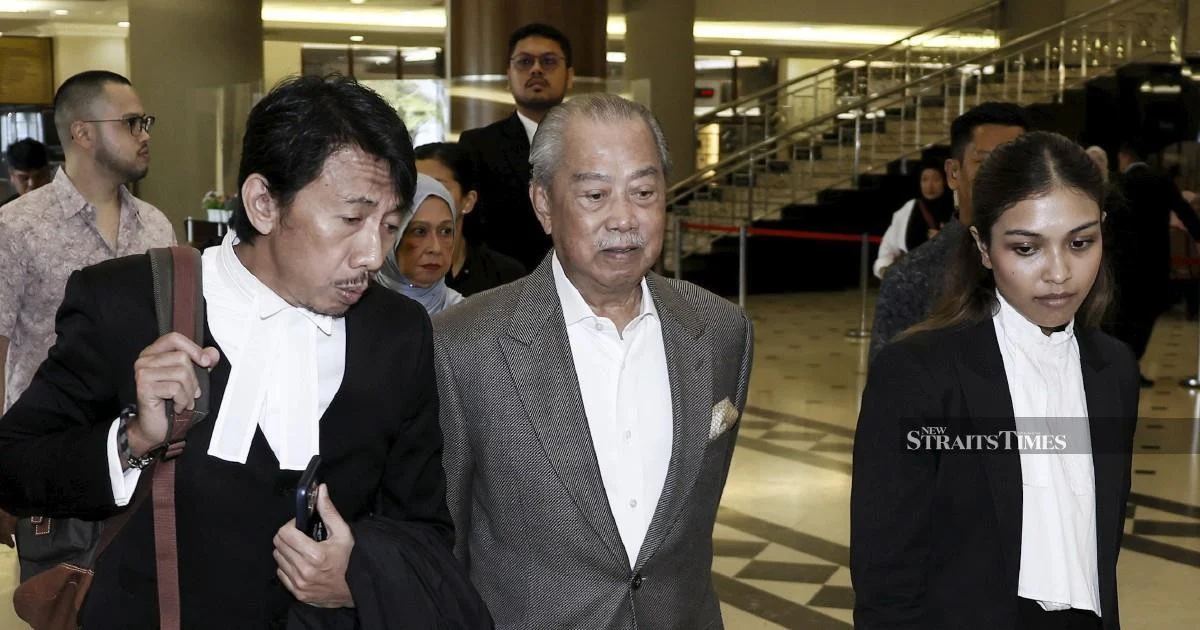
A company director became the latest witness in the High Court to detail the submission of multiple project applications to the former prime minister's office, revealing in her testimony that she had personally drafted five distinct letters purportedly on behalf of five separate companies seeking entry into the Jana Wibawa initiative. The disclosures emerged during proceedings in Kuala Lumpur as the court continued to scrutinise the circumstances surrounding how projects were allocated under the government's economic stimulus programme during Tan Sri Muhyiddin Yassin's tenure as prime minister.
The Jana Wibawa programme, launched during the COVID-19 pandemic period, was designed as an economic assistance initiative to support businesses and generate employment across the nation. The programme became the subject of considerable public interest and regulatory investigation following concerns about how projects were selected and allocated to companies. The project listings, values, and bidding mechanisms drew particular attention from auditors and oversight bodies seeking to understand whether proper procedures had been followed in the distribution of government-backed opportunities.
The witness's account of drafting multiple letters from different corporate entities raises significant questions about the coordination and presentation of these applications to the prime minister's office. The parallel submission of five separate bids from distinct companies, ostensibly prepared by the same individual, suggests either an unusually concentrated involvement in the application process or potentially a systematic approach to maximising the chances of securing contracts under the programme. Such practices, while not necessarily unlawful, form part of the broader pattern of evidence being presented to the court.
The High Court proceedings represent an important moment of accountability regarding how pandemic-era stimulus funds were distributed. Malaysia, like many regional economies, faced tremendous pressure during 2020 and 2021 to rapidly deploy financial support to struggling businesses and maintain economic stability. The Jana Wibawa programme was positioned as a key instrument in this response, but questions about transparency and fairness in project selection have persisted among Malaysian business communities and civil society observers.
The testimony also sheds light on the operational mechanics of how companies approached securing government contracts during this period. The involvement of a single director in preparing correspondence from multiple entities suggests either a scenario where she provided professional services to various clients seeking project access, or a more concentrated arrangement centred around her role as a principal operator across these firms. The court's examination of these details remains crucial to understanding whether there were any inappropriate concentrations of influence or conflicts of interest in how applications reached decision-makers.
For Malaysian companies and entrepreneurs watching these proceedings, the testimony carries important implications regarding best practices in government procurement and transparency standards. The case demonstrates the judiciary's commitment to examining even technical aspects of how applications were compiled and submitted, reinforcing that procedural propriety matters as much as substantive merit in government contracting. This scrutiny sets expectations for current and future stimulus or assistance programmes that may be launched by Malaysian authorities.
The regional dimension of this investigation also warrants consideration. Southeast Asian governments have collectively deployed substantial economic support mechanisms in response to pandemic pressures, and how these funds are allocated remains a matter of regional interest and governance standards. Malaysia's willingness to conduct open court proceedings examining these allocations reflects a commitment to institutional accountability that extends beyond the particular case at hand.
The prosecution's building of evidence through witness testimony about the mechanics of application submission suggests a methodical approach to establishing patterns or irregularities in how the Jana Wibawa programme operated. Rather than relying solely on documentary evidence or financial records, the court is hearing directly from individuals involved in the process, allowing for detailed questioning about their actions, knowledge, and the context surrounding the submission of these applications.
The implications for future government economic stimulus initiatives in Malaysia are noteworthy. As policymakers consider how to structure similar programmes in response to future economic challenges or sectoral support needs, the judiciary's scrutiny of Jana Wibawa allocations will likely influence how application processes are designed, monitored, and documented. Clearer protocols around application submission, conflict-of-interest declarations, and record-keeping may emerge as lessons from this case.
Looking forward, the continuation of these High Court proceedings will likely produce further testimony and evidence about the decision-making processes surrounding Jana Wibawa project allocations. Whether this particular witness's preparation of five letters constituted an inappropriate coordination of applications, appropriate professional service provision, or something between these poles, remains a matter for the court to determine based on the full evidentiary record and applicable legal principles governing government procurement and potential misconduct.

