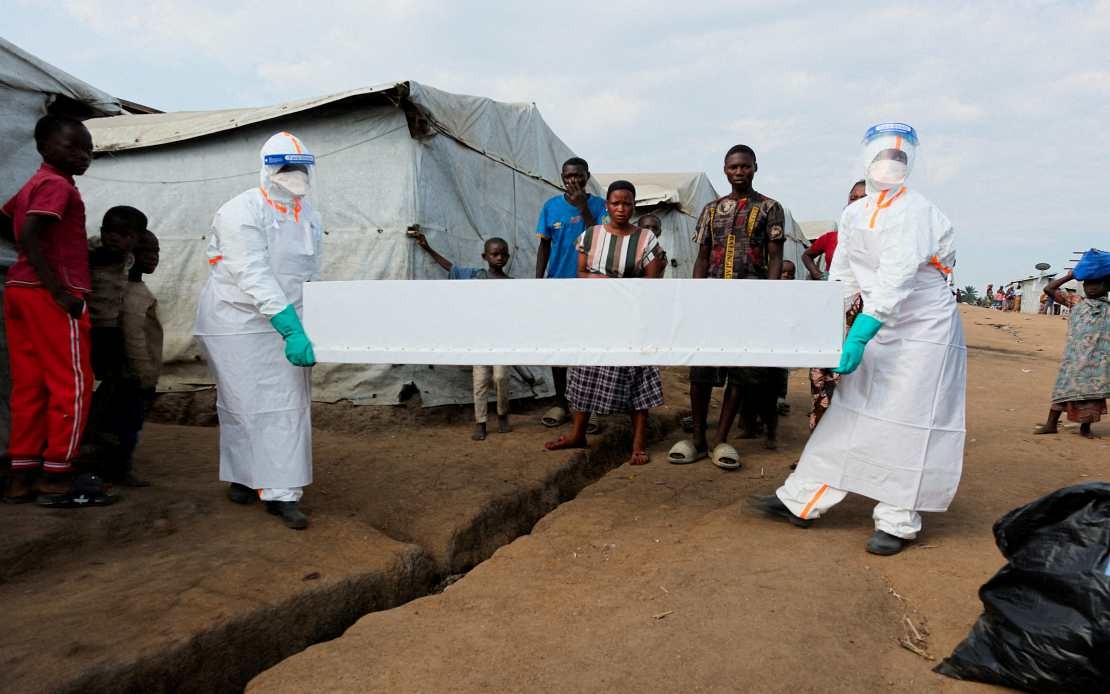
The Democratic Republic of Congo's Ebola crisis has crossed a critical threshold with confirmed cases now exceeding 1,000, marking a sobering milestone in what has become one of the continent's most concerning disease outbreaks in recent years. As of mid-June, health authorities documented 1,003 confirmed infections and 254 deaths since the virus was first identified on May 15, translating to a mortality rate of 25.3 per cent. The steady climb in case numbers reflects the persistent challenge facing response teams operating across three eastern provinces simultaneously, even as containment efforts continue to intensify.
The geographic distribution of this outbreak across Ituri, North Kivu, and South Kivu provinces presents unique obstacles for disease management. Health Minister Roger Kamba acknowledged that while recovery numbers have shown modest improvement, the response infrastructure faces mounting pressure. At the time of reporting, approximately 365 patients remained isolated or hospitalised, while at least 100 individuals had recovered from the virus. These figures underscore the resource-intensive nature of Ebola management, requiring sustained medical intervention and isolation protocols across multiple jurisdictions simultaneously.
International health officials have sounded increasingly urgent alarms about the trajectory of this outbreak. The Africa Centres for Disease Control and Prevention cautioned publicly that without rapid containment, the current epidemic could ultimately prove more devastating than the 2014-2016 West African crisis, which claimed over 11,000 lives across Guinea, Liberia, and Sierra Leone. That earlier pandemic fundamentally tested regional and international health systems and exposed critical gaps in disease surveillance and cross-border coordination. The prospect of a similarly catastrophic outcome in Central Africa carries profound implications not only for the Democratic Republic of Congo but for the broader East and Central African region, where porous borders and high population mobility facilitate rapid viral transmission.
A significant development emerged from collaborative research conducted by scientists from Uganda's Department of National Health Laboratory and Diagnostic Services and Congo's Institute of National Biomedical Research. These investigations identified the circulating strain as Ebola Bundibugyo and, critically, determined that it originated from a fresh wildlife spillover event. This finding carries important epidemiological weight, as it definitively rules out the possibility that the outbreak stemmed from residual transmission chains from previous epidemics or dormant viral reservoirs that had evaded detection. Understanding the source and mechanism of emergence provides vital information for designing targeted prevention strategies and understanding animal-human interface transmission patterns.
The 25.3 per cent mortality rate, while lower than some Ebola variants, remains exceptionally high by any public health standard and vastly exceeds mortality from most infectious diseases. For Malaysian observers and regional policymakers, this statistic underscores the inherent severity of filoviral diseases and the imperative for robust surveillance systems capable of detecting unusual disease clustering before outbreaks achieve significant scale. The Democratic Republic of Congo's experience demonstrates how rapidly transmission can accelerate once community transmission becomes established, transforming a manageable outbreak into a public health emergency.
Despite the alarming trajectory, Congolese health authorities have maintained that response operations continue to gather momentum. Active case investigations persist in affected areas, alongside epidemiological surveillance designed to identify new infections quickly and implement isolation measures. Community communication initiatives represent a critical component of the response strategy, as public understanding and cooperation directly influence transmission dynamics. When communities understand disease transmission pathways and trust health messaging, they prove more likely to seek prompt treatment and adhere to isolation recommendations, both essential for breaking transmission chains.
The emphasis on diagnosis and case management intensification reflects a strategic pivot toward clinical interventions. Early identification of cases enables faster isolation and supportive care, which can meaningfully improve survival outcomes even without disease-specific therapeutics. Healthcare workers in Ituri, North Kivu, and South Kivu provinces operate under considerable strain, treating highly infectious patients while managing the psychological and physical toll of sustained Ebola response operations. Equipment shortages, staff fatigue, and the emotional burden of managing a disease with such high mortality all compound the operational challenges.
For Southeast Asian nations including Malaysia, the Democratic Republic of Congo outbreak carries important cautionary lessons about disease preparedness. While geographic distance provides some buffer against direct transmission risk, the interconnected global health landscape means that emerging infectious diseases pose potential threats to all regions. The speed with which Ebola can spread in areas with high population density and limited healthcare infrastructure, combined with modern transportation networks, demands that countries maintain vigilant surveillance systems and pandemic preparedness protocols. Malaysia's position as a regional hub with significant air traffic to multiple African nations necessitates heightened awareness and robust screening protocols at points of entry.
The convergence of factors driving the Democratic Republic of Congo outbreak—environmental disruption facilitating wildlife-human contact, dense urban settlements in resource-constrained areas, limited healthcare infrastructure, and ongoing regional instability—creates conditions particularly conducive to emerging infectious disease transmission. These structural vulnerabilities are not unique to the Democratic Republic of Congo but characterise multiple regions globally, making this outbreak a reminder of systemic gaps in global disease prevention architecture. Investment in surveillance systems, laboratory capacity, and healthcare infrastructure in vulnerable regions represents a form of global disease prevention that benefits all nations.
As case numbers continue their upward trajectory, the international community faces mounting pressure to provide substantive support to Congolese health authorities. Response effectiveness ultimately depends on sustained funding, technical expertise, and personnel deployment from regional and international partners. The Africa Centres for Disease Control and Prevention's warning carries implicit urgency for donor governments and multilateral organisations to treat the outbreak with corresponding seriousness. Previous epidemic experiences demonstrate that delayed intervention or insufficient resource commitment invariably results in exponentially greater case numbers and deaths.
The psychological and social dimensions of this outbreak warrant equal attention to epidemiological metrics. Communities experiencing high mortality from a novel, poorly understood disease often develop mistrust toward health authorities and resist isolation measures, paradoxically accelerating transmission. Culturally sensitive communication strategies that acknowledge community concerns while building confidence in public health interventions prove essential for moving transmission rates downward. The Democratic Republic of Congo's response teams recognise this dimension, but the scale of the challenge tests the limits of available capacity.
%22%2F%3E%3C%2Fpattern%3E%3C%2Fdefs%3E%3Crect%20width%3D%22100%25%22%20height%3D%22100%25%22%20fill%3D%22url(%23ph3l4smg)%22%2F%3E%3Crect%20width%3D%22100%25%22%20height%3D%22100%25%22%20fill%3D%22url(%23ph3l4smp)%22%2F%3E%3Ctext%20x%3D%2250%25%22%20y%3D%2250%25%22%20text-anchor%3D%22middle%22%20dominant-baseline%3D%22central%22%20fill%3D%22rgba(255%2C255%2C255%2C0.95)%22%20font-family%3D%22Georgia%2C%20'Times%20New%20Roman'%2C%20serif%22%20font-weight%3D%22700%22%20font-size%3D%22194%22%20letter-spacing%3D%22-0.02em%22%3EBersatu%3C%2Ftext%3E%3C%2Fsvg%3E)

%22%2F%3E%3C%2Fpattern%3E%3C%2Fdefs%3E%3Crect%20width%3D%22100%25%22%20height%3D%22100%25%22%20fill%3D%22url(%23ph4zr2og)%22%2F%3E%3Crect%20width%3D%22100%25%22%20height%3D%22100%25%22%20fill%3D%22url(%23ph4zr2op)%22%2F%3E%3Ctext%20x%3D%2250%25%22%20y%3D%2250%25%22%20text-anchor%3D%22middle%22%20dominant-baseline%3D%22central%22%20fill%3D%22rgba(255%2C255%2C255%2C0.95)%22%20font-family%3D%22Georgia%2C%20'Times%20New%20Roman'%2C%20serif%22%20font-weight%3D%22700%22%20font-size%3D%22320%22%20letter-spacing%3D%22-0.02em%22%3EKing%3C%2Ftext%3E%3C%2Fsvg%3E)