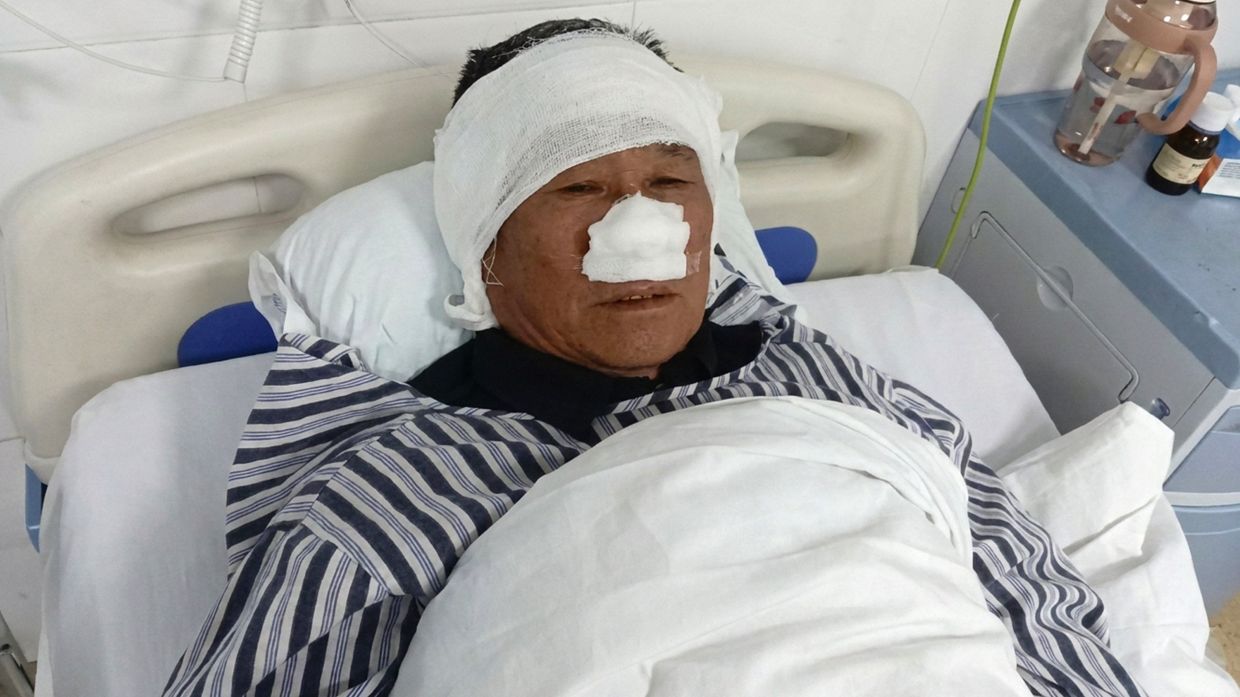
A courageous intervention by a retired village mediator in Hunan province has earned him recognition from the Chinese government as a national hero, though the cost was extraordinarily personal. Zeng Fanlin, 69, from Chenzhou, sacrificed much of his nose when he tackled a violent attacker who was threatening to strangle a woman in April. His actions have since been honoured alongside 85 others on China's latest official list of "national heroes for a just cause", announced on July 9.
Zeng's background shaped his willingness to act when danger erupted in his village. Orphaned during childhood, he was raised with assistance from local residents and later benefited from government scholarships to complete his education. This experience of community support cultivated a deep sense of obligation to repay that kindness. After retiring from his position as a village official, he transitioned into voluntary work as a dispute mediator, using his standing and interpersonal skills to help neighbours resolve conflicts without escalating tensions. His track record of community service extended beyond mediation; in 2016, he had already assisted police in apprehending a thief, demonstrating a consistent pattern of civic engagement.
The April incident that changed his life began when a man in his twenties entered the village and initiated an unprovoked rampage through the neighbourhood. He assaulted pedestrians indiscriminately, kicked at residential doors, and created an atmosphere of fear and chaos. The situation escalated when he spotted a woman on an e-bike and forcibly stopped her, seizing her by the neck with apparent intent to cause serious harm. The woman faced immediate danger of strangulation, yet bystanders were paralysed by fear of the attacker's obvious aggression. Most chose to call police rather than intervene directly, leaving the victim vulnerable during those critical moments when police response times could mean the difference between life and death.
Zeng's decision to act was instinctive and selfless. He rushed forward and engaged the attacker directly, managing to tackle him to the ground. His courageous intervention created the opening for two other villagers to join the struggle and help restrain the violent man. However, during the intense physical confrontation, the attacker turned to biting as a defensive weapon, and in a moment of savage desperation, bit away a significant portion of Zeng's nose. Despite the excruciating pain and severity of the injury, Zeng maintained his grip on the attacker until police officers arrived at the scene. The suspect was taken into custody, and Zeng was transported to hospital for emergency treatment.
The medical consequences of his bravery proved far more complicated than a simple wound treatment. Doctors assessed that Zeng had lost most of his nose structure, creating a reconstruction challenge of considerable difficulty. Medical teams warned him of potential long-term complications, including chronic pain, functional breathing difficulties, and permanent scarring that would affect his appearance indefinitely. The initial reconstruction plan required a minimum of six months of recovery, involving multiple surgical procedures and skin grafts. Zeng underwent two surgeries where physicians rebuilt his nose using a skin graft harvested from his own scalp and reconstructed his nasal wings to restore basic respiratory function. Although he regained the ability to breathe normally, he remains burdened by constant pain as a daily reminder of his sacrifice.
The financial burden of his medical treatment exceeded 70,000 yuan, equivalent to approximately US$10,000, a substantial sum for most rural residents. Recognising both the severity of his injury and the nobility of his actions, government authorities provided support to cover the medical expenses. In addition, the Alibaba Foundation and local media outlets recognised his bravery by awarding him 20,000 yuan, further acknowledging his contribution to community safety. Yet money could never adequately compensate for the permanent disfigurement and chronic pain he now endures.
When speaking to local media about his ordeal, Zeng displayed remarkable perspective and absence of self-pity. He stated that in comparison to the life he had saved, the physical sacrifices he had made were entirely worthwhile. His philosophical approach to his injuries reflects a lifetime of values emphasising community welfare over personal comfort. His daughter has described him as a man possessed of a strong moral compass who finds it impossible to remain passive when confronted with injustice or wrongdoing. According to those who know him, passivity in the face of evil has never been part of his character.
The broader legal context surrounding the case underscores the seriousness of the attacker's actions. Under Chinese criminal law, the intentional infliction of serious bodily injury carries penalties ranging from three to ten years of imprisonment, reflecting the gravity with which the legal system treats such violence. The case remains under investigation by authorities, though police have indicated that the suspect's violent outburst stemmed from a loss of emotional control rather than premeditation or specific targeting of victims. The rescued woman has maintained a low public profile, offering no public statements about the traumatic incident or her rescuer.
Zeng's elevation to national hero status reflects broader Chinese values regarding civic virtue and moral courage. His story resonates particularly in rural communities where informal social networks and personal relationships remain central to maintaining order and resolving disputes. By honouring individuals like Zeng, the Chinese government sends a message that extraordinary acts of selflessness in defence of vulnerable community members constitute the highest form of citizenship. Online commentators responding to his story have emphasised both admiration for his heroism and concern that such sacrifice should not go unrecognised, with one observer noting that perpetrators of violence must face severe consequences to ensure that good people's sacrifices are not rendered meaningless.
For Malaysian readers and Southeast Asian observers, Zeng's story carries significance beyond the immediate incident. It illustrates persistent tensions in contemporary East Asian societies between individual safety concerns and community responsibility, particularly in smaller towns and villages where informal social bonds remain strong. The incident also highlights the role that volunteers and retired officials can play in maintaining social cohesion, a lesson relevant to communities throughout the region where ageing populations increasingly assume civic responsibilities. Furthermore, Zeng's willingness to intervene despite personal risk challenges assumptions about urban and rural attitudes toward public safety and collective action in the face of danger.

