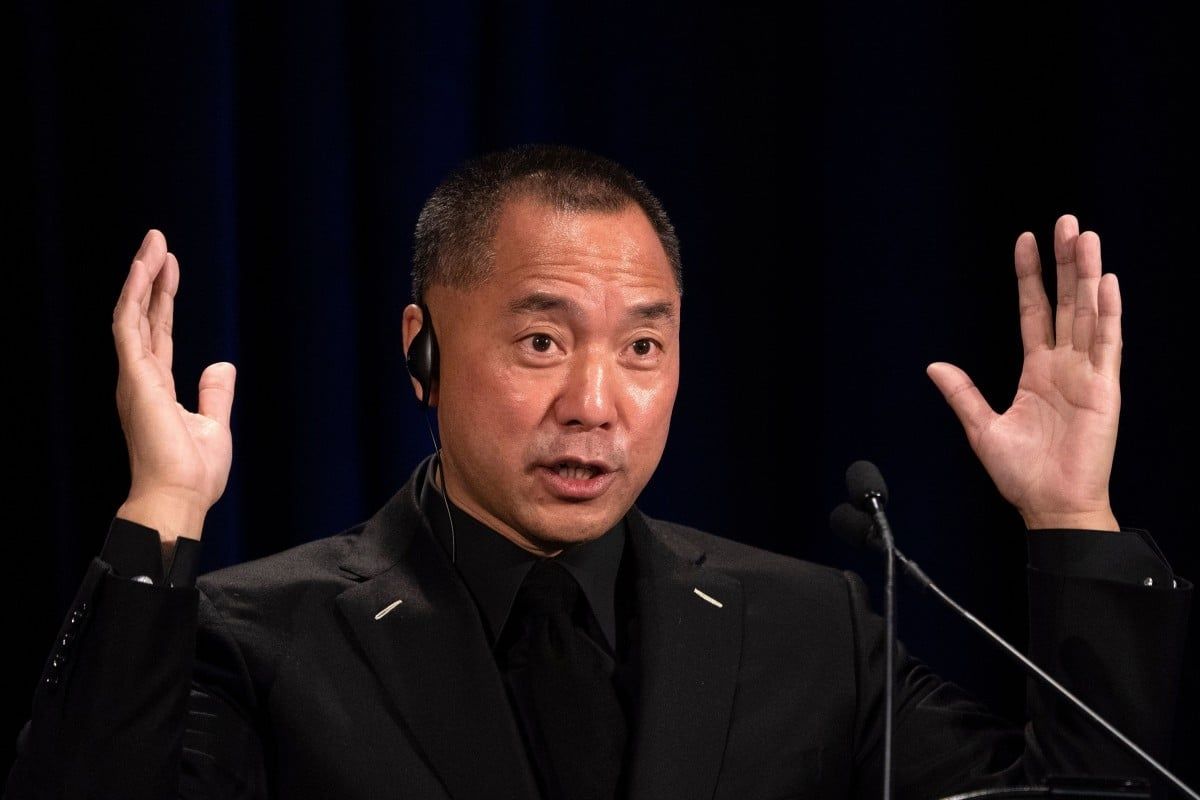
A self-exiled Chinese billionaire who once positioned himself as a leading dissident voice in the United States faces three decades in federal prison after a Manhattan court convicted him of orchestrating one of the largest financial fraud schemes targeting vulnerable investors seeking to challenge Beijing's Communist Party. Judge Analisa Torres handed down the 30-year sentence to Guo Wengui on Monday, describing how his predatory scheme systematically exploited the aspirations of democracy advocates, extracting their life savings to bankroll an extravagant lifestyle across American high society.
Guo, also known by the aliases Miles Guo and Ho Wan Kwok, had built a carefully cultivated image as an anti-Communist activist after fleeing China in 2014, eventually settling in New York where he cultivated connections with conservative political circles and even joined former President Donald Trump's Mar-a-Lago golf club. His relationship with Steve Bannon, the influential conservative strategist, became particularly close, culminating in a 2020 announcement of a joint initiative purportedly aimed at toppling the Chinese government. Yet beneath this facade of political activism lay an intricate financial scheme that prosecutors say victimised hundreds of thousands of people globally between 2018 and 2023.
The scale of the fraud reveals sophisticated deception across multiple entities under Guo's control. Prosecutors demonstrated that he channelled over one billion dollars from investors into various schemes, including his media company GTV Media Group Inc., the Himalaya Farm Alliance, and the Himalaya Exchange. Rather than generating legitimate returns or advancing stated political objectives, these entities primarily functioned as vehicles to funnel wealth toward Guo's personal indulgence. Court documents paint a vivid portrait of the proceeds funding mansions, luxury yachts, high-performance race cars, designer fashion collections, and extravagant furnishings—a lifestyle of extraordinary excess designed to broadcast his success to potential new investors.
The human cost of Guo's deception emerged starkly during courtroom proceedings, as victim testimony revealed the profound devastation wrought upon ordinary individuals who believed they were supporting a noble cause. Wei Chen, one of investor who testified at trial, described how the fraud "destroyed my life" and that of her entire family. Judge Torres read excerpts from letters submitted by victims detailing the loss of life savings, overwhelming anxiety, profound shame, and irreparable damage to family relationships caused by the fraudulent investments. These accounts demonstrated that Guo's crimes transcended financial loss, inflicting deep psychological and emotional trauma upon people whose trust he had deliberately manipulated.
During Monday's sentencing hearing, Guo displayed what observers characterised as a conspicuous lack of genuine remorse for his actions. The defendant briefly protested his jail treatment, claiming he had suffered physical distress that morning, though prosecutors had previously characterised such complaints as calculated malingering designed to manipulate court proceedings. When addressing the criminal charges directly, Guo offered no acknowledgment of harm caused to victims, instead framing his presence in America narrowly through the lens of anti-Communist activism. The judge pointedly noted his refusal to accept responsibility, observing that he "insists incredibly his conduct caused no loss and harmed no one," while simultaneously directing supporters to harass and intimidate individuals who dared speak against him publicly.
Guo's legal team mounted a defence centred on claims of persecution by the Chinese Communist Party, arguing that a lengthy sentence would merely vindicate Beijing's allegedly coordinated campaign to eliminate him and other dissidents from American public life. Defence lawyers submitted evidence suggesting Guo bore physical scars and disfigurements from torture allegedly endured in China between 1993 and 2022, attempting to cast him as a victim deserving lenience rather than a predatory fraudster. They contended that comparable defendants in financial crimes received substantially lighter sentences of two to four years, and suggested that an extended prison term would embolden further Chinese government efforts against dissidents worldwide. This argument failed to persuade Judge Torres, who imposed the full 30-year term prosecutors had recommended.
The sentencing underscores the vulnerability of asylum seekers and political refugees to exploitation by bad actors who weaponise legitimate grievances against authoritarian regimes. Guo's case demonstrates how sophisticated fraudsters can leverage genuine opposition to repressive governments and democratic aspirations to build trust with vulnerable populations, particularly immigrants and diaspora communities deeply invested in homeland politics. His exploitation of these constituencies—convinced they supported a political struggle—represents a particularly cynical form of predation that extends beyond conventional fraud into the realm of ideological manipulation. This dimension carries particular relevance for Southeast Asian nations hosting exile communities from Burma, Thailand, Vietnam, and Cambodia, where similar dynamics could potentially unfold.
Chinese authorities have maintained that Guo faces multiple criminal allegations in Beijing, including charges of rape, kidnapping, and bribery—accusations Guo dismissed as politically motivated fabrications. Following Monday's sentencing, China's Ministry of Foreign Affairs reiterated that Guo remains wanted by Chinese law enforcement and carries an Interpol Red Notice, a request to global police forces to arrest the subject pending possible extradition. This international dimension complicates Guo's legal situation and raises broader questions about the intersection of US domestic criminal justice, international law enforcement cooperation, and the competing interests of different states regarding high-profile fugitives.
The conviction and sentencing represent a significant moment in ongoing debates about due process for asylum seekers in the United States and the accountability mechanisms available when individuals leverage political persecution claims to conduct elaborate criminal schemes. Prosecutors established that Guo deliberately exploited looser American asylum regulations to establish himself in the country, subsequently using his gained freedom and resources to defraud thousands. The case suggests American immigration and security systems may require heightened scrutiny of prominent exile figures making explosive claims against foreign governments, particularly when such figures rapidly accumulate wealth and political influence. For regional observers, the outcome reinforces that residency in democratic countries provides no immunity from prosecution for serious financial crimes, regardless of the defendant's stated opposition to authoritarian rule.
Guo's sentencing to 30 years imprisonment, coupled with a restitution order for 889 million dollars, represents a formal acknowledgment by US courts that political activism credentials cannot obscure or justify systemic fraud targeting vulnerable investors. As he departed the courtroom, supporters applauded—a reminder that Guo retains a dedicated following despite the conviction. Nevertheless, the judiciary has determined that his claimed noble motivations pale against the documented reality of predatory financial deception, establishing a precedent that political rhetoric alone cannot shield fraudsters from significant criminal consequences in the American legal system.

