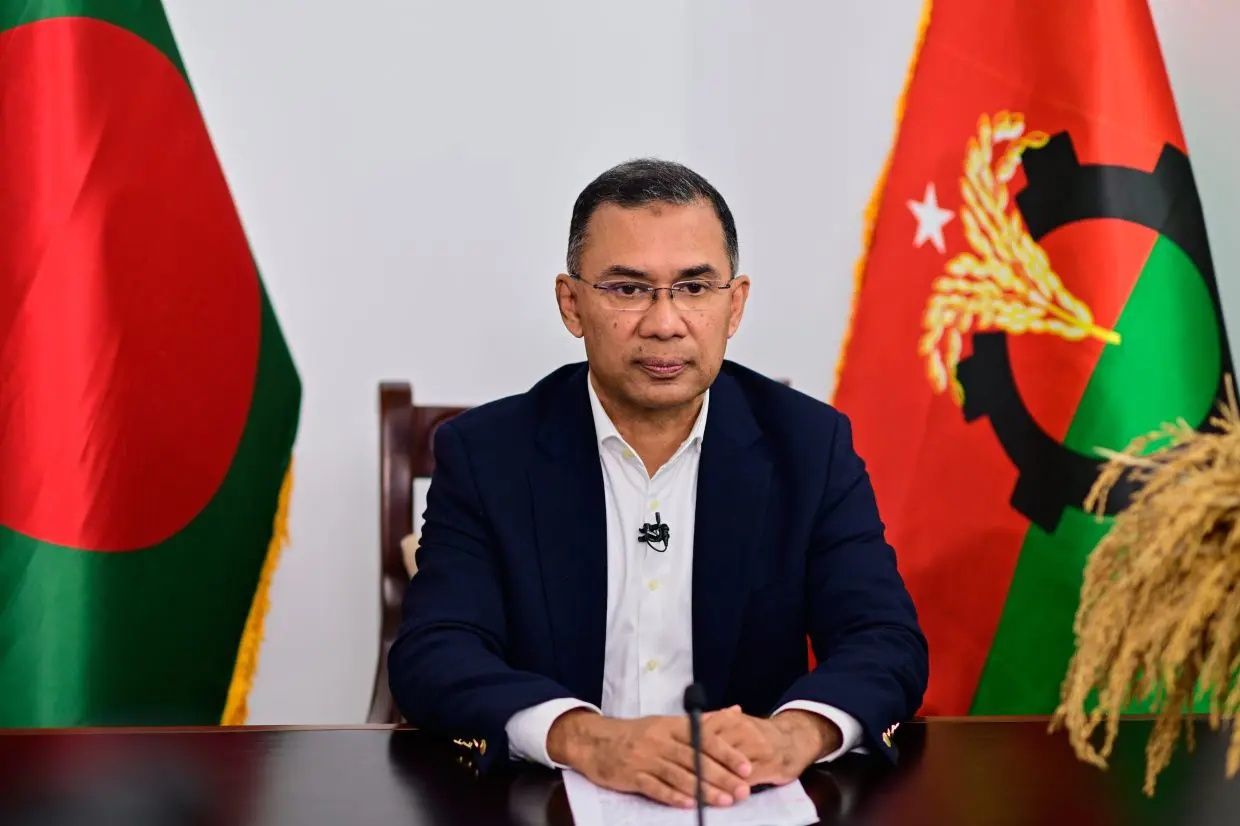
Bangladesh Prime Minister Tarique Rahman is embarking on his first foreign mission since taking office, a deliberate diplomatic manoeuvre that will see him touch down in Malaysia on Sunday before proceeding to China. The choice of destinations carries symbolic weight in South Asian geopolitics, particularly given Bangladesh's geographic proximity to India and the historical closeness of their institutional ties. Instead of following convention by visiting New Delhi first, Rahman's itinerary reflects the shifting calculus of Bangladeshi foreign policy under his stewardship.
The prime minister's visit to Malaysia addresses a substantial diaspora reality: an estimated 800,000 Bangladeshi workers call the country home, representing more than one-third of Malaysia's entire foreign workforce. This human dimension underscores why Dhaka would prioritise engagement with Kuala Lumpur at this pivotal moment in Bangladesh's political trajectory. For Malaysian policymakers and businesses, the visit presents an opportunity to reinforce economic ties with a nation that provides crucial human capital to its economy. The scale of this workforce migration means that bilateral relations carry material significance for both populations.
China features prominently in Rahman's itinerary for reasons rooted in infrastructure ambitions and regional alignment. During discussions in Beijing, trade partnerships and development projects will take centre stage, with particular attention on securing Chinese financial and technical support for the Teesta river restoration initiative. This long-stalled undertaking aims to rehabilitate a critical waterway through systematic dredging, embankment reinforcement, and irrigation enhancement—projects requiring the kind of capital investment and engineering expertise that China has demonstrated capacity to provide across Asia. The Teesta scheme carries significance beyond engineering; control and management of shared river systems often determine geopolitical dynamics in South Asia.
The diplomatic framing of these visits as economic partnership consolidation reveals Rahman's intention to position Bangladesh as an active player in regional commerce and development rather than a passive participant in great-power competition. Foreign ministry officials have explicitly characterised the tour as a major diplomatic initiative, suggesting this is not merely a ceremonial undertaking but rather foundational to how his administration intends to conduct international relations. This articulation signals to both domestic constituencies and external observers that economic pragmatism, rather than historical allegiances or ideological commitments, will guide Bangladesh's external engagement.
The political context shadowing these visits cannot be overlooked. Bangladesh experienced significant upheaval in 2024 when mass protests toppled the government of Prime Minister Sheikh Hasina, who maintained close ties with New Delhi. That uprising fundamentally altered the country's political landscape, prompting an interim administration to assume control before Rahman's electoral victory and subsequent appointment in February. The transition represented not merely a change of personnel but potentially a recalibration of how Dhaka relates to its most powerful neighbour.
Relations between Bangladesh and India have grown prickly since Hasina's departure. The former prime minister has sought refuge in India, where she remains, and Bangladesh has persistently demanded her extradition to face legal proceedings at home. This outstanding dispute exemplifies the tension between the two nations. Beyond that specific grievance, border management has emerged as a source of friction, with Indian authorities allegedly directing individuals classified as illegal migrants across the frontier into Bangladesh, creating humanitarian and administrative challenges for Dhaka.
The political biography of Sheikh Hasina carries additional weight because her alignment with New Delhi was widely understood as reflecting ideological and strategic preference, not merely circumstantial positioning. Her ouster therefore registered as more than a leadership change; it appeared to many observers as a potential shift in Bangladesh's regional orientation. Rahman's decision to visit Malaysia and China before engaging with India sends a pointed signal about recalibrating those relationships and demonstrating that Dhaka will not default to New Delhi simply because of geographic proximity or historical connection.
India views Bangladesh's engagement with China with considerable unease, given the broader context of Sino-Indian competition for regional influence across South Asia. Beijing has invested substantially in infrastructure, trade arrangements, and strategic positioning throughout the subcontinent, initiatives that often run counter to Indian interests. Bangladesh, situated at a geopolitically sensitive junction between South and Southeast Asia, represents a prize that both powers value. For India, seeing its neighbour cultivate deepening ties with China constitutes a setback in its efforts to maintain predominant influence in the immediate region.
The timing of Rahman's tour also reflects Bangladesh's strategic positioning between major power blocs. By addressing Malaysia simultaneously with China, Dhaka demonstrates engagement with both Asian configurations—the Chinese-led regional development model and the Southeast Asian institutional framework within which Malaysia operates. This multi-directional diplomacy allows Bangladesh to diversify partnerships and avoid excessive dependence on any single external power, a calculation increasingly common among mid-sized Asian nations seeking autonomy in an environment of intensifying great-power competition.
For Malaysian observers, Rahman's inaugural overseas visit carries implications worth considering. It signals that Bangladesh under new leadership intends to maintain robust engagement with Southeast Asia, supporting the region's broader economic integration and institutional development. The presence of such a substantial Bangladeshi workforce in Malaysia means that bilateral relations extend beyond government-to-government interaction to encompass worker welfare, remittance flows, and community integration—dimensions that economic engagement alone cannot address.