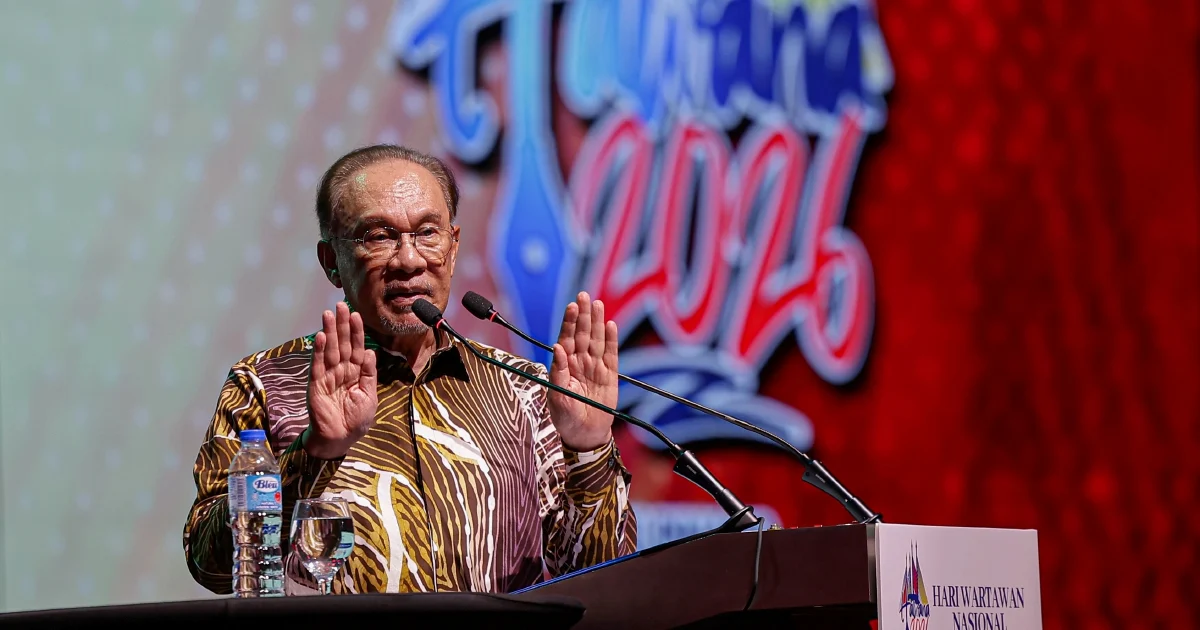
Prime Minister Datuk Seri Anwar Ibrahim has welcomed the elevation of Tan Sri Nallini Pathmanathan to the helm of the Malaysian Media Council, signalling that her appointment represents a strategic choice to restore confidence in an institution that has faced ongoing questions about its independence and effectiveness. Speaking in Butterworth, Anwar articulated his optimism that the former Federal Court judge would bring enhanced legitimacy to an organisation tasked with navigating the complex terrain of media governance in an increasingly polarised information landscape.
The appointment of Nallini, whose distinguished judicial career spans decades on the bench, marks a notable shift in the MMC's leadership trajectory. Her transition from the highest levels of Malaysia's judiciary to media regulation signals an attempt to infuse the council with the impartiality and gravitas traditionally associated with the courts. In an environment where media credibility has become a central concern for policymakers across Southeast Asia, this move carries symbolic weight beyond the immediate administrative transition.
The Malaysian Media Council operates within a complex institutional framework, overseeing standards and conduct within a media ecosystem that encompasses traditional broadcasters, print outlets, and increasingly, digital platforms. The body's effectiveness depends substantially on whether stakeholders—journalists, media organisations, and the public—perceive its decisions as grounded in rigorous principle rather than political expediency. Anwar's public confidence in Nallini's appointment reflects recognition that institutional legitimacy cannot be mandated but must be cultivated through demonstrated competence and integrity.
Nallini's judicial background carries particular implications for how the MMC might approach emerging regulatory challenges. Courts operate within clearly defined procedural frameworks and are constrained by precedent and established legal reasoning. The application of such disciplined methodologies to media governance could introduce greater consistency and transparency to council decisions, areas where critics have previously identified gaps. Her judicial experience also suggests familiarity with balancing competing interests—in this instance, the media industry's operational freedoms against the broader public interest in responsible reporting.
The timing of this appointment occurs against a backdrop of intensifying global conversations about media regulation and digital content moderation. Malaysia, like other Southeast Asian nations, continues wrestling with questions about how to maintain professional journalistic standards while protecting speech rights and managing the proliferation of misinformation. Having a figure with Nallini's standing may lend additional authority when the MMC engages with government bodies, media organisations, and international media freedom advocates on these contentious issues.
Public trust in media institutions represents a foundational requirement for functioning democracies and informed citizenries. Across the region, confidence in traditional news sources has declined, partly reflecting concerns about editorial independence and partly attributable to the broader fragmentation of the information environment. The MMC's capacity to address such concerns—or at least to be perceived as attempting to do so—contributes to the broader institutional health of Malaysia's political system. Anwar's emphasis on trust enhancement acknowledges this underlying dynamic.
The transition also suggests consideration of how best to position Malaysian media governance within international contexts. Many Commonwealth nations, particularly those with similarly structured media regulatory bodies, have appointed senior judicial figures to lead such organisations. This approach has generated mixed results globally; while judicial credibility can enhance an institution's image, it does not automatically resolve fundamental questions about regulatory scope, enforcement capacity, or the relationship between state-appointed bodies and editorial autonomy. Nallini's appointment may signal Malaysia's alignment with this international trend, even as the broader effectiveness of such arrangements remains contested.
For journalists and media organisations operating in Malaysia, Nallini's appointment carries ambiguous implications. On one hand, a chairman with established reputation for legal rigour might establish more predictable governance standards and reduce perceptions of arbitrary decision-making. On the other, questions persist about whether the MMC's authority should be expanded or constrained, particularly concerning digital media and online publications. Nallini's judicial temperament may bring greater restraint to regulatory expansion, though this remains an open question that will unfold through her substantive decisions.
The Malaysian Media Council itself operates within the broader ecosystem of press freedom in Southeast Asia, a region where media independence remains unevenly distributed and frequently contested. International observers, including media freedom organisations and foreign governments, closely monitor regulatory bodies like the MMC, interpreting appointments and decisions as indicators of commitment to press freedom or, conversely, as efforts to constrain critical journalism. Nallini's appointment will likely receive such external scrutiny, with international media freedom advocates assessing whether her leadership strengthens or narrows the space for independent reporting.
Anwar's public backing of this appointment demonstrates that the government regards media regulation as sufficiently significant to warrant direct prime ministerial attention and endorsement. This visibility carries both advantages and risks. While it underscores government commitment to strong institutions, it also invites questions about the nature of government influence over the appointment and, by extension, the independence of an institution meant to operate at arm's length from political actors. How Nallini navigates this inherent tension—between receiving government support and maintaining institutional independence—will substantially shape the MMC's trajectory during her tenure.
The practical impact of Nallini's leadership will emerge through specific decisions on contested issues: the regulation of digital publications, the handling of defamation complaints, engagement with political commentary and partisan media, and responses to misinformation. These decisions will test whether judicial experience translates productively into media governance, or whether different skill sets and frameworks prove necessary for effectively regulating an increasingly complex information ecosystem. The coming months will reveal whether Anwar's confidence reflects accurately assessed institutional capacity or aspirational thinking about what leadership change can accomplish.


%22%2F%3E%3C%2Fpattern%3E%3C%2Fdefs%3E%3Crect%20width%3D%22100%25%22%20height%3D%22100%25%22%20fill%3D%22url(%23ph4rvt6g)%22%2F%3E%3Crect%20width%3D%22100%25%22%20height%3D%22100%25%22%20fill%3D%22url(%23ph4rvt6p)%22%2F%3E%3Ctext%20x%3D%2250%25%22%20y%3D%2250%25%22%20text-anchor%3D%22middle%22%20dominant-baseline%3D%22central%22%20fill%3D%22rgba(255%2C255%2C255%2C0.95)%22%20font-family%3D%22Georgia%2C%20'Times%20New%20Roman'%2C%20serif%22%20font-weight%3D%22700%22%20font-size%3D%22320%22%20letter-spacing%3D%22-0.02em%22%3ERare%3C%2Ftext%3E%3C%2Fsvg%3E)