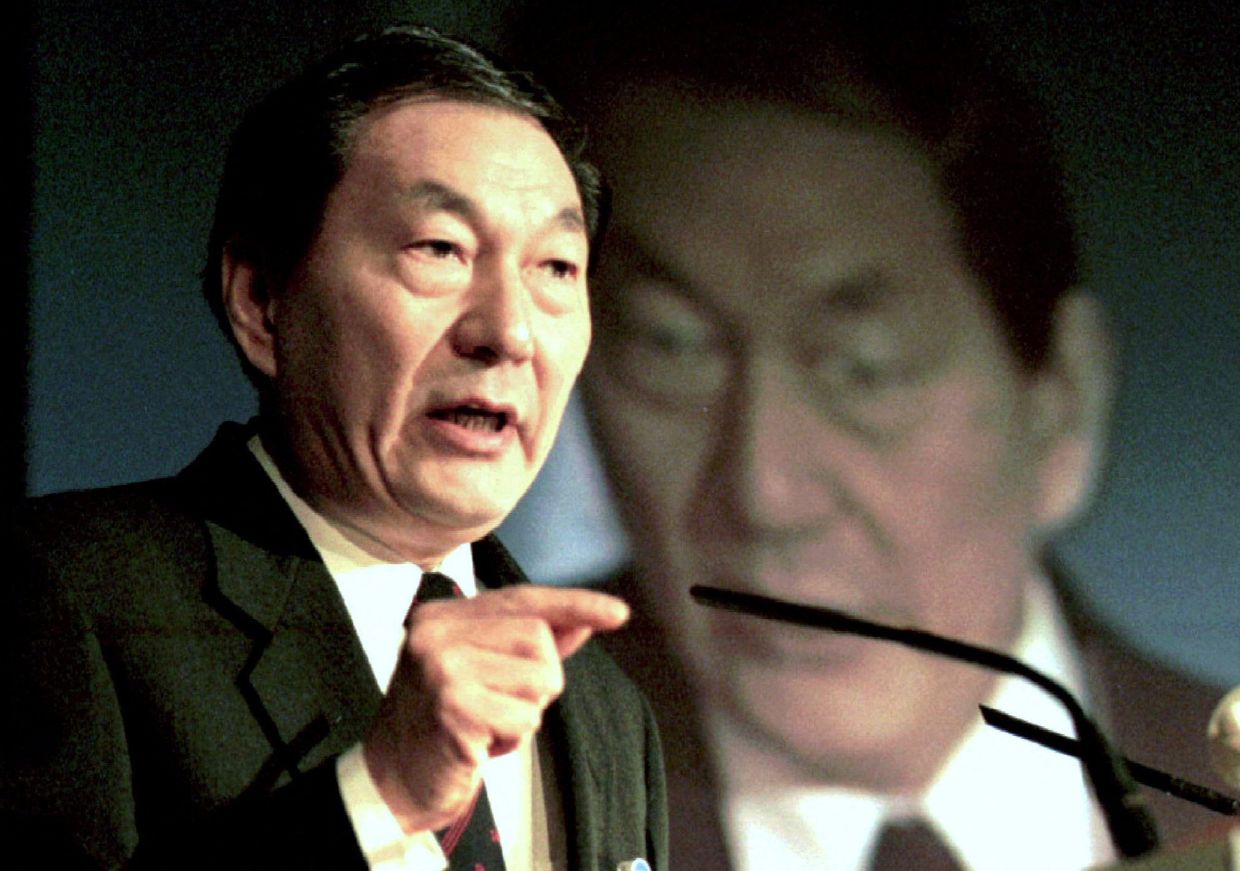
Zhu Rongji, the former Chinese premier whose aggressive restructuring of the nation's state-owned sector fundamentally transformed its economic landscape, died in Beijing on Wednesday morning after receiving medical treatment for an undisclosed illness. The pioneering administrator was 98 years old. His passing marks the end of an era defined by decisive market-oriented policymaking that positioned China for its subsequent emergence as an economic superpower, though his legacy remains contested among economists and policymakers who debate the long-term consequences of his tenure.
During his time as China's chief economic architect before becoming premier in 1998, Zhu navigated the country through multiple economic storms including the 1997 Asian financial crisis and sustained double-digit inflation. His willingness to implement painful but necessary reforms—closing tens of thousands of inefficient state enterprises spanning telecommunications, banking, and energy sectors—demonstrated a pragmatic approach fundamentally at odds with the state-intervention philosophy that would later dominate under President Xi Jinping. The structural adjustments eliminated roughly 45 million jobs across state-owned enterprises, an extraordinarily disruptive but ultimately consequential transformation that set the stage for China's eventual WTO membership and subsequent economic ascendancy.
The contrast between Zhu's market-friendly approach and contemporary Chinese economic policy underscores a significant ideological pendulum swing. While Zhu championed privatization and efficiency through competition, Xi Jinping has instead advocated for a "stronger, better, and bigger" state-controlled economy designed to serve strategic national interests. This philosophical divergence reflects broader debates within China's leadership about balancing market mechanisms with state direction—debates that continue to shape policy across Southeast Asia's largest trading partner. Goldman Sachs Group's former co-president John Thornton, who worked with Zhu during the mid-1990s, recalled him as someone "not afraid to make difficult decisions," a characterization that encapsulates his reputation for unflinching commitment to reform regardless of political costs.
Zhu's most consequential individual achievement may have been facilitating China's entry into the World Trade Organization in 2001. In 2000, he personally engaged with then-European Union Trade Commissioner Pascal Lamy in Beijing to break a negotiating deadlock that had stalled China's accession process for years. This single diplomatic intervention unlocked market access that would eventually propel China's GDP to increase more than elevenfold over the subsequent two decades, establishing it as the world's second-largest economy. For Malaysian policymakers and regional trade observers, Zhu's role in that historic transition remains instructive: a single senior leader's commitment to multilateral engagement fundamentally reshaped regional commerce and investment flows that continue benefiting Southeast Asia today.
His stewardship of banking sector reform proved particularly transformative. As governor of the People's Bank of China from 1993 to 1995, Zhu initiated programmes that opened China to foreign financial institutions while also establishing the infrastructure for institutional sophistication. Later, in 1999, he oversaw the creation of asset-management companies that purchased 1.4 trillion yuan (approximately US$220 billion) in non-performing loans accumulated by the nation's four largest banks. These institutions had accumulated staggering debt loads while continuing to fund uneconomical state enterprises, creating a vicious cycle of financial deterioration. By removing these bad assets and forcing banks to adopt market-oriented practices, Zhu enabled their subsequent public listings beginning in 2005—a transition that modernized Chinese finance and attracted significant regional and international capital.
Beyond macroeconomic policy, Zhu cultivated a distinctive personal brand that transcended traditional diplomatic conventions. His fluent English and sharp wit made him unusually accessible to foreign interlocutors and domestic constituencies alike. During a 1999 joint press conference with US President Bill Clinton, when confronted with allegations that China had improperly funded American political campaigns, Zhu responded with disarming logic: if political donations were genuinely effective, his country's substantial foreign-exchange reserves would justify allocating billions rather than hundreds of thousands of dollars for such purposes. His self-deprecating humour—declaring the alleged contribution "too foolish"—demonstrated a political communication style markedly different from his successors' more guarded approach, earning him respect among Western business and political elites who conducted regular negotiations with Chinese leadership.
Zhu's broader administrative philosophy extended beyond economic structure to governmental operations themselves. During his premiership from 1998 to 2003, he championed bureaucratic efficiency and anti-corruption measures that earned him the colloquial designation "one-chop Zhu," referring to his effort to streamline official approvals by reducing the proliferation of required seals and signatures needed for government authorization. This administrative innovation, seemingly technical in nature, actually represented a sophisticated understanding that reducing transaction costs for legitimate business activity could simultaneously constrain opportunities for official corruption and rent-seeking. Malaysian observers familiar with persistent bureaucratic delays and red-tape complications might recognize the enduring relevance of his methodology.
His early career trajectory illuminated the political hazards faced by outspoken reformers within Communist Party structures. Born in October 1928 in Hunan province—the same birthplace as Chairman Mao Zedong—Zhu attended Tsinghua University from 1947 to 1951, studying electrical engineering before joining the Communist Party in 1949. During Mao's "Hundred Flowers Campaign," when the party briefly encouraged open debate, Zhu criticized the economic policies underlying the disastrous Great Leap Forward, arguing they promoted irrational expansion unsustainable over the long term. For this heresy against Maoist orthodoxy, he was branded a "rightist" and subsequently demoted. During the subsequent Cultural Revolution, Zhu spent five years relegated to agricultural labour, raising pigs and planting rice—a humbling experience that many contemporaries did not survive intact.
Zhu's rehabilitation following the Cultural Revolution's conclusion in 1978 marked his transition from persecuted intellectual to rising technocrat. He ascended through government agencies with steady progression: Shanghai's mayor in 1987, vice premier in 1991, and membership in the Politburo Standing Committee in 1992. This incremental advancement through meritocratic channels reflected Deng Xiaoping's confidence in his abilities; the paramount leader famously characterized Zhu as a "rare talent" who possessed genuine economic understanding and possessed the courage to confront difficult challenges. Deng's endorsement essentially provided the political capital necessary for Zhu to implement reforms that inevitably generated powerful opposition from beneficiaries of the existing system.
Zhu's stated ambition for his legacy revealed modest expectations regarding historical judgment. During a 2000 legislature session, he expressed his primary hope that upon leaving office, the Chinese people would regard him as "a clean official, not a corrupt one." He acknowledged that should posterity prove "more generous" and concede that he "got some real things done," he would "thank heaven and earth." This remarkably restrained aspiration—simply desiring recognition for honesty in office and accomplishment—contrasts sharply with the grandiose historical narratives subsequently constructed around other leaders. Yet the evidence suggests his modest self-assessment substantially understated his actual influence on China's institutional evolution and regional economic integration.
Following his 2003 transition to emeritus status when Wen Jiabao assumed the premiership, Zhu devoted considerable energy to elevating Tsinghua University's international prominence through direct involvement and donations. His offspring continued wielding influence within China's financial sector: his son Levin Zhu served as head of China International Capital Corp, a Beijing-based investment bank, while his daughter Zhu Yanlai held senior positions at Bank of China (Hong Kong). These family connections to finance reflected the broader Chinese pattern of power consolidation within networked family structures, though neither child achieved the prominence their father commanded during his active political career.
For Southeast Asian observers and policymakers, Zhu's trajectory and accomplishments carry particular significance. His vision of market integration and multilateral engagement directly benefited the region through expanded trade and investment flows following China's WTO accession. However, his successors' subsequent shift toward state-directed capitalism and strategic competition has created a fundamentally different relationship environment characterizing contemporary Sino-ASEAN relations. Understanding Zhu's approach—its achievements, its costs, and its eventual abandonment—provides essential context for interpreting China's current economic trajectory and assessing potential futures for regional engagement that might emphasize either renewed multilateralism or intensifying strategic competition.

