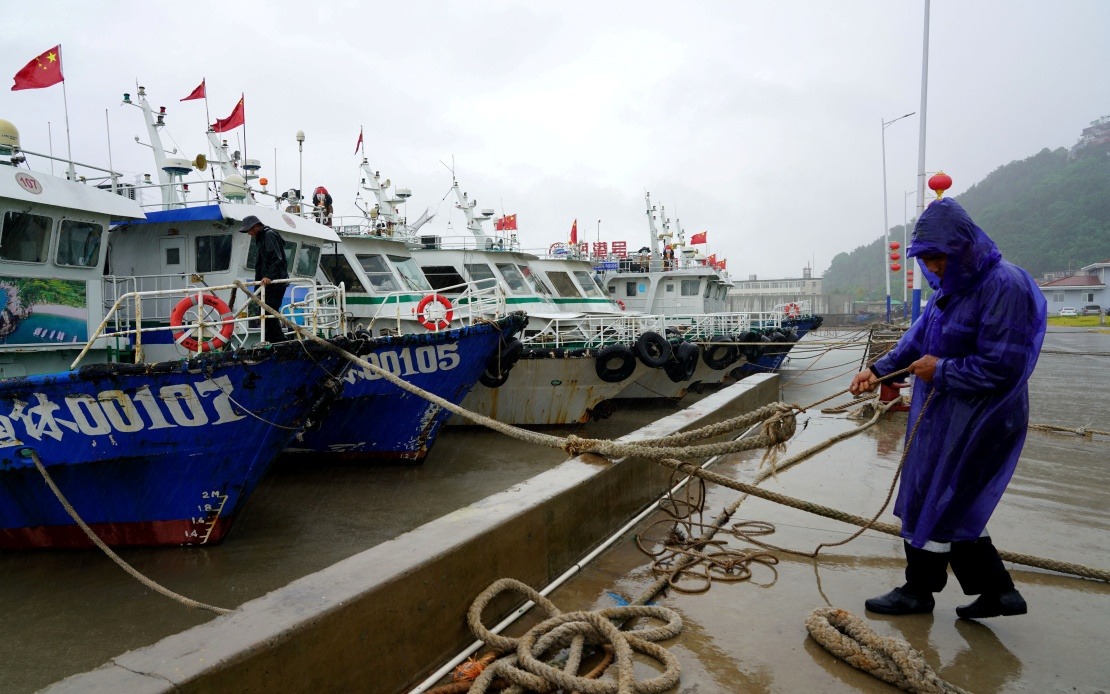
Zhejiang Province in east China has significantly strengthened its emergency preparedness as Typhoon Dolphin inches closer to the coastline, with regional authorities upgrading their alert status from Level IV to Level III on Friday at noon. The shift reflects growing concern about the 13th typhoon of 2026, which threatens to deliver a major blow to one of China's most economically vital regions.
As of Friday morning, Typhoon Dolphin was positioned approximately 763 kilometres east of Wenling, a coastal city in Zhejiang, according to data from the Zhejiang Meteorological Observatory. The storm system is tracking westward at a steady pace of 15 to 20 kilometres per hour, maintaining its current strength with a possibility of intensifying slightly as it continues its approach toward the heavily populated eastern seaboard.
China's National Meteorological Centre issued a yellow-level alert on Thursday evening, identifying a potential landfall corridor extending from Shanghai southward to Fuqing in neighbouring Fujian Province. This forecast window of Sunday or Monday presents a critical timeframe for coastal communities to complete their defensive preparations. The anticipated intensity range—from typhoon to severe typhoon classification—underscores the severity of what residents and authorities may soon face.
Lou Xiaofen, the chief forecaster at the Zhejiang Meteorological Observatory, has cautioned that Zhejiang itself sits squarely within the typhoon's probable path, given its geographic position between Shanghai and Fujian. This positioning substantially elevates disaster risks for the province, a manufacturing and trading powerhouse that hosts some of China's busiest ports and industrial zones. Direct landfall in Zhejiang would create cascading impacts across supply chains, logistics networks, and coastal communities throughout the region.
The scale of Zhejiang's operational shutdown reflects the magnitude of preparations underway. By Friday morning, provincial authorities had suspended services across all 162 passenger ferry routes, effectively halting all civilian water transport. Simultaneously, work has ceased at 193 offshore projects, eliminating potential human exposure to dangerous conditions at sea. Maritime authorities have directed 474 construction vessels to return to port, removing them from harm's way and consolidating resources that could support emergency operations.
Communication infrastructure has become a central pillar of the disaster response strategy. The provincial maritime authorities have distributed 86,000 early warning messages to vessels, port operators, and coastal residents, while conducting systematic inspections of 24,000 vessels to ensure compliance with safety protocols. These information campaigns serve dual purposes—alerting the public to emerging dangers while providing guidance on protective measures and evacuation procedures. Meanwhile, high-powered tugboats have been mobilized into standby positions, positioned to launch rapid rescue missions should vessels or individuals find themselves in distress during the typhoon's passage.
The Level III response protocol mandates that local authorities implement rigorous monitoring of the typhoon's trajectory and intensity changes, issue continuous forecasts and warnings to the public, initiate precautionary evacuation of vulnerable populations from high-risk areas, and provide comprehensive public guidance aimed at protecting lives and property. These measures represent the formal activation of institutional capacity built through decades of typhoon management experience in coastal China.
For Malaysian and Southeast Asian observers, Zhejiang's response offers instructive parallels to typhoon preparedness in the region. While Malaysia faces lower typhoon risk due to its geographic position near the equator, the lessons embedded in Zhejiang's comprehensive approach—early escalation of alert levels, proactive transport shutdown, mass communication campaigns, and pre-positioned rescue assets—reflect global best practices in natural disaster management. The speed and scale of Zhejiang's mobilization underscore how regional typhoon systems demand coordinated, multi-sector responses that integrate maritime safety, public communication, and emergency services.
The economic implications extend beyond immediate disruption. Zhejiang is home to major container ports, textile manufacturing hubs, and technology production facilities that feed into regional and global supply chains. Any prolonged operational disruption could reverberate across Southeast Asian trade networks, particularly in time-sensitive sectors such as semiconductors, automotive components, and textiles. Malaysian importers and exporters with commercial relationships in the region should prepare for potential shipping delays and logistical adjustments in the coming week.
Typhoon Dolphin arrives at a moment of heightened activity in China's 2026 typhoon season, which has already produced thirteen systems. The escalation of Zhejiang's alert status reflects both meteorological forecasts and institutional caution—the province's experience with major typhoons has instilled a culture of preventive action that errs toward safety. As the storm advances toward landfall, the coming 48 hours will prove critical in determining the actual impact on one of China's most vital economic zones and the broader regional implications for supply chains and infrastructure.

