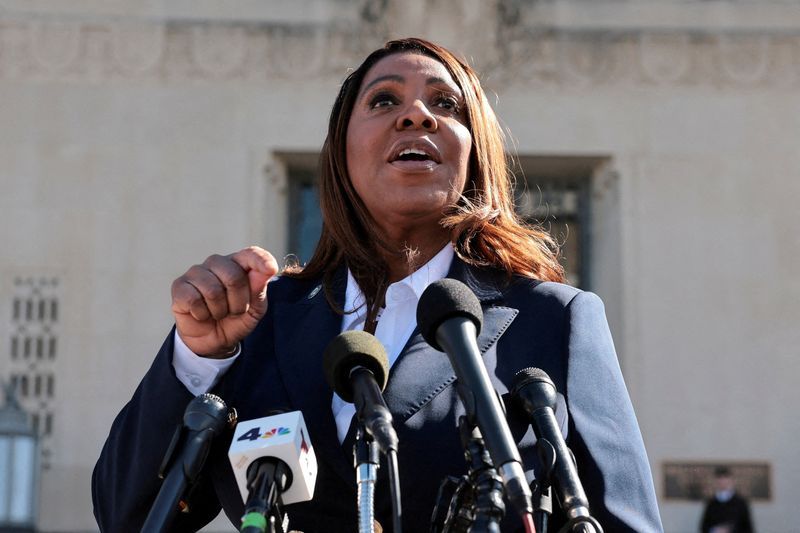
Justice Phaedra Perry-Bond of New York state court in Manhattan has ruled that New York Attorney General Letitia James has presented sufficient grounds to proceed with her lawsuit against Zelle, rejecting the payment platform's attempt to have the case thrown out before trial. The decision, handed down on Tuesday, marks a significant setback for the digital payments service and its parent company Early Warning Services, which is jointly owned by seven major United States banks including Bank of America, JPMorgan Chase, Wells Fargo, Capital One, PNC, US Bank and Truist.
At the heart of the dispute is James's assertion that Zelle deliberately prioritised rapid market expansion and user convenience over essential consumer protections, despite warnings from its banking partners. The judge found that the attorney general's allegations were substantial enough to warrant proceeding to the next phase of litigation, rather than being dismissed as implausible or legally insufficient. Perry-Bond specifically noted that Zelle's parent company had "prioritised accessibility, convenience, consumer adoption, and market dominance at the expense of consumer safety" when bringing the platform to market.
The allegations against Zelle centre on a pattern of fraud affecting consumers across the United States. James identified several recurring scam types that have plagued the platform's user base: criminals gaining unauthorised access to legitimate accounts and transferring funds without permission, fraudsters posing as representatives of banks or government agencies to trick users into sending money, and con artists advertising non-existent products and services to extract payments from unsuspecting victims. According to James's investigation, these various schemes have resulted in losses exceeding $1 billion to consumers who believed they were using a secure, bank-backed payment system.
A particularly damning aspect of the case involves Zelle's continued collection of transaction fees from payments later determined to be fraudulent. The judge flagged this practice as potentially raising questions about whether Zelle may have implicitly or explicitly sanctioned fraudulent activity by continuing to benefit financially from tainted transactions. This detail suggests the platform may have had knowledge of problematic patterns yet continued to extract revenue from the system.
The marketing claims made by Zelle also feature prominently in the lawsuit. James objected to promotional materials that touted the platform as offering "peace-of-mind" and described it as "backed by the banks, so you know it's secure." These assertions, paired with what James characterises as inadequate fraud prevention measures, form part of her argument that Zelle engaged in deceptive practices when advertising its services to Australian consumers who lacked sufficient information about the actual safety risks.
Zelle's legal defence centred on two main arguments that failed to convince the court. The company argued that advertising its platform as safe and secure was not inherently misleading, and separately contended it should not bear legal responsibility for what it termed "passive nonfeasance"—essentially claiming that merely failing to implement security features cannot constitute legal liability. The judge's rejection of these arguments suggests courts may be moving toward holding payment platforms to higher standards of responsibility for consumer protection.
The timeline of events reveals a significant gap between when Zelle identified necessary safeguards and when it actually implemented them. According to James's investigation, the platform had proposed basic security measures approximately four years before actually deploying them in 2023. This delay occurred despite increasing pressure from the U.S. Consumer Financial Protection Bureau and members of Congress who had launched investigations into fraud patterns on the platform. The extended period between identifying problems and implementing solutions strengthens the attorney general's case that Zelle deprioritised consumer protection.
Since its launch in 2017, Zelle has competed directly with other peer-to-peer payment applications including PayPal's Venmo and Square's Cash App, now owned by Block. The platform's positioning as a bank-backed solution theoretically provided it with credibility advantages over independent fintech competitors. However, this reliance on banking partnerships for legitimacy makes the allegations of inadequate safety features particularly significant, as consumers reasonably expected that an initiative jointly owned by established financial institutions would incorporate robust fraud prevention mechanisms from inception.
The lawsuit gained renewed impetus following the federal regulator's actions in March 2025. The Consumer Financial Protection Bureau had originally pursued enforcement action against Zelle but ultimately dropped its case early in U.S. President Donald Trump's second term, a period during which the agency significantly scaled back enforcement activities across the financial sector. James's decision to proceed independently with state-level litigation ensured that legal accountability mechanisms remained available to consumers who suffered losses on the platform.
Zelle's official response dismissed James's claims as politically motivated, with company spokesperson Eric Blankenbaker asserting that fraud incidents on the platform have "always been exceptionally low." The company accused the attorney general of targeting Zelle "for political gain by recycling claims that courts across the country have rejected as meritless." This defensive posture contrasts sharply with the New York judge's finding that James's allegations presented legally cognizable claims worthy of adjudication, suggesting the broader legal and regulatory environment may be shifting toward demanding greater accountability from payment platforms regarding fraud prevention.
The ruling carries implications for Southeast Asian fintech companies and payment platforms that are rapidly expanding across the region. As digital payment systems become increasingly central to commerce in Malaysia, Singapore, Thailand and other nations, this New York decision establishes a precedent that regulators and courts may expect platforms to implement robust fraud prevention measures, particularly when operating under the aegis of established financial institutions. Companies that prioritise growth metrics and user acquisition above consumer protection mechanisms face mounting legal risks in jurisdictions with active consumer protection enforcement regimes.
As the case proceeds toward trial or potential settlement negotiations, the outcome could reshape expectations around digital payment platform liability in the United States and potentially influence regulatory approaches in other markets where Zelle competitors operate. The decision demonstrates that courts are now willing to allow complex fraud cases involving modern payment technologies to reach the merits phase rather than dismissing them based on preliminary legal arguments, suggesting that payment platforms cannot rely on procedural technicalities to avoid accountability for allegedly negligent security practices.

