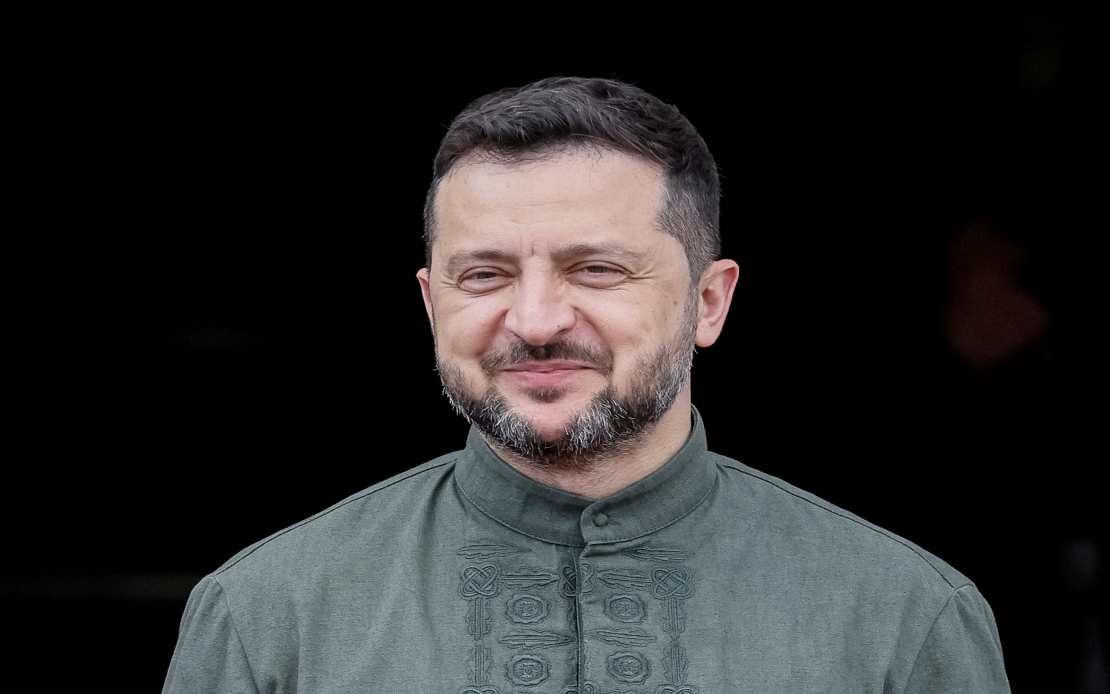
Ukrainian President Volodymyr Zelensky has moved forward with signing a law creating a national pantheon dedicated to Ukrainian heroes, an action that has deepened diplomatic friction with neighbouring Poland. The legislation, which passed through the Ukrainian parliament in July, was formally enacted this week, marking a significant moment in how Ukraine chooses to memorialise its historical figures and independence struggle. Speaking before war veterans on Saturday, Zelensky emphasised Ukraine's sovereign right to determine its own national heroes, signalling that external pressure would not sway the government's decision on the matter.
The pantheon represents a ambitious cultural project spanning centuries of Ukrainian history. The memorial complex, to be established in the capital Kyiv, will honour historical figures dating back to the medieval period of Kyivan Rus, extending through to more recent independence movements. The site is intended to serve a dual commemorative function: preserving the legacy of national icons and simultaneously serving as a burial ground for Ukrainian presidents, transforming it into a place of enduring national significance.
At the heart of the controversy stands the inclusion of members of the Ukrainian Insurgent Army, known by its Ukrainian acronym UPA. These underground nationalist fighters operated during Germany's occupation in World War II and are venerated in modern Ukraine as resistance fighters battling foreign domination. However, the historical record presents a far more complicated picture that has become a source of profound tension between Kyiv and Warsaw. Extensive documentation and scholarship demonstrate that UPA units perpetrated massive violence against Polish and Jewish populations, particularly in the Volyn region of western Ukraine during the war years, resulting in tens of thousands of deaths.
For Poland, the decision to enshrine UPA members in a national memorial amounts to honouring individuals guilty of genocide and mass murder. The Polish perspective views this not merely as a historical disagreement but as a fundamental rejection of accountability for wartime atrocities. When the Ukrainian parliament initially advanced the pantheon proposal in July, Poland's President Karol Nawrocki's office issued a sharp rebuke, asserting that commemorating those responsible for Volyn's horrors contradicted the values and principles associated with integration into the Western world. This framing positions the issue as more than bilateral history but as a question of Europe's collective memory and moral standards.
The diplomatic rupture has already manifested in concrete ways. Tensions between the two nations escalated in June when Zelensky's government awarded a military unit the honorary title "Heroes of the UPA." In response, Poland took the symbolic but weighty step of withdrawing the Order of the White Eagle that had previously been bestowed upon Zelensky. The honour, one of Poland's most prestigious decorations, represents centuries of Polish state tradition, and its withdrawal constituted a dramatic statement of disapproval. Beyond governmental actions, individual politicians from both nations engaged in their own forms of protest, with several Ukrainian and Polish officials returning state honours and decorations they had received from their counterparts.
The timing of this memorial law carries particular significance given the broader geopolitical context. Poland has emerged as one of Ukraine's most steadfast supporters in its ongoing conflict with Russia, providing military assistance, humanitarian aid, and consistently vocal diplomatic backing. Warsaw has positioned itself as essential to Ukraine's security architecture and potential future integration into Western institutions. The pantheon controversy therefore threatens to undermine this crucial alliance at a moment when Ukrainian-Western unity remains vital to countering Russian aggression.
For Southeast Asian observers, this dispute illuminates enduring complexities in how nations navigate competing historical narratives and commemorative practices. The case demonstrates how decisions about national heroes and memorials extend far beyond domestic politics, carrying implications for international relations and regional stability. When smaller nations must balance their own historical consciousness with maintaining essential international partnerships, the choices become agonising and consequential.
The controversy also reflects broader questions about how societies reckon with complicated historical figures who cannot be easily categorised as purely heroic or purely villainous. Ukraine's investment in the UPA narrative reflects the nation's need to construct a cohesive national identity emphasising resistance to foreign domination—a theme with profound resonance for any country that has experienced colonialism or occupation. Yet this narrative formation occurs in direct collision with Poland's equally legitimate need to ensure recognition of suffering inflicted upon its own citizens.
Zelensky's defiant tone regarding Ukrainian sovereignty in choosing heroes suggests the government views external criticism as interference in internal affairs. His statement that "only Ukrainians will decide who is a hero for us" encapsulates a nationalist assertion that may resonate domestically but complicates the diplomatic challenge. The president faces pressure from multiple directions: maintaining domestic political support among those who genuinely view UPA members as patriots, preserving crucial Western backing, and addressing legitimate historical grievances held by neighbouring countries.
Looking forward, the pantheon's construction and eventual dedication will likely become flashpoints for continued Polish-Ukrainian tensions. Museums, monuments, and memorials function as ongoing expressions of national identity, continuously communicating messages to both domestic and international audiences. Every ceremony honouring UPA members at the site will risk rekindling the diplomatic wound, potentially affecting practical cooperation on security matters and European integration.
The episode underscores how historical memory remains a contested terrain in contemporary Europe, where competing narratives about World War II and national liberation movements continue to generate friction decades after the conflict's conclusion. For Ukraine, the pantheon represents an assertion of national narrative autonomy; for Poland, it constitutes a rejection of accountability and remembrance for civilian suffering. Bridging this divide will require substantial diplomatic work and possibly compromises that satisfy neither side completely but preserve the strategic partnership both nations require.

