Umno deputy president Puad Zarkashi has indicated that Umno and PAS may overcome their damaged relationship to forge a fresh political alliance, driven by distinct but complementary strategic priorities within each party. The assessment signals potential recalibration in Malaysia's already volatile coalition landscape, where personal leadership ambitions and institutional power-seeking often outweigh ideological considerations or historical grievances.
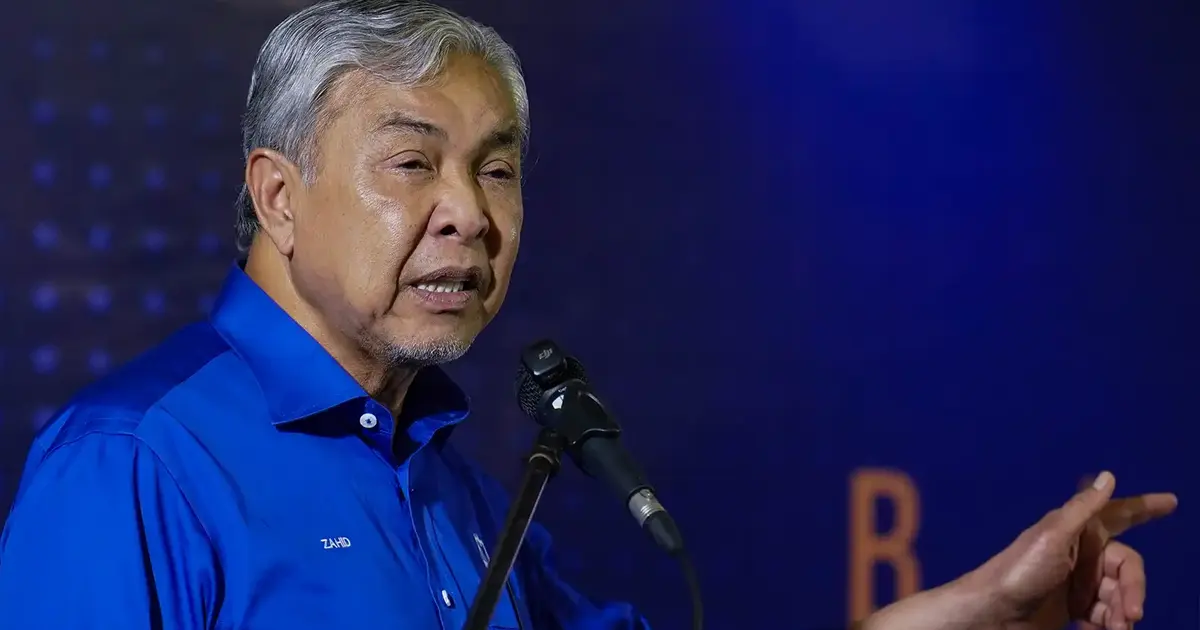
Zahid Hamidi's pursuit of the Prime Minister's office has emerged as a primary motivating force for Umno's leadership, according to Puad's comments. As Umno president, Zahid represents the faction within Malaysia's oldest political party that sees renewed government control as essential to consolidating power and advancing its electoral prospects. The premiership remains the most consequential prize in Malaysian politics, offering not merely symbolic authority but substantial control over cabinet appointments, parliamentary machinery, and government resource distribution—advantages that translate directly into party funding and electoral advantage.
Meanwhile, PAS has signalled its own compelling motivation to return to the corridors of executive power following years in opposition. The Islamic party's absence from federal government ministerial positions and policy-making roles has constrained its capacity to implement religious and social agendas while limiting its ability to distribute patronage to loyal supporters. For a party rooted in grassroots mobilisation and religious constituencies, government participation represents not only ideological validation but practical capacity to influence legislation, secure contracts for allied businesses, and reward party loyalists with appointments and development funds.
Puad's framing emphasises that these parallel objectives—Zahid's personal political elevation and PAS's institutional hunger for governing status—create sufficient common ground to transcend the breakdown of their previous partnership. In Malaysian politics, such pragmatic realignments occur routinely when shorter-term gains override longer-standing tensions. The calculation appears to be that both parties benefit more from cooperative government formation than from protracted opposition or competitive positioning.
The breakdown of the Umno-PAS alliance represents a significant chapter in Malaysia's recent political history, with disagreements over electoral strategy, religious policy implementation, and leadership direction producing irreparable fractures. Yet Malaysian political parties have demonstrated remarkable flexibility in reconciling even bitter disputes when circumstances favour cooperation. The willingness of senior figures like Puad to publicly discuss renewed collaboration signals genuine internal exploration rather than theoretical speculation.
For Malaysian observers monitoring coalition stability, such signals carry immediate implications for parliamentary arithmetic and government formation scenarios. The composition of any future government depends substantially on which parties coalesce, making public statements about feasibility assessments genuinely significant indicators of elite political thinking. If Umno and PAS do reunite, the resulting combination would command formidable parliamentary numerical strength and electoral reach across both urban and rural constituencies.
The timing of Puad's remarks reflects the cyclical nature of Malaysian electoral politics, where coalition negotiations intensify as general elections approach or as sitting governments face instability. Current parliamentary dynamics have created conditions where no single bloc maintains uncontested majority control, meaning government formation necessarily involves strategic coalition-building among multiple parties. This structural reality perpetually incentivises previously estranged parties to reassess collaboration potential.
From a Southeast Asian perspective, Malaysia's coalition dynamics merit attention because they demonstrate how personalised leadership ambitions and institutional power-seeking shape democratic processes in competitive multi-party environments. Zahid's prime ministerial aspirations and PAS's desire for government participation operate independently, yet Puad's analysis suggests these distinct motivations can align sufficiently to overcome historical animosity. This pattern—where tactical interests override ideological or personal disputes—characterises Malaysian politics more broadly.
The practical implications for governance remain uncertain pending actual coalition negotiations. Whether Umno-PAS cooperation would produce stable government, functional policy consensus, or merely another transactional arrangement reserved to mutual advantage remains an open question. Malaysian political experience suggests that coalitions forged primarily around short-term participant benefits often prove fragile when implementation complexities emerge or when constituent factions perceive unequal advantage distribution.
Puad's assessment ultimately reflects elite perception that political realignment opportunities exist despite historical context. His comments carry particular weight given his position within Umno's leadership structure, suggesting such discussions may have already progressed beyond casual speculation into serious exploratory conversations. Senior party figures typically exercise considerable restraint in public coalition commentary, making explicit suggestions about feasibility sufficiently noteworthy to indicate substantive internal deliberation.
The capacity of Malaysian political parties to transcend previous conflicts remains one of the system's defining characteristics, enabling fluid coalition formation while simultaneously constraining governmental predictability. Whether the Zahid-PAS combination materialises depends on ongoing negotiations around ministerial distribution, religious policy parameters, and electoral seat allocation—practical matters where short-term interests often collide despite overarching coalition rationale.

