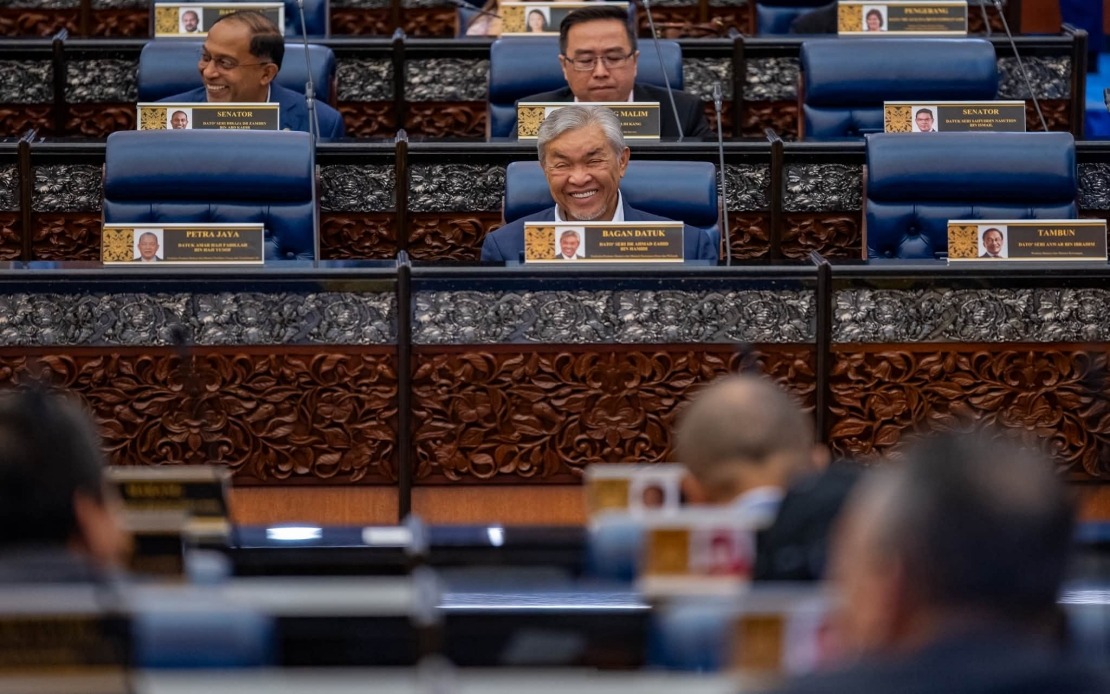
Deputy Prime Minister Datuk Seri Dr Ahmad Zahid Hamidi has called for constructive criticism of Lembaga Tabung Haji to be matched with tangible and responsible action, underscoring the government's determination to restore public confidence in the troubled Islamic pilgrimage fund. Speaking after a special parliamentary session devoted to debating the Royal Commission of Inquiry findings, Zahid warned against what he termed excessive allegations and unfounded perceptions that lack factual grounding, signalling the administration's shift toward a more action-oriented phase in addressing the institution's well-documented governance failures.
The remarks come as Parliament formally examined the RCI report into TH's management between 2014 and 2020, a period marked by significant financial irregularities and operational shortcomings that eroded the trust of millions of Malaysian Muslims who regard the fund as a sacred repository for their pilgrimage savings. Zahid, who holds the Rural and Regional Development portfolio alongside his role as Deputy Prime Minister, framed the parliamentary debate as a critical opportunity for lawmakers to scrutinize the inquiry's 25 recommendations and hold the institution accountable through a structured, transparent process rather than allowing grievances to fester in public discourse.
The government's decision to release the RCI report publicly on July 29 represented a calculated step toward institutional transparency, breaking with the typical pattern of sensitive inquiries remaining confidential. By opening the findings to parliamentary scrutiny and broader public examination, officials signalled recognition that TH's legitimacy depends on demonstrable commitment to reform rather than opaque damage control. This approach acknowledges a fundamental reality in Malaysian governance: major national institutions serving religiously significant functions cannot rebuild credibility through concealment but only through honest confrontation with systemic problems and verifiable corrective measures.
TH's governance challenges during the review period encompassed mismanagement of pilgrims' funds, inadequate oversight mechanisms, and operational inefficiencies that collectively undermined the institution's fiduciary obligations to its contributors. The inquiry identified specific weaknesses in financial controls, investment oversight, and internal accountability structures that created conditions enabling poor decision-making at senior management levels. These findings resonated deeply with the Malaysian Muslim community, for whom TH represents not merely a financial institution but a trusted conduit for fulfilling one of Islam's five pillars, rendering the institutional breach particularly damaging to public trust.
By August 11, when Zahid issued his statement, TH had already implemented approximately three-quarters of the RCI's recommendations, demonstrating responsiveness to the inquiry's prescriptions. However, implementation timelines and the adequacy of reforms remain subjects requiring ongoing scrutiny. The deputy premier's emphasis on coupling criticism with responsible action reflects an implicit acknowledgement that without demonstrable progress on the ground, continued parliamentary debate risks descending into recrimination without generating meaningful institutional change. This framing positions the government as ready to move beyond the investigatory phase toward concrete governance improvements.
Zahid's invocation of wisdom and sincerity carries particular weight in the Malaysian political context, where public institutions often suffer from perceptions of political instrumentalization and factional competition. His appeal to all parties to prioritize the interests of the Muslim community and the nation suggests an attempt to depoliticize the TH reform agenda, though the institution's prominence ensures that its restoration inevitably intersects with broader questions of religious governance, state capacity, and public administration standards. The deputy premier's language reflects awareness that TH's rehabilitation must transcend partisan positioning to achieve genuine institutional legitimacy.
For Malaysian pilgrims and their families, the parliamentary examination and subsequent implementation of reforms directly affects the security of funds entrusted to TH over decades. Many contributors view their TH accounts as constituting sacrifices toward religious obligation, adding an affective dimension to financial concerns. The institution's recovery therefore carries implications extending beyond narrow governance metrics to encompass public confidence in state-managed entities handling communal resources, particularly those serving religious purposes central to Malaysian Muslim identity and practice.
The special parliamentary sitting represented a rare instance of comprehensive legislative engagement with a detailed institutional inquiry, signalling parliamentary seriousness about TH's reform trajectory. Rather than treating the RCI report as a closed investigatory chapter, legislators used the occasion to probe recommendations, interrogate implementation progress, and establish benchmarks for institutional accountability. This engagement mechanism provides a forum for ongoing monitoring beyond the inquiry's conclusion, potentially strengthening parliamentary oversight of TH's governance going forward.
Zahid's caution against baseless allegations and perception-building without factual foundation suggests concern that unfounded criticism could undermine legitimate reform efforts by creating a cacophony of competing narratives obscuring substantive progress. The statement implicitly advocates for evidence-based discourse centered on verifiable outcomes rather than speculative accusations, a position reflecting broader governance aspirations for Malaysian public administration. Whether Parliament and civil society can maintain this disciplined focus on measurable reform indicators remains an open question as TH begins its institutional reconstruction.
Looking ahead, the institution's credibility restoration depends on consistent delivery against the RCI's reform agenda, transparent reporting on implementation progress, and demonstrated improvements in investment returns and member services. The government's willingness to subject TH to parliamentary scrutiny establishes new baseline expectations for transparency and accountability that will prove difficult to abandon without inviting renewed criticism. For Southeast Asian observers, TH's experience offers instructive lessons about rebuilding trust in major Islamic financial and social institutions following governance failures, particularly regarding the balance between investigatory accountability and forward-looking institutional reform.

