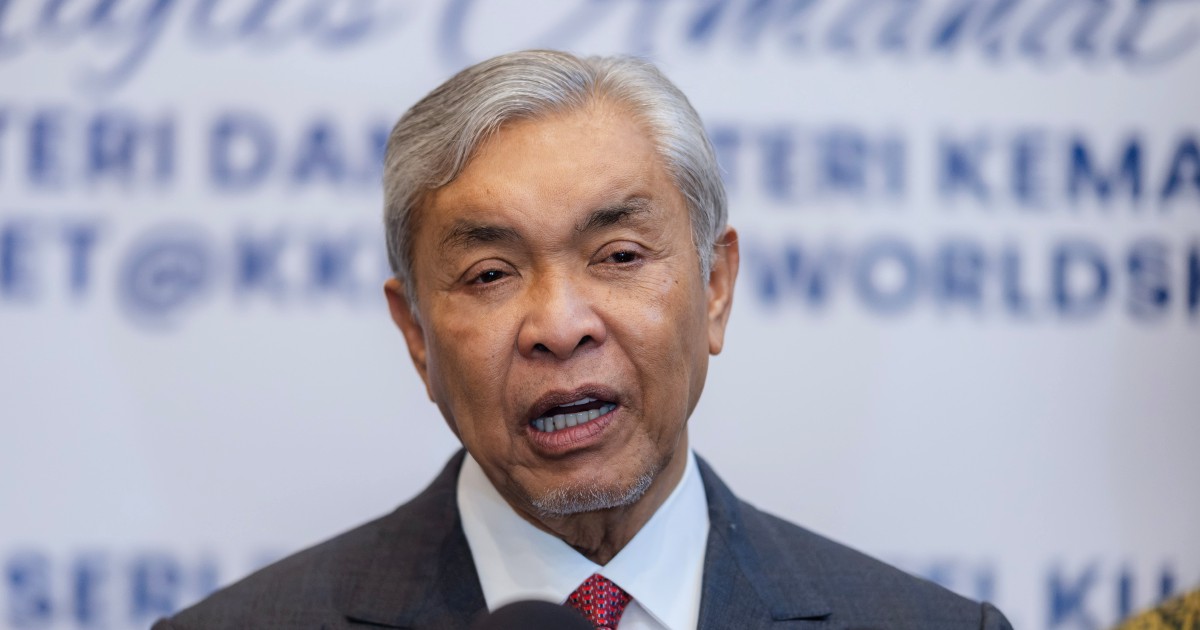
Deputy Prime Minister Datuk Seri Dr Ahmad Zahid Hamidi has signalled government support for a thorough examination of the service framework governing Immigration Department personnel, recognising that officers' concerns accumulated over many years merit serious policy attention. Speaking in Cyberjaya, Zahid indicated his willingness to champion the initiative, suggesting that the persistent appeals from immigration staff have reached a tipping point warranting executive consideration.
The Immigration Department, as Malaysia's frontline agency responsible for managing population movement and border security, operates through a workforce whose conditions and career progression structures have remained largely unchanged despite significant shifts in operational demands and the security environment. The service scheme governing these officers essentially establishes their terms of employment, compensation frameworks, and professional development pathways—matters that directly influence morale and operational effectiveness across the department's various functions.
Officers within the department have long articulated concerns about their current service arrangements, suggesting that the existing scheme fails to reflect contemporary operational challenges or provide competitive remuneration relative to comparable civil service positions. These grievances appear to encompass both financial compensation and career advancement opportunities, issues that affect recruitment and retention of experienced personnel in a critically important public institution.
The Deputy Prime Minister's backing represents a significant shift in institutional receptiveness to reform discussions. Government endorsement at this level typically signals that financial and administrative resources may be available to conduct the review process, and more importantly, that policy recommendations emerging from such an examination would receive serious consideration rather than shelving in a bureaucratic queue. This political weight becomes particularly relevant given that service scheme modifications typically require careful fiscal planning and coordination across multiple government agencies.
Malaysia's immigration administration has faced mounting operational pressures in recent years, handling expanded responsibilities ranging from counter-terrorism functions to managing pandemic-related movement restrictions. The existing service framework may not adequately account for these evolving security and health-related dimensions of immigration work, potentially placing officers in positions where their operational responsibilities exceed their formal job classifications. A comprehensive review could address such misalignments between actual duties and official designations.
The timing of this government signal also reflects broader civil service reform conversations occurring across Southeast Asia, where regional governments increasingly recognise that competitive compensation and professional development structures are essential for retaining quality personnel in public institutions. Malaysia's civil service, while traditionally attracting capable candidates, faces competition from private sector opportunities and neighbouring jurisdictions offering enhanced terms to skilled workers.
For the Immigration Department specifically, enhanced service conditions could facilitate better implementation of Malaysia's increasingly sophisticated border management systems, including biometric technologies and intelligence-sharing protocols with regional partners. Officers operating within modern frameworks require not only technical training but also compensation levels reflecting their expertise and responsibility in safeguarding national security interests.
The review process itself would likely encompass comparative analysis with service structures in other government agencies, assessment of current officer compensation relative to private sector equivalents, and evaluation of career progression pathways that enable retention of experienced personnel. Such examinations typically require engagement with staff representatives, financial advisors, and human resource specialists to ensure recommendations prove both fiscally sustainable and operationally practical.
The government's receptiveness to this initiative also carries implications for broader civil service morale. When high-level officials visibly champion review processes addressing worker concerns, it sends signals throughout the public administration that legitimate grievances receive attention rather than dismissal. This symbolic dimension extends beyond immigration officers to encompass other civil service cohorts nursing similar concerns about outdated service arrangements.
Implementing service scheme modifications, however, extends beyond policy goodwill. The government must coordinate with the Ministry of Finance to secure budget allocations, navigate existing pension obligations, and ensure any structural changes do not inadvertently disadvantage current or retiring officers. These technical requirements explain why well-intentioned reform initiatives sometimes face implementation delays despite high-level political support.
From a Malaysian perspective, strengthening the Immigration Department through improved service conditions represents an investment in institutional capacity at a critical juncture. As border security becomes increasingly sophisticated globally and regional security challenges evolve, maintaining a professional, well-compensated immigration workforce becomes strategically important for maintaining operational standards and protecting Malaysia's interests.
The Deputy Prime Minister's backing suggests that government recognises such institutional strengthening as a legitimate policy priority deserving resource allocation. Whether this endorsement translates into concrete modifications to the service scheme within specific timeframes remains dependent on subsequent technical review processes and fiscal negotiations, but the public commitment itself represents tangible progress on an issue that has accumulated force through years of officer advocacy.

