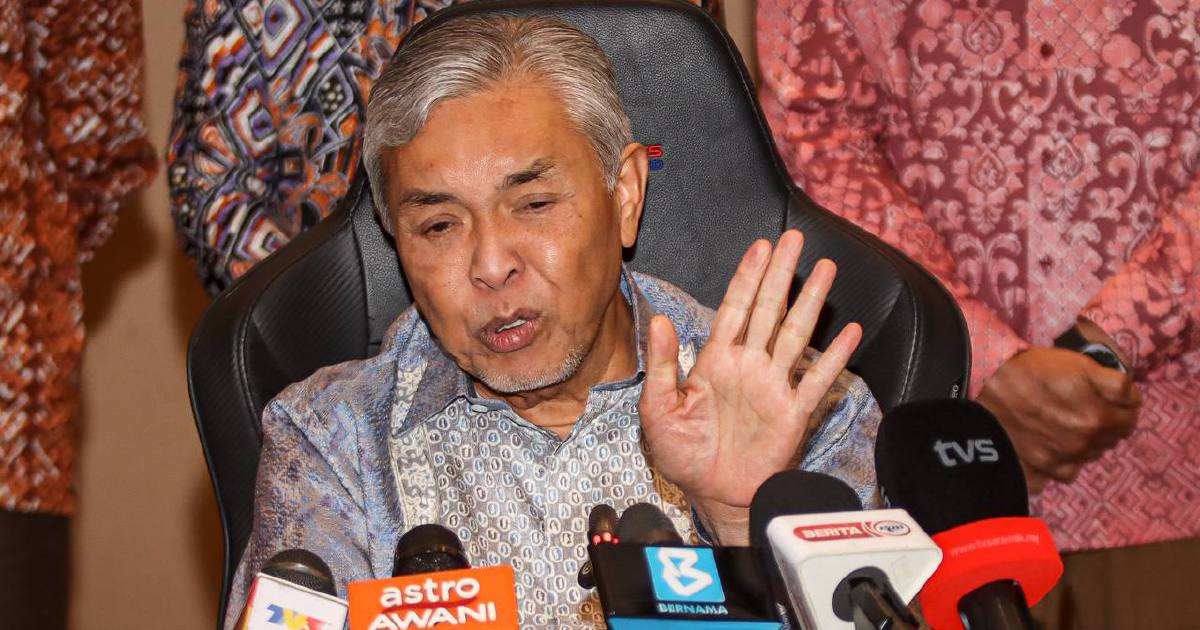
Datuk Seri Dr Ahmad Zahid Hamidi has firmly rejected suggestions that Barisan Nasional harbours plans to dislodge Prime Minister Datuk Seri Anwar Ibrahim from office, making clear in George Town that the coalition intends to maintain its partnership within the unity government framework until the end of the current parliamentary term.
The UMNO president's comments come at a time of sustained political speculation about the stability of Malaysia's governing coalition. Since its formation following the 2022 general election, the unity government has faced periodic rumours regarding potential shifts in political alignments and leadership changes. Such speculation has become a recurring feature of Malaysian political discourse, reflecting the delicate balance of interests among the various coalition partners.
Barisan Nasional's explicit commitment to sustaining the unity government represents a significant stabilising force in the nation's political landscape. The coalition, which comprises UMNO, MIC, and MBN-affiliated parties, holds considerable parliamentary influence and has wielded considerable weight in determining the durability of successive administrations. Any withdrawal of support from Barisan would fundamentally alter the government's parliamentary mathematics and create substantial uncertainty.
The current unity government emerged from complex post-election negotiations following the December 2022 polls, bringing together historically rival coalitions—Pakatan Harapan and Barisan Nasional—under a single administration. This unprecedented arrangement has produced both opportunities and challenges, requiring ongoing dialogue and compromise between partners with differing political philosophies and organisational cultures. The coalition's sustainability depends significantly on maintaining working relationships across these traditional divides.
Political observers have noted that regular rumours of government instability often gain traction during periods of policy disagreement or when coalition partners compete for legislative attention or resource allocation. The denial issued by Zahid, as a senior coalition leader, serves to reassure both domestic and international stakeholders about the government's continuity, which holds implications for investor confidence, administrative effectiveness, and Malaysia's standing in regional affairs.
The 15th Parliament's full term extends several years ahead, providing an extended timeline during which coalition partners must navigate competing interests whilst maintaining unified governance structures. This extended horizon reflects both the aspiration for stability and the recognition that maintaining multi-coalition governments requires sustained commitment from all participating parties over extended periods.
For Malaysian readers and regional observers, the reaffirmation of Barisan's commitment signals continuity in economic and governance policies during a period when Malaysia faces external pressures including trade uncertainties, technological disruption, and regional geopolitical shifts. Coalition stability directly impacts government capacity to implement long-term development strategies and respond coherently to emerging challenges.
The dismissal of toppling speculation also carries implications for Anwar Ibrahim's administration's ability to pursue its legislative agenda without constant distraction from survival politics. Governments preoccupied with maintaining parliamentary majorities often find their policy focus compromised, reducing effectiveness in areas ranging from economic reform to infrastructure development to social welfare initiatives.
Zahid's statement reflects broader patterns in Southeast Asian coalition politics, where managing multiple partner interests while presenting unified governance requires careful political choreography. Malaysia's experience with the unity government has drawn interest from neighbouring democracies grappling with similar coalition-building complexities, making stability reassurances significant beyond domestic boundaries.
The coalition's ability to maintain cohesion will likely depend on several factors, including equitable benefit distribution among partner parties, successful navigation of contentious legislation, and demonstration of measurable progress on shared governance priorities. As the 15th Parliament progresses, how effectively coalition partners balance competing interests while delivering on development commitments will test the durability of these commitments.
Zahid's reaffirmation essentially signals that whatever internal dynamics exist between coalition members—disagreements over policy direction, ministerial positions, or resource allocation—these remain manageable within the existing framework rather than posing existential threats to the government's parliamentary foundation. This messaging aims to project normalcy and stability to international investors, government employees, and the broader public, all of whom benefit from predictable governance environments.
The timing and prominence of such statements also reflect the political reality that Malaysian administrations function within tight parliamentary margins where even minor defections could theoretically alter outcomes on crucial votes. Explicit reaffirmations of coalition commitment serve important signalling functions, reducing incentives for backbench members to entertain alternative alliances or opposition overtures.

