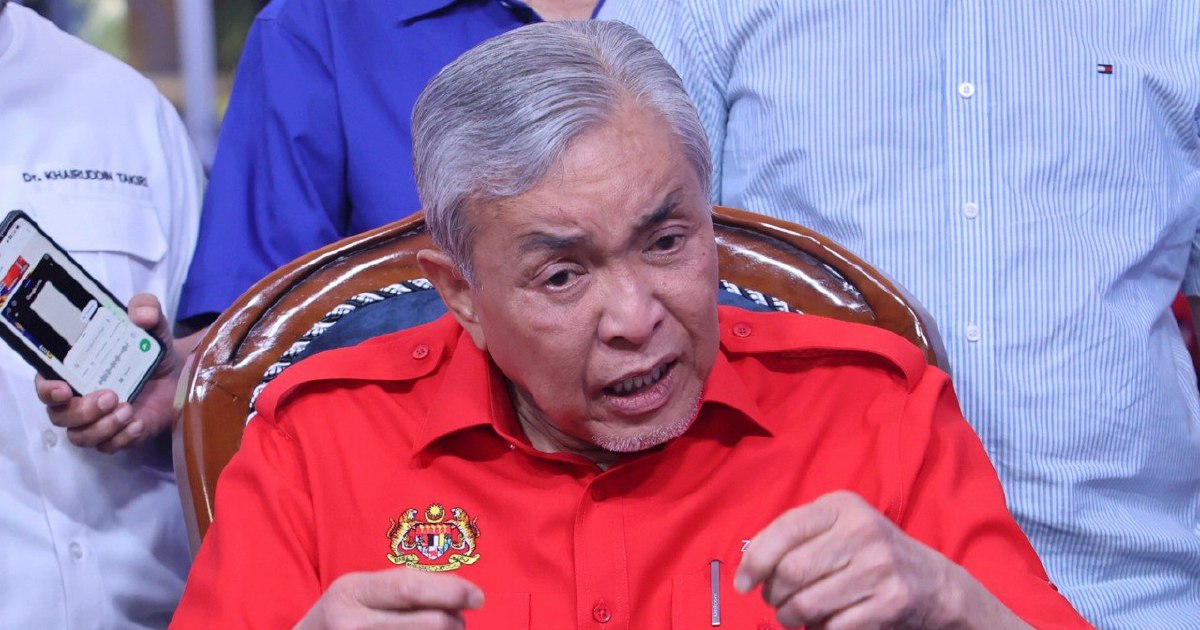
Barisan Nasional leadership is signalling heightened determination in the race for Negeri Sembilan, with coalition chairman Datuk Seri Dr Ahmad Zahid Hamidi emphasising the urgency of mobilising supporters across the state. Speaking in Seremban, the senior politician conveyed a clear message that the ruling coalition cannot approach the forthcoming state contest with complacency, recognising that electoral dynamics in the central Malaysian state present formidable challenges to BN's traditional stronghold.
Zahid's intervention marks a critical moment for the coalition as it prepares ground-level operations ahead of polling day. His characterisation of BN as entering the race as the underdog represents a striking acknowledgement of shifting political sentiment in Negeri Sembilan, a state that has long been regarded as a barometer of national political trends. The veteran politician's candid assessment suggests internal coalition strategists have conducted thorough analysis of voter sentiment and competitive positioning, leading to a sobering reassessment of the electoral landscape.
This realignment of expectations reflects broader challenges facing BN in peninsular state politics. Negeri Sembilan, with its mixed urban-rural demographic composition and economically diverse constituencies, has become increasingly competitive as opposition blocs strengthen their organisational capacity and messaging. The state's electorate has demonstrated willingness to split their votes across different coalitions depending on local concerns, making uniform campaign approaches less effective than in previous election cycles.
Zahid's call for enhanced campaign momentum extends beyond standard electioneering rhetoric. It underscores the necessity for coalition partners to coordinate messaging, mobilise grassroots networks, and address specific voter grievances that have shifted political preferences in recent years. The coalition's component parties must demonstrate tangible progress on issues ranging from economic opportunities for younger voters to infrastructure development and local governance standards that resonate with middle-class and professional communities in urban centres like Seremban.
The timing of the BN chairman's appeal carries strategic significance. By publicly acknowledging underdog status rather than projecting inevitable victory, party leadership may be attempting to galvanise internal supporters and discourage complacency within divisional and branch organisations. Psychological momentum in electoral campaigns often hinges on perceived viability; acknowledging challenges can paradoxically energise supporters by framing the contest as a worthy struggle rather than assured success.
Negeri Sembilan's political significance extends beyond its state assembly seats. As a central corridor state connecting the Klang Valley conurbation to southern regions, its voting patterns frequently anticipate national political sentiment. Opposition forces have invested substantially in the state, recognising that gains here would underscore momentum in their broader peninsular strategy. The configuration of constituencies and demographic shifts favour candidates who emphasise economic inclusivity and responsive governance over traditional hierarchy-based politics.
For Malaysian observers monitoring coalition dynamics, Zahid's statement reveals candid reassessment of electoral prospects that contrasts with earlier public confidence. This shift likely reflects private polling data and ground feedback indicating softer support among crucial voter segments including young professionals, small business operators, and middle-income households concerned about rising living costs and economic mobility. Such constituencies have proven susceptible to opposition messaging centring on governance reform and anti-corruption credentials.
The coalition's campaign recalibration in Negeri Sembilan carries lessons for BN's broader peninsular positioning. Should the campaign intensity drive deliver improved electoral performance, it would validate enhanced grassroots engagement and targeted local messaging strategies that opposition parties have successfully employed. Conversely, if BN's momentum-building efforts prove insufficient, further strategic reassessment of the coalition's appeal mechanisms would likely follow at national level ahead of eventual federal elections.
Zahid's exhortation to party members and coalition partners represents an effort to transform acknowledged disadvantage into motivational narrative. Rather than accepting complacency that underdog status might encourage, the BN chairman is channelling recognition of electoral vulnerability into a clarion call for exceptional organisational effort. Whether this psychological reframing translates into tangible electoral gains will depend substantially on execution at divisional and branch levels, where individual candidates and party operatives must convert heightened commitment into voter persuasion and turnout mobilisation across diverse constituencies in this strategically important state.

