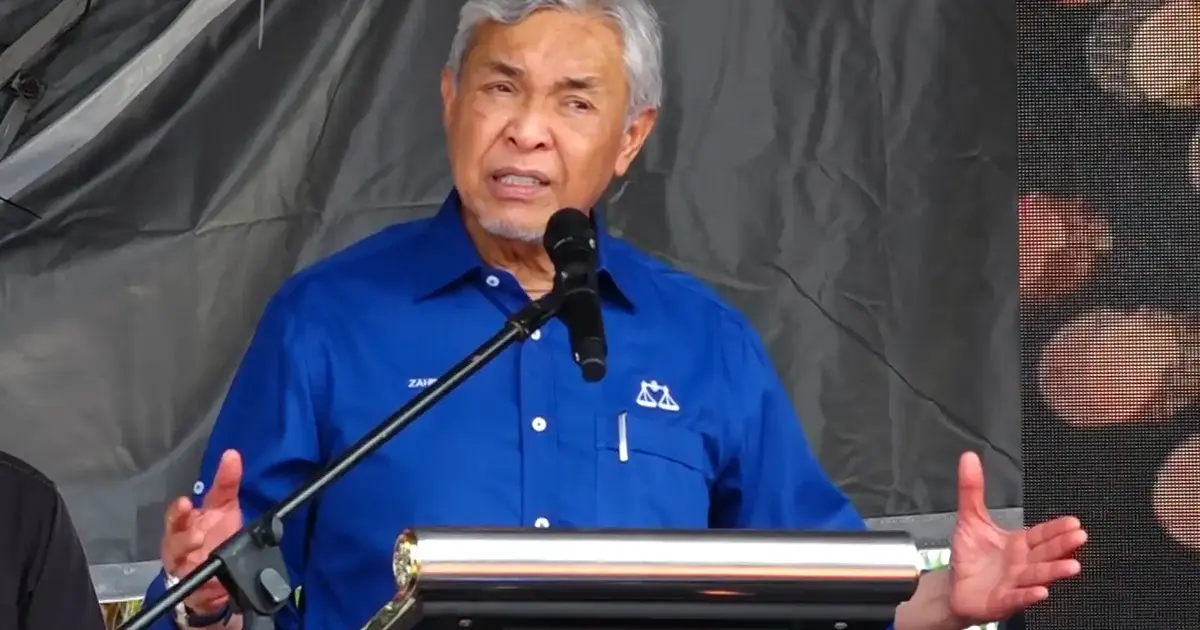
Umno president Ahmad Zahid Hamidi has signalled that the party's extensive election machinery should simply discount any critical commentary from Puad Zarkashi, the former party leader, as the coalition prepares for the Johor state elections. The directive reflects an attempt to minimise internal discord within Umno's ranks during a crucial campaign period, where maintaining unified messaging typically proves essential to electoral success. By effectively instructing grassroots operatives and party officials to overlook Puad's pronouncements on Barisan Nasional candidate selections, Zahid appears intent on preventing high-profile disagreements from undermining the coalition's broader electoral strategy in the southern state.
Puad Zarkashi, whose tenure as Umno leader concluded some years ago, has apparently voiced reservations or criticism regarding specific Barisan Nasional candidates proposed for the Johor contest. Such interventions from former party leadership can create awkward tensions within political organisations, particularly when they suggest questioning of sitting leaders' electoral judgement. The fact that Zahid felt compelled to publicly address Puad's commentary indicates the remarks carried sufficient prominence to warrant official attention, even if the Umno president's stated intention is to simply brush them aside.
In Malaysian political culture, such public dismissals of criticism from senior figures sometimes mask deeper factional tensions simmering beneath the surface. Umno's internal dynamics have historically been fluid, with competition between various power centres occasionally surfacing during electoral cycles. The timing of Puad's intervention—should it concern candidate selection—touches on matters that invariably generate passionate debate within party structures, since candidacy decisions fundamentally determine individual members' political prospects and influence distribution.
Zahid's instruction to the party machinery carries implicit messaging about the hierarchy of authority within Umno. By essentially telling operatives to disregard Puad's views, the current president reasserts his prerogative in determining electoral strategy and candidate selections. This approach also signals confidence that Puad's criticism, whatever its substance, lacks sufficient resonance to threaten the coalition's electoral prospects in Johor. The Umno president appears calculated in his confidence, suggesting internal polling or assessments indicate the party's position remains secure despite factional disagreement.
For Johor voters, such internal party dynamics carry implications beyond mere organisational housekeeping. Barisan Nasional has historically dominated the southern state's politics, and Johor remains a crucial component of any federal coalition government's electoral arithmetic. Any perceived weakness or division within Umno during a state election campaign could theoretically provide openings for opposition parties seeking to capitalise on voter dissatisfaction. However, Zahid's public confidence suggests Umno's leadership remains convinced that internal disagreements need not translate into electoral vulnerability in Johor specifically.
The Johor state elections represent a significant moment for testing coalition strength and popular sentiment following recent national political turbulence. State-level contests often serve as barometers of public opinion and can shift momentum heading toward eventual federal elections. Umno's performance in its traditional southern stronghold will undoubtedly receive close scrutiny from political observers across Malaysia and within Southeast Asia more broadly, as the state's electoral outcome frequently influences perceptions of Barisan Nasional's broader viability as a governing coalition.
Puad Zarkashi's background as former party leader means his views carry weight among certain Umno constituencies, particularly those aligned with older factional arrangements or those who harbour particular views about party governance and candidate selection processes. His willingness to speak publicly about candidate matters suggests he may retain sufficient standing to command attention, though Zahid's response indicates the current leadership prefers to marginalise such criticism rather than engage substantively with the concerns Puad has raised.
The broader context involves how Malaysian political parties manage internal disagreement during crucial campaign periods. Democratic parties typically face tensions between maintaining unity for electoral purposes and accommodating the legitimate right of members to express different perspectives. Zahid's approach essentially prioritises campaign cohesion by minimising the platform available to dissenting voices, a strategy that carries both advantages in terms of projected unity and potential drawbacks if it signals inflexibility or suppression of legitimate internal debate.
Moving forward, observers will likely monitor whether Puad Zarkashi continues to voice criticism despite Zahid's public dismissal, or whether the former leader respects the implicit boundary the Umno president has drawn. Such interactions often reveal underlying power dynamics within political organisations and can illuminate factional alignments that remain significant for understanding party evolution. The Johor election results will ultimately determine whether Zahid's confidence in party direction proves justified or whether internal divisions contributed to any electoral shortcomings.

