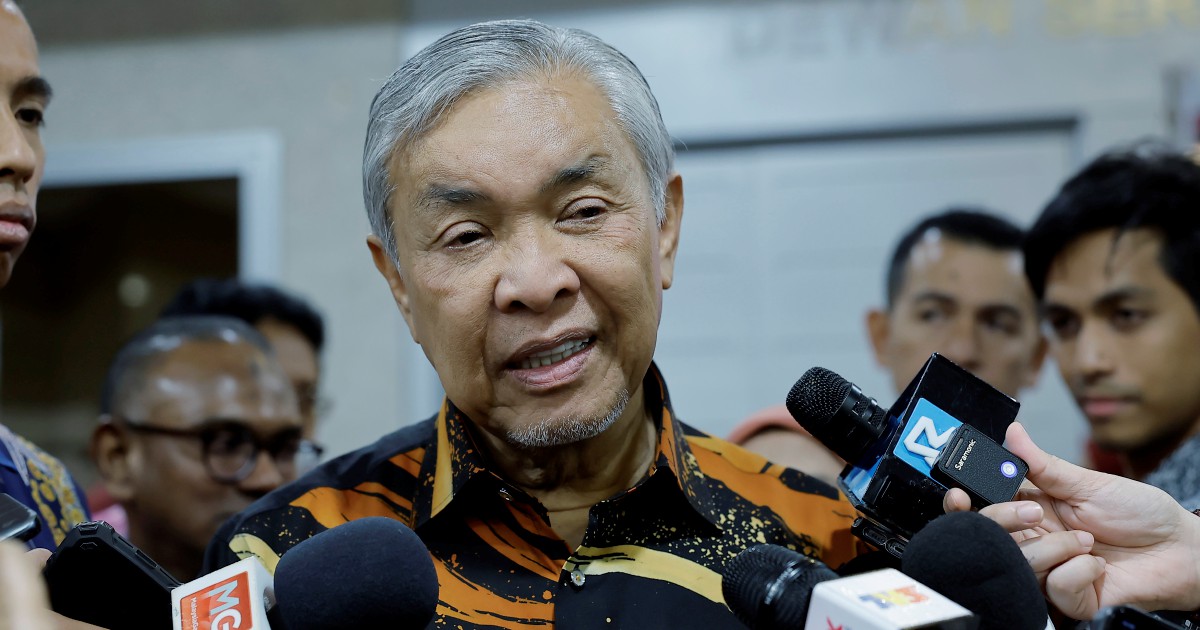
Barisan Nasional chairman Datuk Seri Dr Ahmad Zahid Hamidi has brushed aside allegations that external actors influenced the selection of Negri Sembilan's Menteri Besar, characterising such complaints as nothing more than uninformed commentary divorced from the realities of state-level politics.
The remarks, delivered in Putrajaya, represent Zahid's firm pushback against a growing wave of criticism surrounding the appointment process. Those levelling accusations of interference, he suggested, are operating from a position of fundamental misunderstanding about how political consensus is forged at the state level and within the framework of Barisan Nasional's coalition structures. His language—dismissing concerns as the "ramblings of someone who does not understand political realities"—signals an effort to delegitimise such questioning rather than engage substantively with the underlying concerns.
The appointment of a Menteri Besar in any Malaysian state carries considerable symbolic and practical weight, affecting not just state governance but coalition dynamics at the federal level. Negri Sembilan, as a traditionally significant Barisan Nasional stronghold, has long been a focal point of internal party maneuvering. Selection processes for such high-profile positions are typically subject to intense scrutiny from party members, rival factions, and the broader political establishment, all seeking to understand whether merits, seniority, factional alignment, or external pressure have determined the outcome.
Zahid's dismissive tone reflects a broader pattern within Malaysia's political leadership: the reluctance to transparently explain decision-making processes, especially when those decisions carry implications for factional balance or power distribution. By framing the critics as simply confused about political mechanics, the BN chairman sidesteps the need to articulate clear criteria for the appointment or to address specific allegations that have circulated. This rhetorical strategy is commonplace in Malaysian politics, where appeals to political "realities" often substitute for substantive public explanation.
The controversy itself points to deeper tensions within Barisan Nasional's coalition architecture. The coalition, which encompasses multiple component parties with distinct bases and interests, has long struggled with questions about how power and patronage are distributed, particularly at the state level. When appointments appear to deviate from established conventions—whether regarding seniority, zoning arrangements, or customary rotations between party factions—observers reasonably seek clarification about what factors drove the decision. The absence of such clarity naturally invites speculation about hidden influences or interventions.
For Malaysian readers, this episode reflects broader patterns of governance transparency issues that extend beyond Negri Sembilan. State-level appointments serve as bellwethers for how political decisions are made across the country. When leaders respond to legitimate questions about appointment processes with dismissiveness rather than explanation, confidence in the integrity of those processes naturally erodes. This dynamic has wider implications for how political institutions function and how citizens come to view the legitimacy of governmental decisions.
The timing of Zahid's remarks also merits consideration. As BN chairman, his role is to project authority and unity within the coalition while managing factional interests that periodically clash. By firmly rejecting interference allegations without engagement, he appears to be signalling to coalition members that the decision stands and will not be revisited based on external pressure or internal questioning. Such messaging serves an internal consolidation function but may simultaneously alienate those within the coalition who believe their concerns warrant serious consideration.
The political "reality" that Zahid invokes is presumably his own assessment of how state politics must function, what coalitional arrangements are necessary, and how appointments serve broader strategic objectives. However, the actual substance of that reality—the factors genuinely at play—remains opaque to public view. This gap between the claimed reality and observable facts creates space for conjecture and undermines the claim that critics are simply confused. Rather, critics may be rationally responding to the absence of transparent information by questioning what lay beneath a decision presented without clear public justification.
Moving forward, this episode has broader implications for how Barisan Nasional positions itself, particularly as the coalition continues to compete for electoral relevance against Pakatan Harapan and other political forces. Public confidence in the coalition's institutional fairness and decision-making processes affects its ability to attract members and maintain discipline. When senior leaders respond to accountability questions by invoking mystical knowledge of political realities rather than offering concrete explanation, they risk widening the credibility gap that has increasingly plagued Malaysian political institutions.
For observers across Southeast Asia watching Malaysian politics, this moment encapsulates a continuing challenge: how established political coalitions maintain legitimacy while operating within systems where patronage and factional considerations inevitably influence outcomes. Zahid's dismissal of his critics may satisfy coalition hardliners in the short term, but it leaves unresolved the fundamental question of whether Menteri Besar appointments are determined through fair, merit-based processes or through calculations that remain hidden from public scrutiny.

