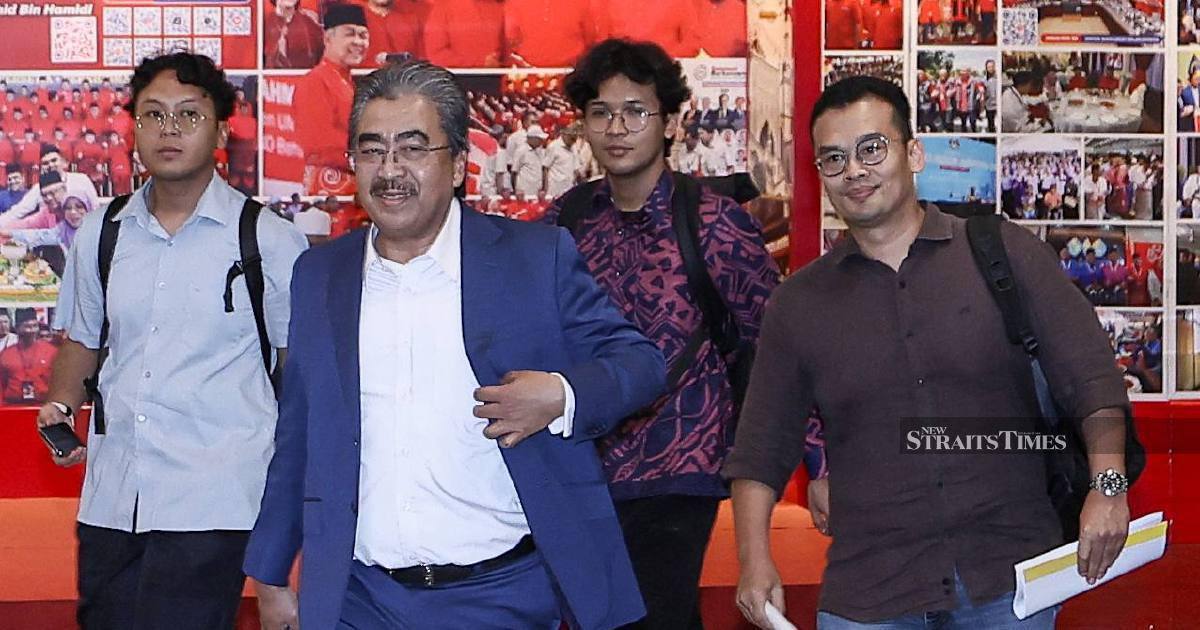
Deputy Prime Minister Datuk Seri Zahid Hamidi presided over a restricted briefing session at Barisan Nasional's nerve centre, bringing together party heavyweights to review the long-awaited findings of the Royal Commission of Inquiry into Lembaga Tabung Haji. The gathering at Umno headquarters marked a significant moment in the coalition's assessment of the pilgrimage fund's troubled history, with the selective declassification of the RCI report now enabling top political figures to examine recommendations and findings previously kept from public view.
The inclusion of Perikatan Nasional leaders at the Kuala Lumpur meeting underscores the cross-coalition nature of Malaysia's current political landscape, where government business increasingly demands coordination between nominally distinct political blocs. That partnership entities attended a forum centred on reviewing institutional governance speaks to the degree to which Tabung Haji's fortunes have become embedded in Malaysia's broader political consciousness. The fund's mismanagement and subsequent near-collapse in recent years transformed it from a technocratic concern into a matter affecting millions of Malaysian Muslims and their families' retirement aspirations.
Tabung Haji's deterioration became one of the most visible symbols of institutional erosion in Malaysia's public sector during the preceding decade. What began as a respected savings and pilgrimage financing mechanism evolved into a cautionary tale of lax oversight, questionable investments, and governance failures that left ordinary Malaysians anxious about their accumulated savings. The RCI's inquiry represented an attempt to catalogue precisely how the fund descended from respected custodian of Muslim citizens' wealth into an entity requiring emergency recapitalization and operational restructuring.
The decision to declassify portions of the RCI report reflects evolving considerations about transparency and accountability in Malaysian governance. Rather than maintaining the investigation findings as classified state documents, the government's step towards selective disclosure suggests recognition that political and public stakeholders require access to factual assessments of what transpired. However, the closed-door briefing format indicates that while transparency has expanded, information distribution remains carefully managed through controlled channels accessible primarily to senior leadership rather than through public release.
For Malaysian Muslims specifically, Tabung Haji's rehabilitation carries deep personal significance beyond conventional financial metrics. The fund historically represented an institutionalized pathway toward fulfilling the Islamic obligation of Hajj pilgrimage, combining religious aspiration with practical savings discipline. Millions of contributors viewed their annual deposits not merely as investments but as spiritual commitments, making the fund's near-catastrophic difficulties a matter touching upon faith and trust in institutions meant to serve that sacred purpose.
The briefing's composition—bringing together figures from both Barisan Nasional and Perikatan Nasional—reflects the current government's hybrid political foundation. Prime Minister Anwar Ibrahim's administration depends upon support from multiple coalition entities, requiring consensus-building among different political camps on matters of national importance. Tabung Haji's governance restructuring falls squarely into that category, as decisions about the fund's future direction, leadership, and operational framework will influence both immediate institutional recovery and longer-term confidence in Malaysia's management of public financial entities.
Senior leadership access to declassified RCI materials positions the briefing session as an intelligence-sharing exercise preparing key decision-makers for potential policy announcements or legislative action. The Royal Commission's investigation likely produced detailed findings about causative factors, individual accountability, systemic weaknesses, and recommended reforms. Equipping coalition leaders with comprehensive understanding of those recommendations before public disclosure allows coordinated messaging and unified political positioning, reducing the prospect of conflicting statements or internal disagreement about appropriate responses.
The Tabung Haji crisis also carries broader implications for Malaysia's development trajectory and institutional credibility. International observers and domestic investment communities closely monitor how governments respond to public sector financial scandals. The competence displayed in diagnosing problems, implementing solutions, and preventing recurrence influences confidence in Malaysian institutions more broadly. By facilitating high-level political briefings on the RCI findings, leadership demonstrates commitment to serious engagement with institutional remediation rather than allowing matters to fade from public consciousness.
Governance reform at Tabung Haji necessarily intersects with questions about Islamic finance supervision, public sector accountability mechanisms, and fiduciary responsibility standards in Malaysian law. The RCI's recommendations likely extend beyond identifying past failings to proposing structural, regulatory, and personnel changes designed to prevent similar deterioration in future. Political leaders reviewing those recommendations face consequential decisions about resource allocation, legislative priorities, and the distribution of accountability—choices that will reverberate through Malaysia's financial ecosystem and shape expectations for institutional performance across government.
The selective release of the declassified RCI report through high-level briefing sessions rather than comprehensive public disclosure suggests a staged approach toward information revelation. Presumably, further portions of the report or fuller public accounts will eventually reach the broader Malaysian public, allowing citizens to understand what occurred and what institutional changes are underway. However, the timing and extent of public disclosure remain subject to strategic political calculation, even as the core factual findings move through official channels toward decision-makers responsible for determining institutional futures.
For ordinary Malaysians with savings locked in Tabung Haji's recovery program, the convergence of political attention on the RCI findings offers modest reassurance that their accumulated wealth is receiving sustained senior-level scrutiny. Whether the briefing translates into prompt, transparent public communication about remedial measures or into political positioning for eventual electoral advantage remains uncertain. Nevertheless, the gathering itself signals that Malaysia's leadership recognizes Tabung Haji's rehabilitation as consequential to both immediate financial stability and longer-term institutional credibility within the Muslim-majority nation's complex political ecosystem.

