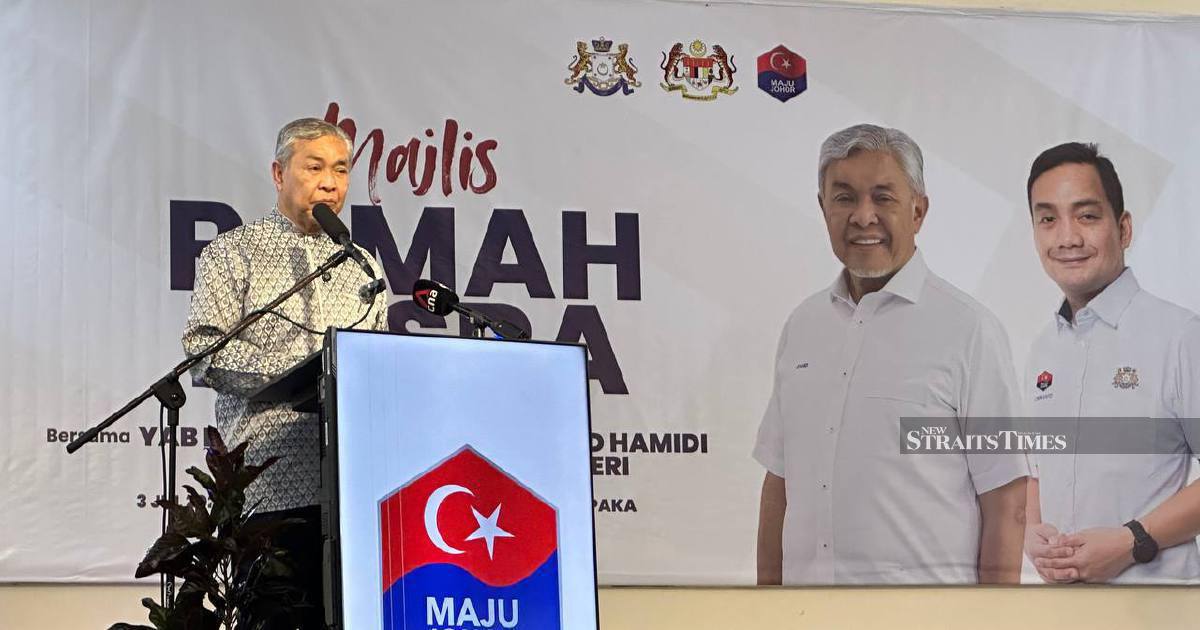
Barisan Nasional chairman Datuk Seri Dr Ahmad Zahid Hamidi has called upon his coalition's unity government partners to set aside past disputes and focus their efforts on the forthcoming Johor state election campaign. Speaking in Johor Baru, Zahid cautioned against dredging up longstanding grievances that have previously targeted Umno and the broader Barisan Nasional coalition, signalling a desire to present a unified front as the alliance enters what is expected to be a closely contested electoral period.
The plea from Zahid reflects the delicate balancing act that the unity government has had to maintain since its formation. The coalition brings together Barisan Nasional, which governed Malaysia for decades until 2018, with Pakatan Harapan, which led the government from 2018 to 2022. Both blocs have accumulated years of mutual criticism and historical disputes that could easily resurface during intense campaign periods. By seeking to impose a moratorium on such attacks, Zahid appears to be attempting to prevent the campaign from devolving into recriminations that might undermine public confidence in the coalition's ability to work together.
For Malaysian political observers, Zahid's intervention underscores the ongoing tensions within the unity government framework. Umno, as the dominant component of Barisan Nasional, carries particular historical baggage related to governance during the pre-2018 era, making it a frequent target of criticism from opposition parties and, at times, from Pakatan Harapan components still within the coalition. Previous campaigns have frequently featured accusations from political rivals regarding past administration, corruption allegations, and policy disagreements, making it challenging for the unity government to present itself as a cohesive alternative to opposition blocs.
The Johor state election campaign represents a significant test for the unity government's ability to maintain internal discipline and messaging coherence. As one of Malaysia's most populous and economically important states, Johor's electoral outcomes carry implications beyond the state level, influencing perceptions of the coalition's strength and viability at the federal level. A successful campaign built on forward-looking policies and constructive messaging rather than backward-focused attacks could reinforce the narrative that unity government partners can set aside historical differences for the greater good.
Zahid's statement also reflects awareness that voters increasingly reject campaign narratives perceived as divisive or mired in old disputes. Malaysian electorates across various states have demonstrated in recent years a preference for candidates and coalitions focusing on practical issues affecting daily life – economic opportunities, public services, infrastructure, and cost-of-living concerns. Rehashing old grievances risks being seen as irrelevant to contemporary voter concerns and could damage the unity government's credibility in addressing present-day challenges.
However, implementing such a directive across all coalition partners presents practical difficulties. Political cadres within Umno and Barisan Nasional have built substantial portions of their campaign arsenals around responses to criticisms accumulated over the years, while Pakatan Harapan components similarly have developed messaging around historical governance records. Asking these parties to simultaneously unlearn established campaign tactics while competing intensely for electoral advantage requires a degree of coordination and self-restraint that may prove difficult to maintain throughout a full election campaign.
The timing of Zahid's appeal matters significantly. Early in campaign periods, when messaging frameworks are being established and party machinery is being mobilized, such leadership guidance carries greater weight. Party workers and candidates take cues from senior leadership regarding acceptable boundaries of political discourse. Should Zahid's plea gain traction among coalition members, it could shape the overall character of the Johor campaign as one focused on future-oriented competition rather than historical recriminations.
From a Southeast Asian perspective, Malaysia's experience managing coalition politics during competitive elections offers lessons relevant to other regional democracies navigating multi-party alliances. Thailand, Indonesia, and the Philippines all feature political environments where diverse parties must sometimes work together despite historical differences. How the unity government handles this tension in Johor may provide instructive examples for other regional players considering coalition strategies.
For Umno specifically, Zahid's intervention serves another purpose – seeking to limit the degree to which the party becomes a focal point for criticism during the campaign. As the largest component of Barisan Nasional and as a party with significant responsibility for pre-2018 governance, Umno remains particularly vulnerable to attacks regarding past administration. By establishing an expectation that such attacks should remain off-limits within the coalition, Zahid attempts to constrain the political space within which rivals can manoeuvre.
The effectiveness of Zahid's appeal will become apparent as the Johor campaign progresses. Whether coalition partners adhere to his guidance while simultaneously maintaining their distinctive political identities and responding to opposition attacks will reveal much about the unity government's internal cohesion. Success would suggest the coalition has found sustainable mechanisms for managing historical grievances, while slippage would indicate that such mechanisms remain fragile when tested by electoral pressure.

