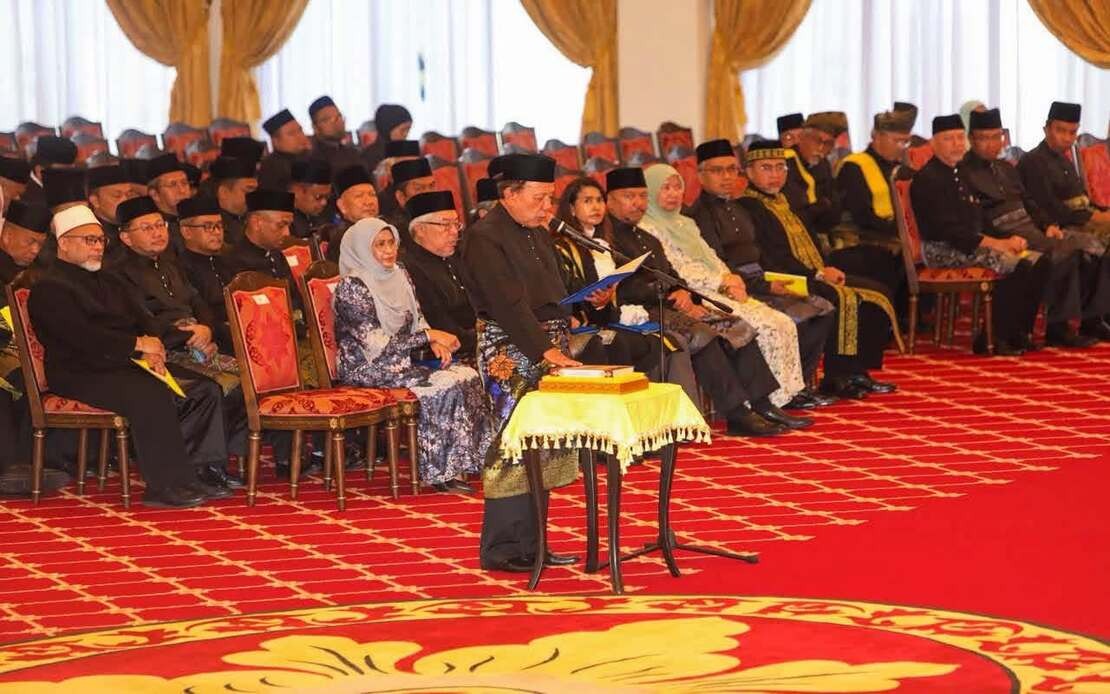
Deputy Prime Minister Datuk Seri Dr Ahmad Zahid Hamidi led congratulations from the federal cabinet on Thursday following the swearing-in of Datuk Ismail Lasim as Negeri Sembilan's new Menteri Besar. The ceremony took place at the Balairong Seri of Istana Besar Seri Menanti before the Yang Dipertuan Besar of Negeri Sembilan, Tuanku Muhriz Tuanku Munawir, cementing Lasim's transition to the state's top administrative position.
Ahmad Zahid, who also serves as Rural and Regional Development Minister, used social media to extend his backing to the newly installed leader. In his statement, he characterised the appointment as a significant responsibility, expressing confidence that Lasim would fulfil his duties with dedication to enhance both the well-being of Negeri Sembilan's residents and overall state development. The Deputy Prime Minister's public endorsement signals the federal government's commitment to supporting the new administration in the central region.
Other senior ministers quickly added their voices of support. Defence Minister Datuk Seri Mohamed Khaled Nordin framed the appointment within the broader context of state stability and economic progress, asserting that the confidence placed in Lasim carries with it an obligation to sustain Negeri Sembilan's development trajectory. Khaled's remarks emphasised the continuity expected under the new leadership, suggesting that maintaining existing momentum in infrastructure and regional prosperity remains paramount.
Plantation and Commodities Minister Datuk Seri Dr Noraini Ahmad described the appointment as marking a pivotal juncture for Negeri Sembilan's governance and future direction. She portrayed the transition as an opportunity to steer the state into a fresh chapter, while also offering personal wishes for Lasim's success. Her statement underscores how the federal administration views this change of guard as complementary to national development objectives.
Ismail, at 67 years old, brings substantial political credentials to his new role. His career in Negeri Sembilan politics spans nearly three decades, beginning in 1999 when he first won election as a state assemblyman representing Juasseh. This lengthy tenure demonstrates deep roots in the constituency and familiarity with the state's political landscape, factors that may facilitate smoother governance transitions and policy implementation.
The incoming Menteri Besar's track record in state administration extends well beyond his assembly membership. He was appointed to the state executive council in 2004 and remained part of the state administration for three consecutive terms, concluding in 2018. During these formative years in government, Lasim directed his focus toward the education portfolio, positioning himself as instrumental in developing and executing policies centred on educational advancement and human capital expansion throughout Negeri Sembilan.
His experience in education policy carries particular relevance for a state facing competitive pressures in human resource development. Negeri Sembilan, situated strategically between Kuala Lumpur and the southern regions, requires continuous investment in its workforce to attract businesses and retain talent. Lasim's prior involvement in shaping educational initiatives suggests he understands these structural challenges and may be prepared to address them as Menteri Besar.
The appointment reflects the broader political dynamics within Negeri Sembilan, where coalition governments have navigated complex state-level politics in recent years. The fact that multiple federal cabinet ministers took pains to congratulate Lasim publicly indicates that his appointment carries implications beyond the state capital Seremban, with ramifications for federal-state coordination on development projects and resource allocation.
For Malaysian observers monitoring regional governance, Lasim's elevation provides insight into how the current administration selects and promotes state-level leadership. His background in routine administrative roles rather than controversial policy domains suggests a preference for steady, consensus-oriented governance. This approach may appeal to a state electorate fatigued by political turbulence and seeking stability in public services.
The cabinet ministers' coordinated messaging around Lasim's appointment underscores the importance placed on projecting unity and confidence in the state's new leadership. In an environment where Malaysia's political landscape remains fluid and subject to shifting coalitions, early displays of federal support can help stabilise a new administration's footing and signal investor confidence in the state's continuity.
Lasim's challenge will be translating his educational background and administrative experience into tangible improvements in Negeri Sembilan's public services and economic competitiveness. The state sits within a strategically important corridor linking Kuala Lumpur, Putrajaya, and the Port Klang region, presenting opportunities for leveraging infrastructure developments and manufacturing investments. How effectively the new Menteri Besar mobilises these advantages while managing local expectations will shape his tenure's success.

