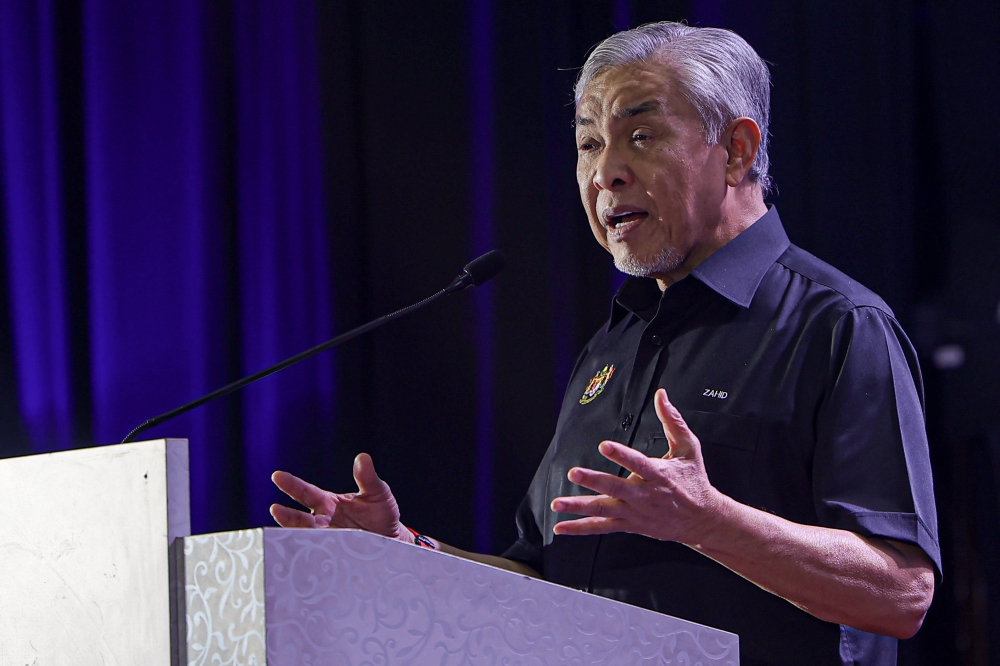
Deputy Prime Minister Datuk Seri Ahmad Zahid Hamidi has made fresh allegations that certain ministry officials encountered pressure to participate in events linked to Barisan Nasional during recent state electoral campaigns. Speaking in Putrajaya on August 6, Zahid raised concerns about the independence and neutrality of the civil service, suggesting that officials may have been coerced into supporting the coalition's political activities.
The assertion touches on a longstanding tension in Malaysian politics between the political executive and the administrative apparatus. Civil servants are constitutionally bound to serve the government of the day regardless of which coalition holds office, yet they are also expected to remain neutral and professional in their conduct. The distinction between legitimate government business and partisan campaign activities has proven difficult to maintain in practice, particularly during election periods when ruling coalitions seek to mobilise state resources and personnel for electoral advantage.
Zahid's remarks come amid broader scrutiny of how government resources are deployed during election campaigns. State elections across Malaysia have frequently generated accusations from opposition parties that the ruling coalition enjoys unfair administrative advantages. These complaints typically centre on allegations that government vehicles, facilities, and personnel are redirected toward campaign purposes, creating an unequal playing field. The involvement of ministry officers in BN-linked events during state polls would, if substantiated, illustrate this pattern at the federal level.
The timing of Zahid's statement is noteworthy given the political dynamics within the current administration. As Deputy Prime Minister and UMNO vice-president, Zahid occupies a position that straddles executive and party politics. His public airing of concerns about pressure on civil servants may reflect internal coalition tensions or genuine institutional worries about administrative independence. Either way, such allegations warrant serious consideration given their implications for democratic governance and public sector integrity.
The Malaysian civil service comprises hundreds of thousands of individuals across numerous agencies and ministries. Officers range from junior administrative staff to senior policy advisors, and their exposure to political pressure varies significantly depending on their seniority and proximity to decision-makers. Lower-ranking staff may feel particularly vulnerable to informal coercion, even where no explicit directive has been issued. Creating an environment where officials feel obligated to support partisan activities undermines the merit-based, professional ethos that effective governance requires.
Previous instances have illustrated the difficulty of drawing clear boundaries during election periods. Election commissions have issued guidelines stipulating that government officials should not engage in campaign activities, yet distinguishing between ordinary government functions and campaigning proves complex in practice. A ministerial visit to a state ostensibly for policy purposes can blur seamlessly into campaign activity, while invitations to officers to attend officially sponsored events may carry implicit expectations of participation and visible support.
The integrity of Malaysia's electoral process depends partly on public confidence that the civil service remains impartial and professional. When officials are perceived as having become arms of ruling parties, it raises questions about whether electoral competition occurs on a level playing field. International election observers and domestic watchdog groups have noted that unequal access to state resources represents a significant structural advantage for incumbent administrations, potentially distorting electoral outcomes.
For civil service leadership, Zahid's allegations present both a challenge and an opportunity. They must investigate whether systematic pressure has been applied to officers, hold accountable any officials who have improperly leveraged their positions for partisan purposes, and reinforce the principle that civil servants serve the public, not political parties. Clear guidelines and protection mechanisms for whistleblowers who report such pressure are essential to maintaining institutional integrity.
The broader Southeast Asian context adds relevance to these concerns. Across the region, tensions between political executives and administratively neutral civil services have occasionally sparked constitutional crises and democratic backsliding. Malaysia's federal system, with multiple layers of government, makes these boundary questions even more complex. States governed by different coalitions than the federal government have particular interest in ensuring that federal officials do not abuse administrative positions to undermine their opponents.
Zahid's willingness to publicly acknowledge that pressure may have been applied suggests a desire to address the problem, though critics may question whether this represents genuine institutional concern or tactical positioning. Regardless, the allegation deserves thorough investigation. The government should commission an independent inquiry to examine whether ministry officers faced coercion, establish clear protocols for distinguishing campaign from administrative activities, and strengthen protections for those who resist improper pressure. Such measures would serve not only democratic principle but also the efficient, professional delivery of government services upon which all citizens depend.

