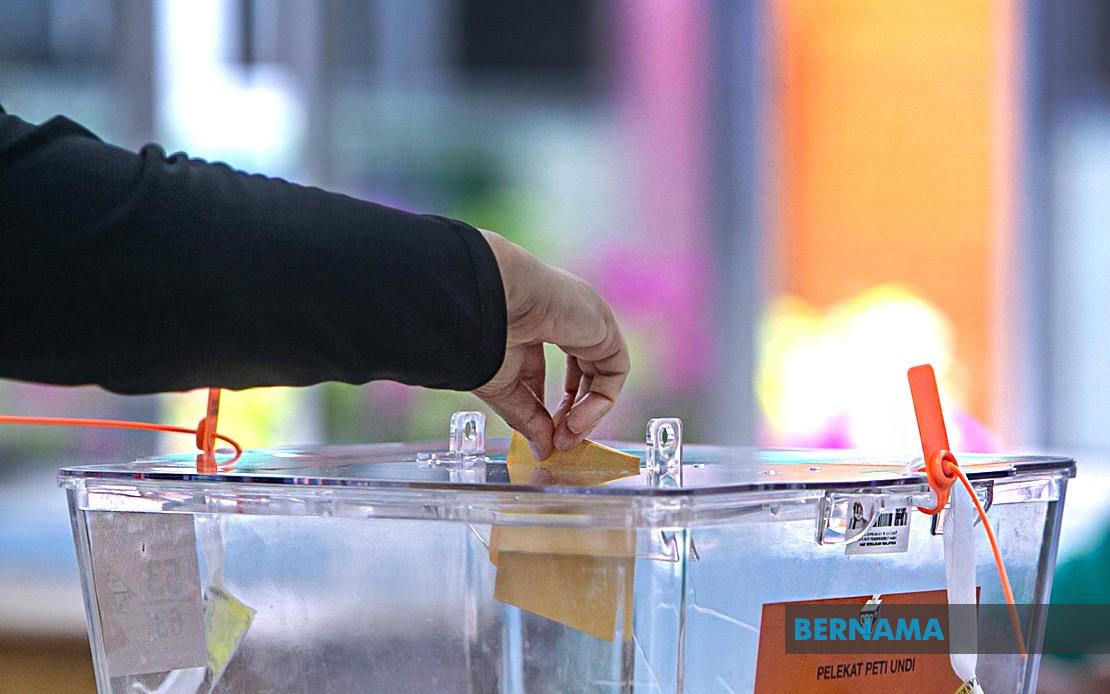
The Ministry of Youth and Sports has moved to eliminate a persistent conflict faced by thousands of young Malaysians pursuing vocational qualifications: the tension between civic duty and educational obligations. In a directive issued through its Youth Skills Development Division, the ministry has instructed all Youth and Sports Skills Training Institutions across the country to accommodate students who wish to return to their electoral constituencies to cast their votes during any electoral exercise.
This policy recognition comes at a time when youth voter participation remains a significant focus for Malaysian electoral authorities and democracy advocates. By formally permitting educational leave for voting purposes, the ministry acknowledges that democratic participation should not require students to sacrifice their training progress or face administrative penalties. The directive applies equally to general elections, state elections, and by-elections, ensuring that students retain voting access regardless of electoral cycle or magnitude.
The implementation framework established by the ministry demonstrates a structured approach to managing competing institutional demands. Rather than providing blanket approval, ILKBS directors retain discretion to evaluate applications based on practical considerations including the distance between the training institution and a student's polling centre, the realistic time required for travel and voting, and the institution's capacity to maintain its training schedule without undue disruption. This graduated system aims to balance the principle of voting access with institutional stability and planning requirements.
Applications for special leave must be submitted formally to each institution's management, requiring students to plan ahead and coordinate with administrative staff well in advance of polling day. This procedural requirement serves multiple purposes: it enables institutions to track attendance patterns accurately, allows training coordinators to adjust schedules proactively, and gives students time to arrange transportation to their home constituencies. The ministry has explicitly encouraged all ILKBS to notify eligible students early about this opportunity, recognizing that awareness gaps could prevent many from utilising their new rights.
The directive carries broader implications for how Malaysia's educational and democratic systems interact. Vocational training institutions serve predominantly younger demographics who are often first-time voters, making their participation patterns particularly influential for long-term democratic engagement. When institutional structures create practical barriers to voting, they risk cultivating generational habits of non-participation that extend beyond the training period. By removing such barriers, the ministry signals that democratic participation is not merely encouraged but actively supported through institutional policy.
For Malaysia's complex electoral landscape, this measure addresses a particularly acute challenge. Malaysia conducts elections at multiple levels—federal, state, and local—with varying schedules and sometimes multiple contests within short timeframes. Students whose homes are located in constituencies distant from their training institutions could previously face impossible choices, particularly during periods of intensive electoral activity. The special leave provision essentially recognises the geographic realities of Malaysia's federal structure and the mobility patterns of its student population.
The ministry's emphasis on welfare and safety alongside voting access suggests an institutional commitment to holistic student support. By requiring ILKBS directors to consider travelling time, the policy implicitly acknowledges that rushed or unsafe travel arrangements could jeopardise student wellbeing. This protection-oriented framing distinguishes the directive from a purely permissive approach, instead positioning it as part of comprehensive student care policy.
International democratic research indicates that voting behaviour established during formative years—particularly during or immediately after educational transitions—tends to persist into adulthood. Malaysian students who exercise their voting rights while pursuing vocational training may develop stronger lifetime voting habits compared to peers who faced institutional obstacles to participation. From this perspective, the ministry's directive represents an investment in sustained democratic participation across the lifespan.
The directive also reflects evolving Malaysian institutional attitudes toward democracy and youth engagement. Previous decades sometimes treated electoral participation and institutional responsibilities as competing rather than complementary values. The current approach treats them as mutually reinforcing, with the ministry essentially arguing that educational institutions serve the nation better by producing citizens who actively participate in democratic processes alongside acquiring vocational skills. This philosophical shift, though subtle in its articulation, represents meaningful progress in integrating civic and educational objectives.
Implementation success will depend substantially on how individual ILKBS institutions interpret and operationalise the ministry's directive. Institutions demonstrating flexibility and proactive communication with students are likely to experience smooth implementation, while those adopting overly restrictive interpretations of approval criteria could inadvertently recreate the barriers the policy aims to remove. The ministry's call for advance notification suggests it recognises this implementation risk and is attempting to create institutional cultures supportive of the policy intent.
For Malaysian voters broadly, the directive expands democratic access among an important demographic segment. Youth represent both current and future voters whose engagement patterns shape electoral dynamics. By ensuring that pursuit of vocational qualifications does not compromise voting access, the policy strengthens the democratic process itself. It also sends a symbolic message that Malaysia's institutions prioritise citizen participation and recognise voting as a responsibility that transcends sectoral boundaries.
The measure aligns with broader Southeast Asian trends emphasising youth engagement in democratic processes. Regional organisations and international observers have increasingly highlighted the importance of embedding democratic participation within institutional structures that young people regularly navigate. Malaysia's ILKBS directive represents practical implementation of this principle, moving beyond rhetorical endorsement of youth participation to concrete policy accommodation.
Looking forward, the directive's success may influence similar policies across other educational and training sectors. If ILKBS institutions report positive experiences in accommodating student voters without significant operational disruption, the model could extend to universities, polytechnics, and private training providers. The cumulative effect would substantially enhance Malaysia's democratic infrastructure by systematically removing institutional obstacles to voting across the entire educational ecosystem.

