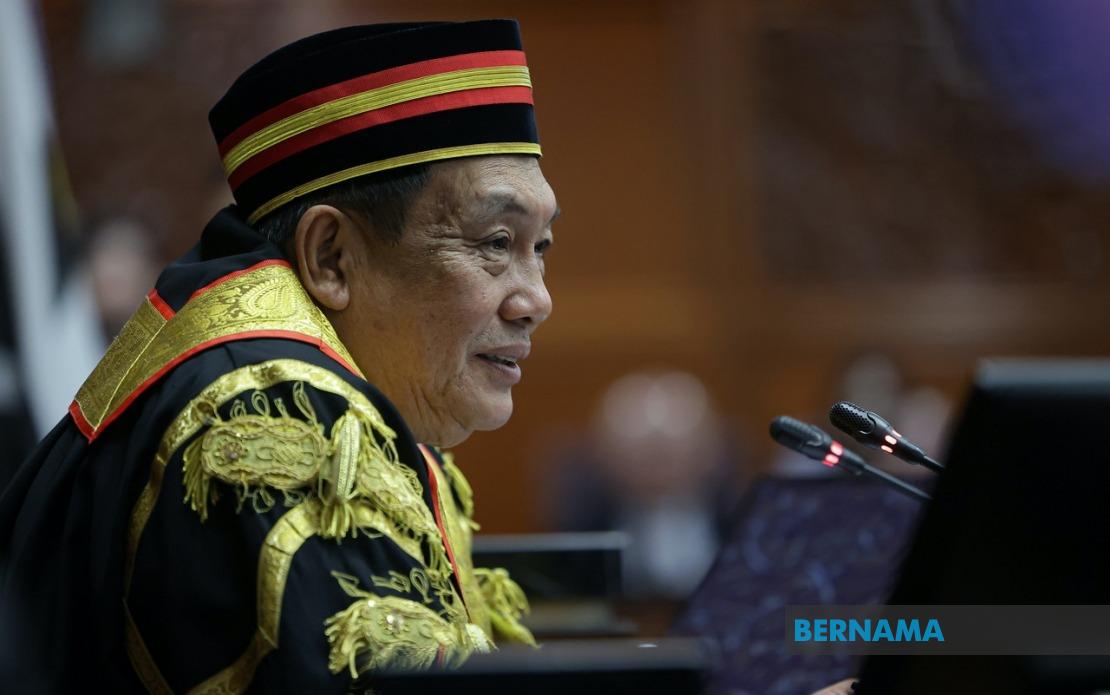
Dewan Negara President Datuk Awang Bemee Awang Ali Basah has characterised Malaysia's Youth Parliament (PBMy) as a foundational institution for cultivating a generation of informed citizens who grasp democratic principles, engage in rigorous intellectual discourse, and advocate for their positions with maturity and accountability. Speaking at the "Tranung Mari! From Campus to Parliament: Youth Voices Shaping Malaysia's Future" programme held at Universiti Malaysia Terengganu on August 27, Awang Bemee framed the initiative as essential infrastructure for democratic renewal and youth empowerment.
The Senate president employed the metaphor of a "school of democracy" to encapsulate what the Youth Parliament accomplishes. Unlike traditional classrooms, this experiential platform grants young participants direct exposure to parliamentary mechanics, including the formulation and presentation of arguments, structured debate, receptiveness to opposing viewpoints, and acceptance of collective decision-making processes. By engaging in these practices from their formative years, participants internalize the reality that advocacy carries reciprocal duties—a principle that Awang Bemee identified as foundational to developing character in future leaders.
Awang Bemee's conception of leadership diverges sharply from populist notions centred on oratorical prowess or command authority. Instead, he articulated a more nuanced framework in which effective leaders prioritize listening as much as speaking, prioritize problem-solving over issuing directives, and conceive office-holding as stewardship rather than privilege. This reframing carries particular significance for Malaysia, where younger voters increasingly demand leaders capable of empathetic engagement and transparent responsiveness to constituents' concerns.
The Senate president positioned Parliament and Youth Parliament as complementary institutions within Malaysia's democratic ecosystem. While Parliament functions as the decision-making apex, Youth Parliament serves as a channel for younger voices, systematically incorporating perspectives that might otherwise remain peripheral in legislative discourse. This structural complementarity mirrors best practices in mature democracies where cross-generational dialogue strengthens institutional legitimacy and policy outcomes.
Awang Bemee outlined three integrated pillars for youth empowerment that extend beyond ceremonial participation. The first pillar—openness and inclusive democracy—hinges on creating institutional and societal conditions wherein young people encounter genuine opportunities to articulate views, receive hearing, and witness their input shape outcomes. Within Malaysia's ethnically, religiously, and culturally heterogeneous context, Awang Bemee argued that diversity represents untapped strategic advantage, contingent upon cultivating mutual comprehension and reciprocal respect. This framing reorients diversity discourse away from managing competing claims toward leveraging heterogeneity as a source of innovative problem-solving.
The second pillar emphasizes educational modernization that transcends examination-driven paradigms. Awang Bemee advocated for curricula deliberately cultivating metacognitive capacities—critical thinking, digital literacy, artificial intelligence comprehension, creative production, entrepreneurial orientation, rhetorical facility, and civic consciousness. Crucially, he emphasized that technological advancement must be anchored in robust value systems to forestall instrumentalization of capabilities toward socially corrosive ends. Within Malaysia's aspirations toward digital economy leadership, this integration of technical proficiency with ethical reasoning addresses persistent anxieties regarding unconstrained technological disruption.
Moreover, Awang Bemee highlighted emerging economic sectors offering youth pathways to prosperity and national contribution. The Blue Economy—encompassing marine fisheries, aquaculture development, maritime tourism, renewable ocean energy infrastructure, and transport systems—represents a frontier for youth entrepreneurship aligned with environmental stewardship. For Southeast Asian nations confronting climate pressures and marine resource depletion, this developmental model offers templates for sustainable economic diversification that younger constituencies increasingly demand.
The third pillar addresses the paradox of democratic freedom in digitally mediated environments. Awang Bemee asserted that speech liberty within democratic frameworks necessarily incorporates accountability—particularly as social media platforms amplify individual expression exponentially. He articulated a simple epistemic hierarchy for responsible digital citizenship: verification before dissemination, scrutiny before credence, comprehension before judgment, and consequence-assessment before action. This framework responds to growing concern across Southeast Asia regarding algorithmic amplification of misinformation and the erosion of shared informational commons.
Awang Bemee expressed conviction that Malaysian youth possess capacity to function as bridge-builders bridging communal divides, addressing collective challenges, and steering the nation toward inclusive prosperity. This characterization rebuts cynicism regarding younger generations' civic capacity and presupposes institutional willingness to grant them substantive agency rather than tokenistic inclusion. The confidence expressed carries strategic importance as Malaysia navigates demographic transitions and increasing youth expectations for authentic representation.
The University of Malaya Terengganu event constituted one component of Parliament Malaysia's nationwide roadshow designed to strengthen youth participation in parliamentary democracy and narrow the distance between academic institutions and legislative bodies. A key component involved a forum titled "Malaysian Youth: Drivers or Spectators?," featuring Parliament Malaysia chief administrator Datuk Dr Ahmad Husaini Abdul Rahman, which provided students direct access to parliamentary leadership and platforms for substantive dialogue regarding their roles in national affairs.
Beyond immediate programming, the initiative aims toward cultivating leadership grounded in ethical integrity while constructing generational cohorts characterized by information literacy, civic responsibility, and active commitment to democratic participation. These objectives acknowledge that sustainable democratic practice depends not merely on institutional architecture but on cultivated predispositions among citizenry toward engagement, deliberation, and accountability. For Malaysia and the broader Southeast Asian region confronting democratic pressures from technological disruption, polarization, and external influence, investing in youth democratic formation represents strategic necessity rather than peripheral concern.

