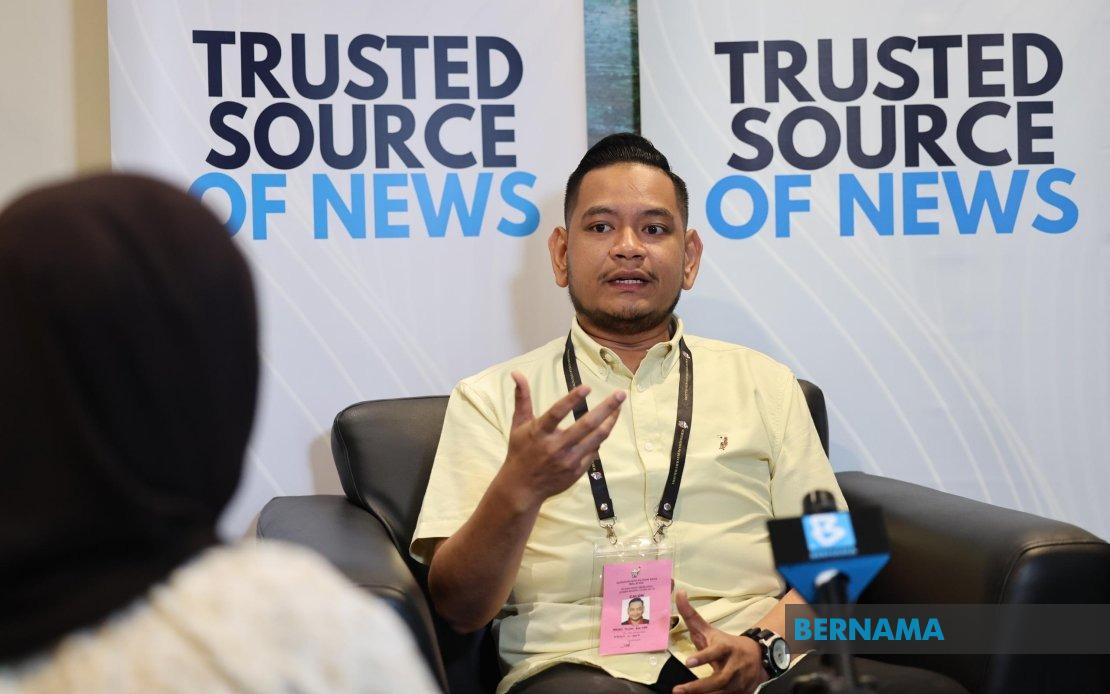
In Johor's competitive Sedili state constituency, political newcomer Amirul Huzni is betting that youthful energy and a clean slate will resonate more strongly than the decades of experience wielded by his two opponents in the upcoming Johor state election on July 11. The 29-year-old Pakatan Harapan candidate and Amanah Youth chief appears unbothered by facing incumbent Barisan Nasional contender Muszaide Makmor and Perikatan Nasional representative Rasman Ithnain, a former assemblyman who held the Sedili seat for three consecutive terms, instead framing the matchup as a generational test of political capability.
Amirul Huzni's campaign philosophy inverts conventional wisdom about electoral advantage, transforming what many would regard as inexperience into a strategic positioning tool. He describes himself and candidates like him as a blank canvas, unencumbered by the reputational baggage that accumulates through years in public office. This framing addresses a growing sentiment among Malaysian voters, particularly younger demographics, who view political newcomers as potentially less beholden to entrenched interests and patronage networks that have characterized Malaysian politics for decades. The candidate's willingness to acknowledge his disadvantage in traditional political influence—the networks, party machinery, and institutional relationships that typically determine electoral outcomes—demonstrates a sophisticated understanding of the contemporary political landscape where perceived authenticity increasingly competes with structural advantages.
The Sedili contest takes place in what has historically been BN territory, making Amirul Huzni's challenge an uphill climb by conventional measures. Rasman Ithnain's three previous terms represent substantial continuity in representation, while Muszaide Makmor carries the institutional weight of the incumbent. Yet the emergence of three viable candidates—rather than a two-way contest—fragments the political landscape in ways that could benefit a unified opposition vote. Amirul Huzni's decision to position himself as a bridge-builder rather than a firebrand, emphasizing respectful engagement with opponents even on nomination day, suggests a calculated approach to accumulating votes from centrist and swing voters who may be fatigued by divisive rhetoric.
Central to Amirul Huzni's platform is a notably concrete and locally-grounded agenda centered on infrastructure delivery rather than sweeping promises. His signature commitment involves pushing forward construction of a fuel station in Sedili, a facility that has languished in limbo despite land clearance over a year prior. This focus on tangible, addressable problems reflects a pragmatic political strategy: by identifying projects that are partially completed or identified but stalled, Amirul Huzni positions himself as capable of unblocking bureaucratic gridlock rather than initiating entirely new ventures. For fishermen and recreational anglers who form part of Sedili's economic base, fuel accessibility directly impacts their livelihoods and leisure activities, making this a populist issue with genuine constituency support.
The fuel station commitment illuminates a broader campaign philosophy that eschews ambitious but vague pledges in favor of deliverable outcomes. Amirul Huzni explicitly stated his reluctance to make promises that might prove difficult to fulfill, a rhetorical stance that could appeal to voters skeptical of political messaging. In a Malaysian context where unfulfilled campaign promises have accumulated through successive election cycles, this cautious approach potentially differentiates him from both his opponents and broader political narratives that habitually over-promise. However, this strategy also carries risks: opponents may characterize limited ambitions as insufficient vision, or suggest that a young candidate lacks the connections to move major projects forward.
The timing of the Johor state election reflects broader political turbulence in Malaysia. Held during a period of coalition realignment and deepening uncertainty about federal-state governance relationships, the election provides a testing ground for how different political configurations perform outside their established strongholds. For Pakatan Harapan, reclaiming ground in traditional BN areas like Sedili would signal organizational capacity despite the coalition's mixed recent performance. For Perikatan Nasional, Rasman Ithnain's candidacy represents an attempt to consolidate the opposition vote that emerged during the 2022 general election, when PN performed strongly in several Johor constituencies.
Amirul Huzni's emphasis on mature, respectful electioneering merits scrutiny as political strategy rather than mere civility rhetoric. In constituencies where communal harmony remains fragile or where previous contests generated friction, a candidate's demonstrated commitment to non-divisive campaigning can influence fence-sitter votes. Malaysian voters in mixed constituencies increasingly value candidates who signal respect for diverse viewpoints and commitment to inclusive governance. By repeatedly emphasizing magnanimity and learning orientation, Amirul Huzni constructs a political persona distinct from the more combative styles sometimes deployed in state elections, potentially appealing to older voters concerned about social cohesion even as he attracts younger voters seeking generational change.
The Sedili race also reflects evolving expectations around what constitutes political competence in Malaysian electoral politics. Traditional markers—party seniority, accumulated experience, patronage networks—compete increasingly with perceptions of authenticity, willingness to engage with grassroots concerns, and demonstrated understanding of local-level economic realities. Amirul Huzni's background as Amanah Youth chief places him within the party's modernizing faction, which has attempted to position Amanah as particularly attentive to younger voters and progressive policy ideas. This positioning, however, requires translation into tangible community engagement and visible campaign presence.
From a regional perspective, the Johor state election carries significance for broader Southeast Asian political trends around generational transition and the challenge of established parties to retain support amid demographic change. Malaysia's rapid urbanization and educational advancement among younger cohorts have created constituencies increasingly skeptical of traditional authority structures and more demanding of evidence-based governance. Amirul Huzni's campaign, by centering on a specific local problem and emphasizing learning and humility, taps into these broader regional currents while operating within recognizable Malaysian political frameworks.
The early voting date of July 7, preceding the main poll on July 11, may provide early indicators of voter sentiment that could influence final-day turnout and strategic decisions by all three camps. For Amirul Huzni, strong early voting performance would vindicate his gamble that youth and fresh perspectives can overcome institutional disadvantages. Conversely, weak early returns might force recalibration of messaging in the final days, potentially compelling a shift toward more aggressive contrasting with opponents' records. The Sedili contest ultimately serves as a microcosm for broader Malaysian political questions about whether generational change can be achieved through the ballot box, and whether fresh faces can compete effectively against entrenched incumbents in traditionally safe seats.

