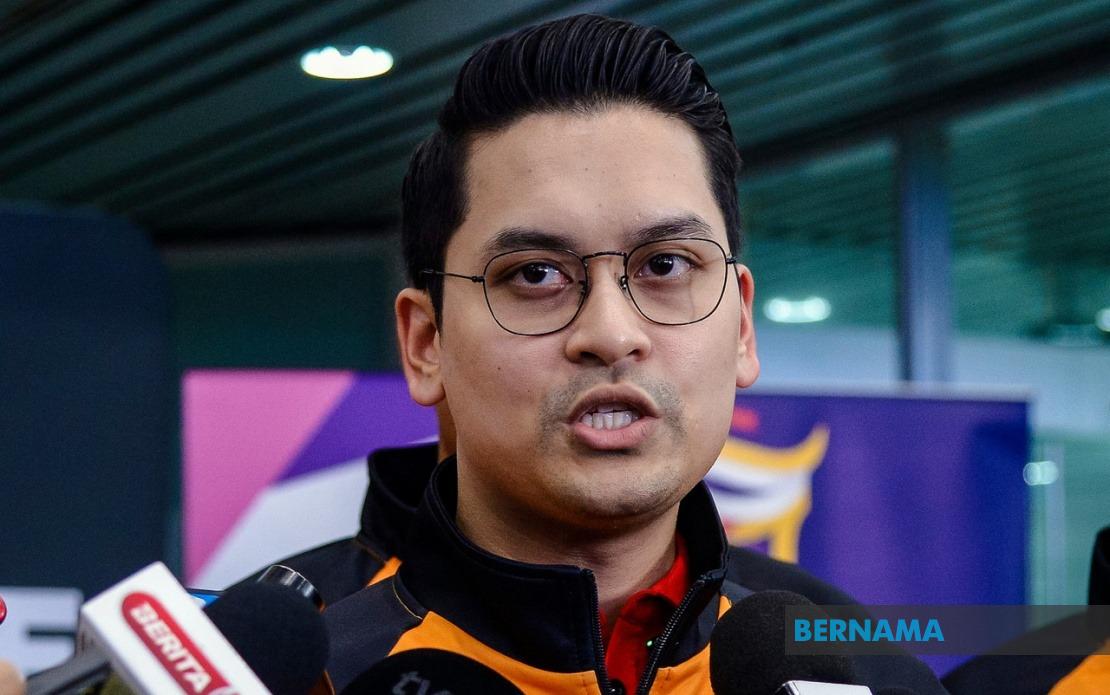
The Youth and Sports Ministry has reinforced its commitment to weightlifting as a priority sport by allocating RM4.1 million for development initiatives in 2026, while remaining receptive to discussions about supplementary funding that could elevate the nation's prospects for Olympic success. Minister Dr Mohammed Taufiq Johari disclosed the funding commitment during remarks made at Kuala Lumpur International Airport following the arrival of Malaysia's Commonwealth Games delegation, signalling that weightlifting remains high on the ministry's agenda for sports investment and talent cultivation.
The allocated resources span multiple developmental pathways designed to create a comprehensive pipeline of talent and expertise. The funding encompasses specific initiatives targeting elite athletes and coaching infrastructure, complemented by the Road to Gold programme that focuses on preparing competitors for major international competitions. Additionally, the Podium and Pelapis schemes, along with grassroots talent identification efforts, form part of the comprehensive strategy to nurture weightlifting across different performance levels and age categories.
Dr Taufiq disclosed that the Malaysia Weightlifting Federation has submitted a request for RM1 million in supplementary annual funding, a proposal that has captured ministerial attention. The minister indicated he has already engaged directly with PABM president Datuk Ayub Rahmat and officials from various weightlifting associations to understand the full scope of the request. He emphasised that a portion of the additional funding sought addresses coaching compensation and professional salaries, operational costs that the ministry recognises as essential for maintaining programme quality and attracting qualified personnel.
The ministry's apparent openness to the federation's request reflects strategic calculations about weightlifting's potential to deliver tangible medal successes on the Olympic stage. Dr Taufiq articulated the broader rationale underlying the funding consideration, framing weightlifting as a sport capable of securing Malaysia's maiden Olympic gold medal. This positioning suggests the ministry views the discipline not merely as another competitive sport but as a vehicle for achieving a historic national sporting milestone that has eluded the country's Olympic efforts across multiple Games cycles.
Under the current framework, the talent development architecture encompasses two weightlifters enrolled in the Road to Gold programme, a scheme designating athletes with realistic prospects of capturing medals at forthcoming Olympic competitions. Eight additional athletes participate in the Podium programme, representing the next tier of development, while another two competitors form part of the Pelapis initiative targeting emerging talent with long-term potential. This tiered approach allows the ministry and federation to allocate resources strategically while maintaining development continuity across the athlete pipeline.
Beyond the immediate funding question, Dr Taufiq pledged to examine conditions affecting state-level coaches working under the auspices of the National Sports Council, recognising that coaching welfare directly influences programme sustainability and athletic performance outcomes. The minister characterised coach welfare as an urgent matter requiring immediate intervention, suggesting that current compensation or working conditions may be creating retention challenges or limiting the quality of instruction available to developing athletes. By elevating this concern, the ministry signalled intent to address structural issues that constrain the sport's growth potential.
The minister's emphasis on coaching investment reflects international best practices in Olympic sport development, where the calibre of coaching directly correlates with athlete achievement levels. The commitment to examine coaching welfare across both the federation and state-level systems suggests recognition that Malaysia's weightlifting ambitions cannot be realised solely through athlete funding but require simultaneous investment in the coaching workforce responsible for technical instruction and programme delivery. This holistic approach positions weightlifting development within a broader ecosystem perspective rather than treating athlete development in isolation.
Weightlifting's elevated status within the ministry's sporting priorities gained tangible validation through its exceptional performance at the recent Commonwealth Games, where the discipline delivered five gold medals alongside one silver and one bronze contribution to Malaysia's overall medal tally. This Commonwealth performance surpassed initial expectations and cemented weightlifting's credentials as a productive investment area for national sporting success. The discipline's capacity to generate multiple medal opportunities across different weight categories and gender classifications makes it a particularly attractive focus for Olympic preparation, where medal breadth contributes substantially to overall Games success.
The Commonwealth Games success has provided empirical evidence supporting the case for enhanced weightlifting investment at a time when Malaysia is strategically repositioning its sporting portfolio toward disciplines with realistic Olympic medal potential. By delivering eight gold, three silver and five bronze medals overall, the Malaysian contingent exceeded its pre-Games target, with weightlifting's five gold medals representing a disproportionate share of this outperformance. This efficiency of medal generation relative to investment has undoubtedly influenced ministerial thinking regarding future funding allocations and strategic prioritisation decisions.
The ministry's willingness to engage in detailed discussions regarding the federation's additional funding request suggests that decisions will not be made precipitously but will follow comprehensive examination of how supplementary resources would be deployed and which specific areas would benefit most. Dr Taufiq's commitment to further consultation indicates recognition that sustainable funding decisions require buy-in from the federation and coaching community, ensuring that additional resources align with strategic priorities and operational realities. This consultative approach may ultimately lead to funding arrangements that exceed the requested RM1 million if deeper examination reveals additional needs warranting investment.
For the Malaysia Weightlifting Federation and the broader weightlifting community, the ministerial signals represent encouraging momentum toward enhanced support that could strengthen the discipline's competitive infrastructure. The combination of existing RM4.1 million allocation, receptiveness to supplementary funding, and ministerial focus on coaching welfare creates conditions where systematic improvement appears feasible. However, the outcome ultimately depends on the federation's ability to articulate a compelling case for additional resources and demonstrate how such investment would be deployed strategically to generate measurable improvements in athletic performance and medal outcomes.
Looking forward, the weightlifting development trajectory will likely influence Malaysia's broader Olympic strategy as the nation looks toward future Games and attempts to establish itself as a consistent medal-producing nation across select disciplines. The emphasis on weightlifting reflects pragmatic sporting policy focused on identifying sports where existing talent foundations, coaching expertise, and competitive structures create realistic pathways to success. By concentrating investment in disciplines with demonstrable medal-winning potential, the ministry positions Malaysia to achieve greater Olympic returns relative to total sporting expenditure than would be possible through dispersing resources thinly across many disciplines.

