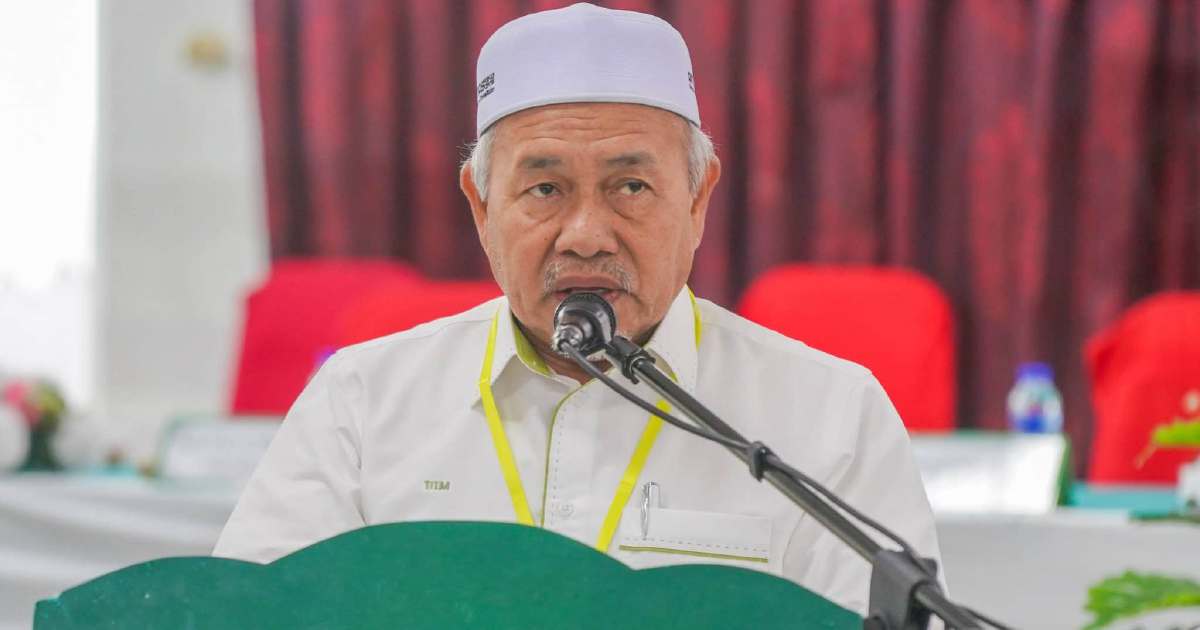
The Islamic Party of Malaysia (PAS) faces a demographic challenge that could prove decisive in determining its electoral fortunes in the upcoming Johor state election. According to the party's deputy president Datuk Seri Tuan Ibrahim Tuan Man, young voters constitute the most formidable obstacle to PAS's broader political expansion efforts in the state, a candid admission that reflects growing awareness within the party hierarchy about generational voting patterns and their impact on electoral outcomes.
Tuan Ibrahim's assessment, delivered in Kota Baru, signals that despite PAS's substantial organizational machinery and deep roots in Malaysia's Islamic constituency, the party struggles to connect with voters aged below 40. This represents a significant vulnerability in an electoral landscape increasingly shaped by younger demographics, who now comprise a meaningful proportion of the voting population across most Malaysian states. The explicit recognition of this weakness suggests PAS recognizes the need for substantial strategic recalibration if it hopes to consolidate and expand its support base beyond its traditional core voters.
The challenge PAS confronts with younger voters is multifaceted and reflects broader shifts in Malaysian political and social attitudes. Young voters tend to prioritize economic opportunity, education, digital governance, and social inclusivity—issues that do not necessarily align with PAS's traditional messaging around religious conservatism and moral governance. Furthermore, this demographic group has demonstrated greater willingness to engage with alternative political parties and candidates, making them less dependent on established political machinery and more responsive to new ideas and platforms. The party's difficulty resonating with this cohort is not unique to Johor but represents a nationwide pattern that extends across PAS's operations.
Johor presents particular significance for PAS's future trajectory. As a state where Umno has traditionally dominated, any expansion of PAS influence depends critically on broadening electoral appeal beyond its secure constituencies. Young voters in urban and semi-urban areas of Johor—particularly in Johor Bahru, Skudai, and other developed municipalities—represent exactly the kind of voter group whose support remains elusive. These voters tend to be more educated, more cosmopolitan, and more skeptical of single-issue political positioning, making them substantially harder to mobilize through conventional party structures and rhetoric.
The party's acknowledgment of this challenge indicates awareness that superficial outreach efforts will likely prove insufficient. Winning young voters requires substantive repositioning across multiple dimensions: policy articulation that speaks directly to youth economic anxieties, digital communication strategies that operate across social media platforms where younger voters congregate, and political candidates who themselves embody youth energy and contemporary perspectives. Many successful political movements globally have discovered that young voters respond more readily to authenticity, transparency, and demonstrated commitment to issues they care about than to hierarchical party structures and inherited political narratives.
PAS's current approach to addressing this gap remains unclear from available reports. The party could pursue several strategic pathways: investing more heavily in youth-oriented policy platforms that address employment, housing, and educational opportunities; recruiting younger candidates with credible records in their respective communities; or fundamentally reforming internal party structures to empower younger voices in decision-making. The effectiveness of any such initiative will depend on consistency, resource allocation, and genuine institutional commitment rather than cosmetic adjustments to party messaging.
The Johor state election context amplifies the importance of resolving this generational divide. Johor remains economically significant, with substantial young populations concentrated in industrial zones and urban centers. The state has experienced rapid development that has transformed its demographic composition and economic structure, creating new constituencies with distinct political requirements. Younger Johoreans increasingly engage in entrepreneurship, creative industries, and technology sectors that demand different governance approaches than traditional manufacturing or agricultural sectors that dominated earlier decades. Any political party seeking to influence Johor's future must address these realities directly.
Comparative analysis suggests that political parties successfully bridging generational gaps typically invest years in patient cultivation of youth constituencies rather than expecting immediate electoral returns. They develop credible platforms on issues young voters genuinely prioritize, create mentorship pathways that help younger members ascend to leadership positions, and demonstrate willingness to evolve traditional positions when evidence and changing social conditions warrant modification. PAS has organizational strength that could support such long-term strategic investment if party leadership commits to it substantively rather than rhetorically.
For Malaysian voters more broadly, PAS's struggle with younger demographics mirrors challenges confronting other established political parties seeking to maintain relevance amid shifting social and economic landscapes. The electorate increasingly comprises cohorts socialized in independence, educated through modern systems, and exposed to global information flows that older generations did not experience. Political parties that fail to address the genuine concerns and aspirations of these younger voters risk gradual decline in electoral influence regardless of historical importance or institutional resources. The next decade will likely determine whether PAS successfully navigates this challenge or continues losing ground among Malaysia's younger voters, with implications extending well beyond Johor to national political competition.

