The contest for the Johor Jaya state assembly seat is shaping up as a generational clash between development philosophies, with candidates framing their electoral pitches around economic revival and infrastructure advancement for the constituency. The four-way battle involving representatives from Pakatan Harapan, Barisan Nasional, Parti Bersama Malaysia, and an independent candidate reflects broader debates within Johor's political landscape as the state prepares for polling on July 11, with early voting scheduled for July 7.
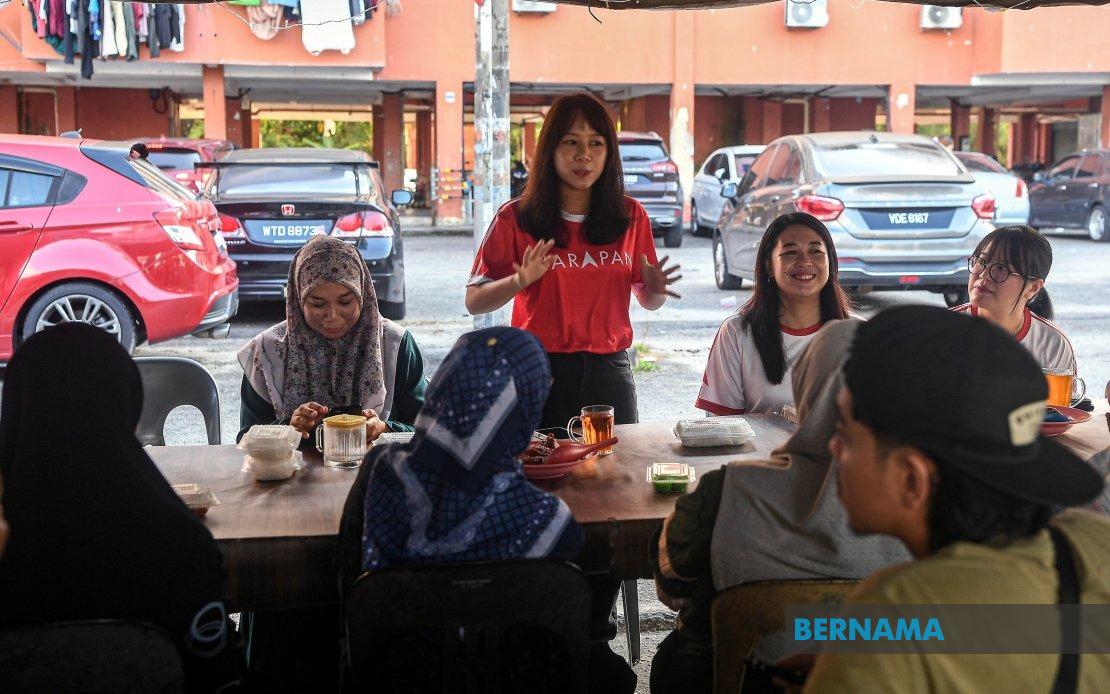
Pakatan Harapan's Lee Wern Yiing brings a decidedly youthful and reform-oriented perspective to the contest, leveraging her credentials as a 30-year-old DAP activist who deliberately returned to Malaysia from Singapore to pursue community service. Her trajectory tells a story of calculated personal sacrifice—turning down lucrative career opportunities in the republic to build a political presence closer to home, a narrative that resonates with narratives about young professionals reconsidering their relationship with Malaysia. Having transitioned from a support role in the previous assembly member Liow Cai Tung's office into the position of defending the seat, she represents the institutional maturation of younger-generation politics within the opposition coalition.
Lee's strategic focus on younger voters reflects a sophisticated understanding of electoral mathematics in contemporary Johor constituencies. Rather than accepting the frequent assertion that young Malaysians are disengaged from electoral politics, she articulates a framework positioning youth as active political observers making informed choices based on observable outcomes. Her multimedia approach—combining conventional social media engagement with ground-level community initiatives such as the Johor Jaya Run—attempts to bridge the digital and physical spaces where younger voters operate. This dual-track methodology acknowledges that modern electoral coalitions require simultaneous presence across multiple platforms and communication modalities.
Among her policy priorities, Lee has identified employment accessibility, housing affordability, and cost-of-living pressures as the central preoccupations of her target constituency. These issues align with documented concerns among Malaysian workers and young families navigating increasingly complex urban economies. Her particular emphasis on the Johor-Singapore Special Economic Zone development represents an attempt to connect local development projects with tangible employment pathways. By framing the JS-SEZ not merely as infrastructure but as an ecosystem capable of retaining young talent within Johor, she presents a counter-narrative to the persistent brain drain that has drawn Malaysian professionals to Singapore and beyond.
Lee's broader vision for the constituency articulates a homecoming narrative—transforming Johor Jaya into a destination where young people can establish careers and families rather than a waypoint toward emigration. This framing addresses a psychological dimension of political competition often underestimated in electoral analysis: the emotional and aspirational appeal of remaining within one's home state. By coupling this vision with concrete policy proposals around economic stimulus and job creation, she attempts to ground abstract nationalist sentiment in material incentives.
Barisan Nasional's Chan San San approaches the contest from an entirely different foundation: deep community embeddedness and demonstrated administrative experience. Her positioning as an "anak Plentong"—a local rooted in the community—represents the traditional BN strength in mobilizing constituency identity and historical continuity. Her decade-plus history of community engagement predates her formal candidacy, suggesting a gradual accumulation of political capital through incremental service delivery rather than rapid ascension through party structures.
Chan's professional trajectory within municipal governance and party administration provides her with operational experience that distinguishes her from candidates focused primarily on policy aspiration. Her roles as a Johor Bahru City Council member, MCA deputy secretary, and volunteer coordinator with the MCA Crisis Relief Squad position her within networks of local governance and administrative implementation. This experience-based appeal contrasts with Lee's reform-oriented narrative, positioning the BN candidate as someone embedded within existing institutional frameworks who understands how development projects materialize within bureaucratic contexts.
Chan has articulated a four-point development agenda emphasizing local economic strengthening, transportation infrastructure connectivity, traffic congestion relief, and positioning Johor Jaya as an eastern transportation hub. Her specific reference to the Rapid Transit System project indicates engagement with regional infrastructure planning already underway. By connecting local constituency priorities to broader transport connectivity initiatives, she demonstrates understanding of how metropolitan development patterns function across municipal boundaries. The emphasis on transportation infrastructure reflects recognition that Johor Bahru's future economic competitiveness depends on mobility and accessibility for both residents and commercial activity.
The transportation focus distinguishes Chan's platform from Lee's employment-creation emphasis, suggesting different diagnostic assessments of the constituency's central challenges. Where Lee identifies a need for job opportunities that retain young professionals, Chan identifies infrastructure deficits that constrain economic activity and reduce quality of life for existing residents. These are not necessarily contradictory positions—improved transportation enables better employment access—but they reflect prioritization differences and different theories about what drives local economic development.
The four-candidate contest encompasses representatives from Parti Bersama Malaysia and an independent candidate, adding complexity to what might otherwise be portrayed as a straightforward two-coalition competition. This wider field suggests that Johor Jaya's electorate confronts genuine ideological choice points rather than binary coalition selection. The presence of Lau Yi Leong and Lim Hun Peaw expands the electoral calculus for voters otherwise inclined toward either PH or BN but dissatisfied with specific aspects of either major coalition's approach.
Johor's state election context involves 172 candidates competing across 56 seats, indicating a substantially contested electoral environment where no seat can be considered safe territory for any coalition. The scale of candidacy relative to available positions suggests robust internal competition within both major coalitions' selection processes, with multiple credible contenders potentially strengthened the overall quality of representation. The Johor Jaya contest exemplifies broader competitive patterns evident across the state polls.
The strategic presentations by both Lee and Chan reveal how contemporary Malaysian electoral competition increasingly centers on development pathways and quality-of-life delivery rather than purely ideological or communal positioning. Both candidates emphasize material improvements to constituency conditions—jobs, housing, transportation, cost management—suggesting that voters increasingly evaluate candidates through pragmatic assessments of their capacity to improve lived experience. This development-focused paradigm reflects maturation within Malaysian electoral competition, where parties must justify continued political support through demonstrated capacity to deliver tangible improvements rather than relying on historical allegiance or identity politics alone.

