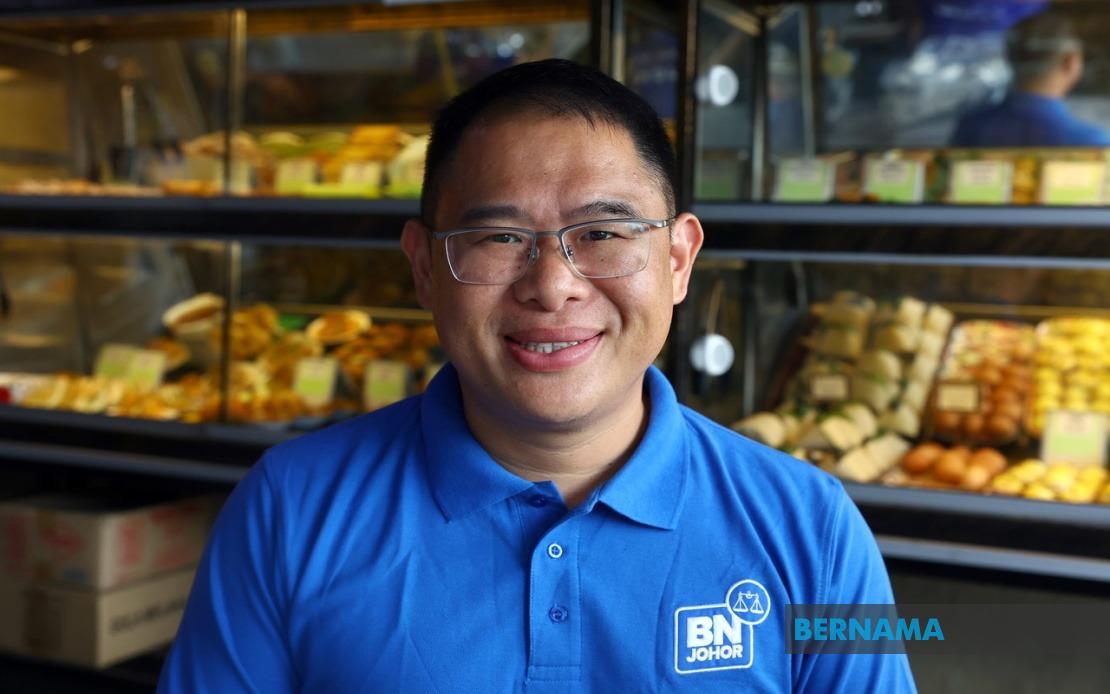
With the Johor state election campaign underway, Yong Peng assemblyman Ling Tian Soon is staking his re-election bid on a tangible development record centred on road infrastructure upgrades that locals once derided as 'Jalan Koyok'—a reference to heavily patched asphalt. The transformation of this critical transport artery has become his signature achievement and the cornerstone of his argument for continued voter support as he seeks a second mandate in the coming polls.
When elected to the state assembly in 2022, Ling, known colloquially as Ah Soon among constituents, identified ageing infrastructure as the primary brake on Yong Peng's economic potential. He channelled substantial development allocations toward road reconstruction, committing approximately RM23 million over a three-year period to rehabilitate the highway corridor stretching from Ayer Hitam toward the Segamat boundary. The investment reflects his conviction that transport infrastructure serves as the foundation for broader prosperity—a principle he articulates through a common Mandarin adage about well-built roads enabling economic momentum.
The 42-year-old legislator, who previously chaired the Johor state assembly's Health and Environment Committee, contends that the upgraded thoroughfare has already begun reshaping investor perceptions of the district. Major logistics operators and parcel delivery firms have begun establishing operational hubs in Yong Peng, recognising advantages that extend beyond mere road quality. Situated roughly 100 kilometres from Johor Bahru and approximately one hour's drive from the Port of Tanjung Pelepas, the district occupies a strategically vital position within the state's emerging industrial geography. This confluence of improved connectivity and geographic centrality is proving attractive to enterprises seeking distribution and manufacturing bases.
The pipeline of planned investment is expanding notably. A prominent e-commerce retailer has committed to constructing its largest regional distribution facility in Yong Peng, a project anticipated to generate substantial employment, particularly for younger demographics seeking local career opportunities. These announcements suggest that road improvements may indeed be catalysing the broader economic repositioning Ling anticipated when prioritising the upgrade. The district appears poised to transition from a peripheral location to an emergent industrial centre, with land acquisitions for manufacturing purposes accelerating.
Ling's campaign manifesto, scheduled for unveiling this weekend, pivots on three interconnected pillars: durability of infrastructure development, expansion of social support mechanisms, and economic revitalisation through the tourism sector. Beyond these primary objectives, he proposes targeted enhancements to amenities serving senior citizens, young families, and newly married couples—initiatives framed as retention tools to discourage youth outmigration and stabilise Yong Peng's demographic composition. These proposals signal recognition that infrastructure alone is insufficient; sustained community vibrancy requires supporting the full spectrum of life stages.
Situating his performance within a broader timeline, Ling emphasises his extended immersion within the Yong Peng community, extending back sixteen years through parliamentary support roles under Ayer Hitam's member of parliament, MCA president Datuk Seri Dr Wee Ka Siong. This prolonged presence distinguishes his approach from transactional campaign-season engagement. Rather than materialising only during electoral contests, Ling claims consistent ground-level interaction with constituents, cultivation of relationships that transcend the conventional representative-voter dynamic and approximate something more familial in character.
This grassroots methodology has earned him the informal designation 'YB Kedai Kopi'—a moniker reflecting his nearly daily practice of stopping at neighbourhood coffee shops, food stalls, and mamak establishments to interact directly with residents. The nickname encapsulates a political philosophy centred on accessibility and informal community presence rather than formal events or office-based consultations. Whether this approach translates into electoral durability remains subject to voter assessment; Ling frames his position as one of humility regarding outcomes, content to submit his record for public judgment and trusting constituents to distinguish between adequate and exceptional performance.
The electoral contest itself shapes as a straight contest between Ling and Yong Hui Yi, the Pakatan Harapan candidate. This two-candidate configuration means the election hinges primarily on comparative assessments of the incumbent's stewardship versus the challenger's proposed direction. For Ling, the RM23 million road investment and emergent logistics transformation provide tangible evidence of governance efficacy; opponents must counter with alternative visions or critique the sufficiency of these achievements relative to remaining development gaps.
For Malaysian and Southeast Asian observers monitoring state-level political competition, the Yong Peng contest illustrates how infrastructure investment increasingly dominates legislative campaigns across the region. The localisation of major logistics hubs and distribution facilities reflects broader structural shifts in supply chain geography, particularly accelerated by e-commerce expansion and port development. Districts previously marginal to economic consideration suddenly gain significance within reconfigured regional trade patterns. Ling's campaign implicitly acknowledges this recalibration, positioning himself as the political figure who recognised Yong Peng's latent advantages and created conditions for their realisation.
The road transformation narrative also carries implications for Malaysian governance more broadly. Persistent concerns about neglected basic infrastructure—particularly transport corridors in secondary towns—have generated sustained electoral vulnerability for incumbents. Ling's choice to prioritise this deficiency signals awareness that voters increasingly demand demonstrable returns on public expenditure, particularly in constituencies geographically peripheral to major urban centres. His willingness to commit substantial allocations to a single infrastructure corridor, rather than dispersing funds across numerous small projects, suggests a strategic prioritisation approach that may prove replicable across other state assemblies facing similar infrastructure deficits.
The outcome of the Yong Peng contest will carry significance beyond local constituency politics. A decisive victory for Ling would validate infrastructure-centric campaign strategies and reinforce the electoral returns from tangible development delivery in secondary districts. Conversely, a defeat would suggest that road improvements alone, regardless of genuine economic benefits generated, may prove insufficient to sustain legislator tenure if other governance dimensions receive inadequate attention. The contest therefore functions as a partial test of whether voters in emerging industrial districts reward economic transformation and infrastructure advancement as primary performance metrics.

